
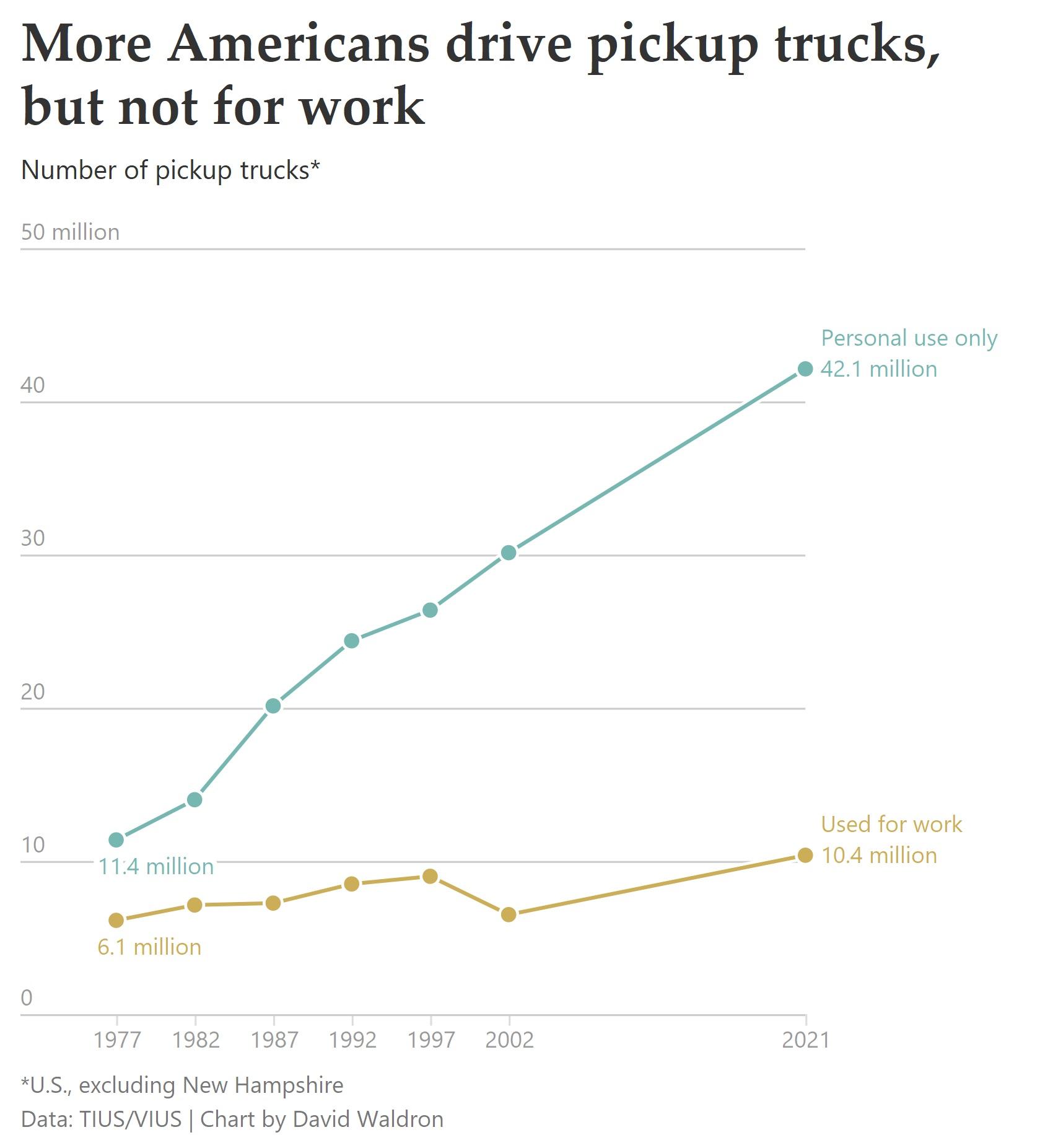
Popularity of pickup trucks in the US — work vs. personal use
Who is dropping $70,000 or more on a pickup truck just to drive to the store? If you look around any suburban parking lot or fast food drive-thru in America, it’s clear that the answer is “a lot of people.” What started out as the ultimate symbol of American utility has morphed into a kind of rolling luxury suite on wheels, tricked out with leather seats, giant touchscreens, panoramic sunroofs, and chrome everything. And it’s not just for the rugged rancher or the small business owner hauling tools; these days, the top-selling vehicle in America is often a high-end pickup, purchased by people whose toughest cargo is a bag of mulch from Home Depot.
There’s something almost absurd about it—an arms race to own the biggest, shiniest, most overbuilt vehicle possible, even if it’ll never see a muddy job site. It speaks to a kind of cultural insecurity, a need to project strength, wealth, and status in a world that feels increasingly out of control. Automakers have been happy to fuel this trend, marketing pickups as both a lifestyle accessory and a symbol of American freedom, even as prices soar into luxury-car territory. Meanwhile, the practical downsides—terrible gas mileage, massive size, rising insurance rates, and astronomical monthly payments—are easy to ignore when everyone else on the block is driving one, too. In the end, buying a $70,000 truck for grocery runs isn’t about need; it’s about want, image, and keeping up with the Joneses, no matter the cost.
The rise and fall of the name Alexa

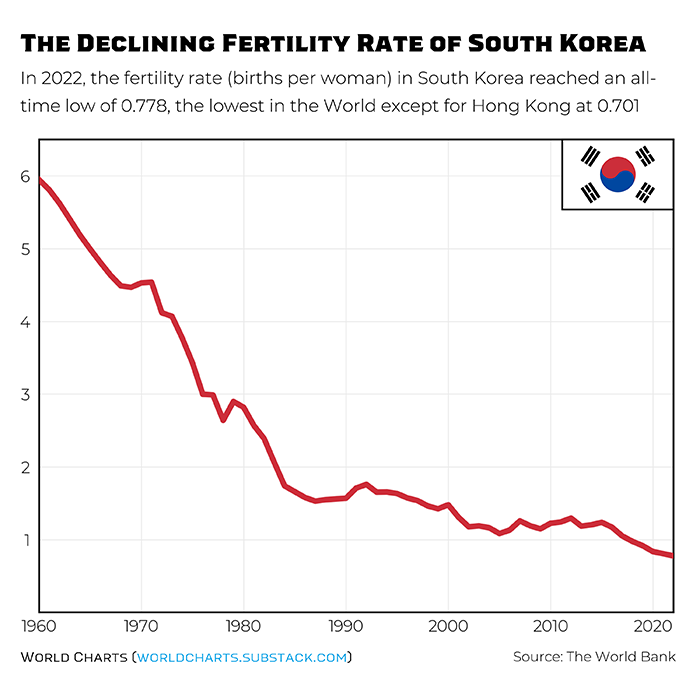
The Declining Fertility Rate of South Korea
South Korea’s fertility rate is the lowest in the world, hovering at less than 0.8 children per woman—a figure so low that it has become a national crisis. The reasons are deeply woven into the fabric of Korean society and its economy. Young Koreans face staggering costs of living, especially when it comes to housing and education. The pressure to secure a stable job, buy a home, and afford the best private education for their children is overwhelming. Many feel they can’t realistically provide the kind of life expected for a family, so they delay or abandon the idea of having children altogether. This has led to the so-called “give up generation,” where young adults feel forced to give up on traditional milestones like dating, marriage, and parenthood in order to survive financially.
On top of these economic pressures, work-life balance in South Korea is notoriously poor, and social expectations around gender roles remain stubbornly traditional. Women in particular face immense pressure: the moment they become pregnant, they often find themselves pushed out of their jobs or forced to choose between career and family, since flexible working arrangements and support for working mothers are still limited. The country also has one of the largest gender pay gaps among developed nations. Combined, these factors make starting and raising a family seem daunting or even impossible for many young Koreans, fueling a cycle that drives the fertility rate even lower year after year.
The actual chemicals detected in 576 heroin samples submitted for anonymous lab testing
The reason 87% of samples sold as heroin actually contained fentanyl comes down to a mix of economics, potency, and risk-shifting in the illegal drug market. Fentanyl is incredibly cheap and easy to manufacture compared to heroin, which relies on time-consuming poppy cultivation. With fentanyl, dealers and suppliers can create a product that is much more potent in much smaller quantities—making it easier to smuggle, distribute, and disguise. As heroin has become harder or riskier to obtain, fentanyl has flooded the supply chain, often replacing heroin altogether or being mixed in to stretch profits. Most users can’t tell the difference until it’s too late, and street dealers often don’t know (or care) what’s really in the product they’re selling.
This substitution is deadly because fentanyl is exponentially stronger than heroin, leaving a razor-thin margin for dosing errors. The lack of quality control in the illegal drug world means that users have no idea how much fentanyl they’re getting, dramatically raising the risk of accidental overdose. Add to this the fact that fentanyl is now being found not just in heroin but also in cocaine and other drugs, and it becomes clear why overdose deaths have surged.

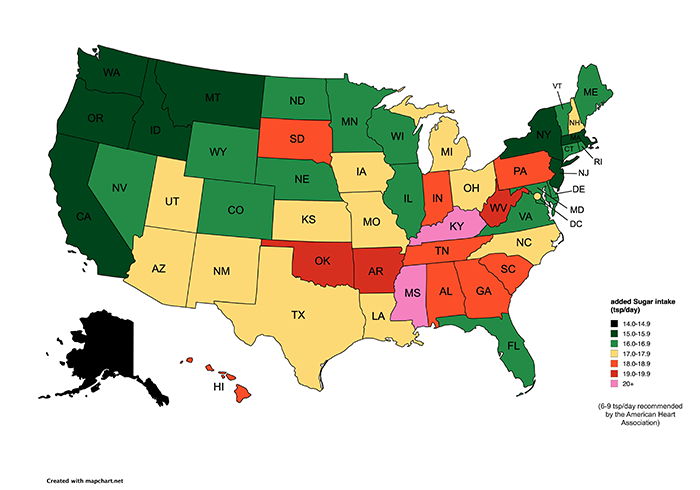
Estimated daily sugar intake by U.S. state
Most of us don’t realize just how much sugar sneaks into our daily diets, even when we’re not eating dessert. It’s not just the obvious suspects like sodas, cookies, or ice cream—sugar hides in everything from bread, pasta sauces, yogurt, and salad dressings to so-called “healthy” snack bars and juices. The average American now consumes about 17 teaspoons (roughly 71 grams) of added sugar per day—more than double the recommended limit for adults. A lot of this sugar intake happens without us even noticing, thanks to confusing food labels, dozens of different names for sugar, and the way sweetness is built into processed foods.
This “hidden” sugar adds up fast. Even a bowl of seemingly healthy cereal or a bottle of flavored water can pack several teaspoons before you’ve even had lunch. Over time, this can have serious consequences for our health, contributing to weight gain, diabetes, heart disease, and other problems. The reality is, unless you’re cooking all your own meals from scratch, there’s a good chance you’re eating a lot more sugar than you think—often without ever reaching for the sugar bowl.
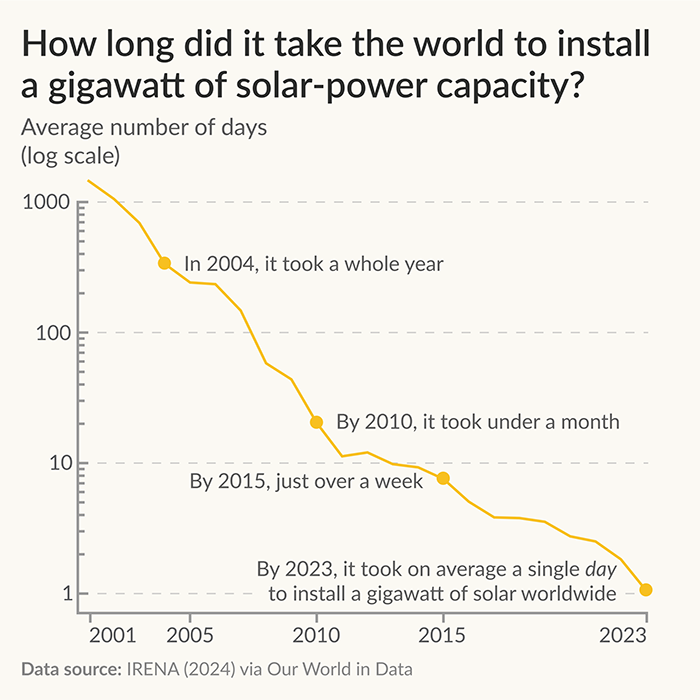
How long did it take the world to install a gigawatt of solar-power capacity?
One gigawatt is equal to 1,000 megawatts, or one billion watts. To put it in perspective, a single gigawatt of solar panels spread out across several square miles can, in theory, produce enough electricity to power about 750,000 average American homes when the sun is shining at its brightest.
Obesity rate by country over time
The obesity epidemic in Egypt is driven by a mix of economic, cultural, and lifestyle factors that have converged over recent decades. One of the main causes is the shift toward a more Westernized, processed diet. As Egypt’s economy developed and urbanized, traditional meals rich in vegetables, legumes, and whole grains have been replaced by foods high in sugar, fats, and refined carbohydrates—think sweetened drinks, pastries, fried street food, and fast food chains. These options are often cheaper and more convenient, especially in crowded cities, but they’re calorie-dense and nutrient-poor.
At the same time, physical activity levels have dropped sharply. Sedentary jobs are more common, public spaces for exercise are limited, and daily life in Egypt’s large, congested cities makes walking or cycling difficult and sometimes unsafe. Cultural attitudes also play a role: in some social circles, being overweight is not necessarily viewed negatively, and food is an important part of hospitality and family life. Add in economic stresses, the growing influence of advertising, and a lack of widespread health education, and you have a perfect storm for rising obesity rates.
College Return on Investment
How Airplanes Make Money
While the vast majority of seats on an airplane are economy, the truth is that business and first class are the real money-makers for airlines—especially on international routes. Even though only a small percentage of passengers sit up front, their tickets can cost five, ten, or even twenty times more than those in the back. And while the perks—better food, lie-flat seats, lounge access—are nice, they’re not nearly as expensive for the airline to provide as the price difference suggests. In fact, the profit margin on a single business class seat can be higher than the combined margin on several economy seats.
This is why airlines pour so much money into their premium cabins and why you see constant upgrades—newer seats, better food, bigger screens, private suites. For many flights, especially long-haul or transcontinental ones, the revenue from business and first class is what keeps the entire operation profitable. Economy may fill the plane, but it’s the premium passengers who pay the bills, fund innovation, and often determine whether a route is worth flying at all. Without those high-paying customers up front, many airlines simply wouldn’t survive in such a competitive industry.

Red Bull Energy Drink Sales Vs. Everyone Else

How Microsoft Makes Money
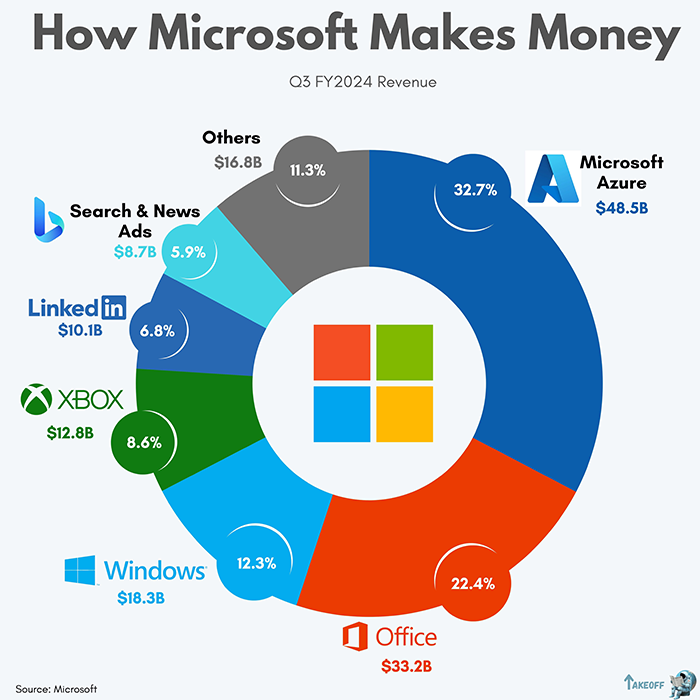
Microsoft Azure is Microsoft’s cloud computing platform—a huge global network of servers and software that lets businesses and developers rent computing power, storage, databases, networking, and all sorts of digital tools over the internet instead of having to run their own physical servers and infrastructure.
Azure makes Microsoft so much money because cloud computing has become the backbone of modern business. Companies use Azure for everything from hosting websites, running apps, and storing data, to artificial intelligence, analytics, and cybersecurity. Instead of investing millions in their own hardware and IT teams, businesses pay Microsoft a subscription or pay-as-you-go fee to use Azure’s resources. This model means steady, recurring revenue for Microsoft, and as more companies move to the cloud, the demand just keeps growing.
What makes Azure especially lucrative is its scale and flexibility. It serves everyone from tiny startups to massive corporations and even governments. Plus, Microsoft has leveraged its existing business relationships and software ecosystem—think Windows, Office, and enterprise tools—to get customers to adopt Azure. All these factors add up to billions in profit, making Azure one of the key drivers of Microsoft’s financial success today.
Fentanyl has become the number one cause of overdose deaths in the U.S.

How a Pizza Place Makes Money

] % of U.S. adults who say they _______ leave a tip when….

Things that Republicans and Democrats actually have in common
Despite what it often looks like on the news or social media, Republicans and Democrats in the United States have a lot more in common than we’re led to believe. Most people, regardless of party, want safe neighborhoods, good schools for their kids, affordable healthcare, fair jobs, and the opportunity to build a better life. Everyday Americans—whether they vote red or blue—care about their families, want their communities to thrive, and value basic decency and respect.
The truth is, the constant drumbeat of outrage and division we see online and on TV isn’t an accurate reflection of how most of us actually live. Much of that division is stoked by politicians and media outlets who benefit from keeping us angry and afraid—because outrage gets attention, clicks, and votes. It’s easy to lose sight of our shared values when every headline is crafted to provoke a reaction or pit us against each other. If you sit down and talk to people from the “other side,” you’ll often find agreement on more issues than you expect, and a shared sense of frustration with how polarized things have become. The real challenge isn’t that Americans are hopelessly divided—it’s that we’re letting others profit by convincing us we are.