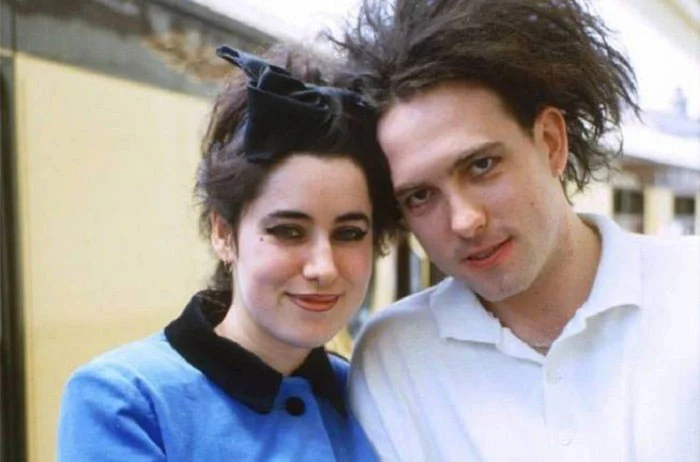
When people talk about The Cure, the spotlight almost always lands on Robert Smith—his instantly recognizable voice, his dark makeup and hair, and the songs that became anthems of love and loss for millions. But behind him, from the very beginning, has been Mary Poole. She’s not a public figure, and she’s never wanted to be. Yet her steady presence has been central to Robert’s life and, in many ways, to the music that made The Cure legendary.
Early Life
Mary Theresa Poole was born on October 3, 1958, in England. Little is known about her childhood because she has always valued her privacy. What we do know is that before she was ever connected to Robert Smith, she pursued modeling and later worked as a nurse caring for children. Those roles—requiring patience, empathy, and emotional steadiness—foreshadow the kind of partner she would become in Robert’s life.
Meeting Robert Smith in Drama Class
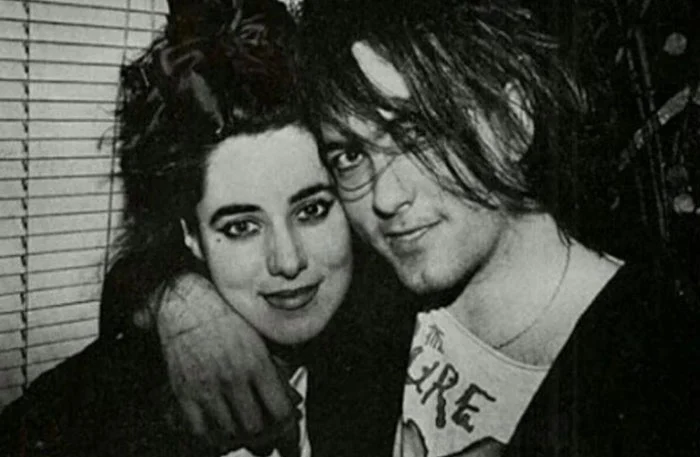
Mary and Robert’s story began as teenagers at St. Wilfrid’s Comprehensive School in Crawley. They first met in a drama class when Mary was 13 and Robert was 14. He asked her to be his partner for a project, a small but defining moment that grew into a lifelong relationship.
Robert has recalled being drawn to Mary not just for her looks, but for her kindness and the way she treated everyone around her. They quickly bonded over a shared love of music—especially Scottish punk artist Alex Harvey. As teens, they followed him around southern England, attending as many of his shows as they could. It was the kind of youthful obsession that brought them even closer together.
One early story captures Mary’s loyalty: at a costume party, Robert poured ketchup all over himself as part of his outfit. Predictably, it started to smell. Most people would have kept their distance. Mary stayed by his side. That small moment says a lot about who she is: steady, supportive, and committed.
Marriage and Shared Choices
As Robert’s music career gained traction, Mary worked as a nurse. Eventually, as The Cure exploded internationally, she chose to step away from her own career—not because she lacked ambition, but because she wanted to be with him fully during the whirlwind of touring and fame.
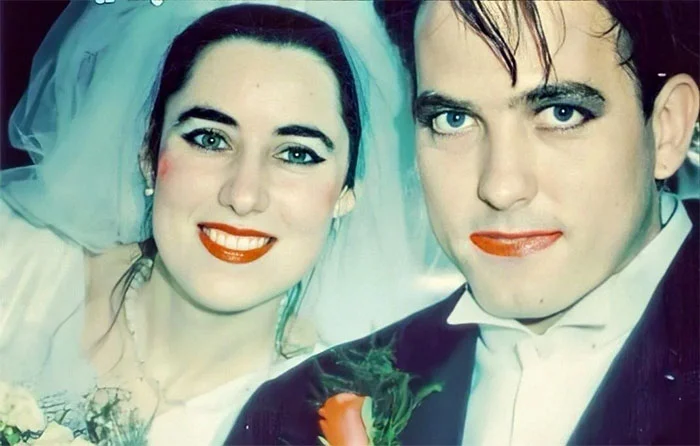
They married on August 13, 1988, in a private ceremony at Worth Abbey, right as The Cure was at its peak. For most couples, the wedding would mark the beginning of a new chapter. For Mary and Robert, it was more like putting a seal on a partnership that had already carried them through years of life together.
Early on, they also made a deliberate decision not to have children. Robert has said that he never felt it was his place to “impose life on someone else” and doubted whether he’d be responsible enough as a parent. Mary agreed. Instead, they built a life centered around each other, while still enjoying the chaos and joy of Robert’s huge extended family with its many nieces and nephews.
The Muse Behind the Music

Mary has been both inspiration and emotional anchor for Robert Smith. Just Like Heaven (1987), one of The Cure’s signature songs, is often associated with her—she even appears in the music video, radiant in a flowing white dress. And then there’s Love Song (1989), which Robert openly admitted he wrote as a wedding gift. “I couldn’t think of what to give her,” he later said, calling the ballad “cheap and cheerful.” What began as a private gesture turned into one of the most enduring love songs in modern music.
For millions of fans, those songs are universal expressions of love. For Robert, they were personal. They were for Mary.
A Life Chosen Out of the Spotlight
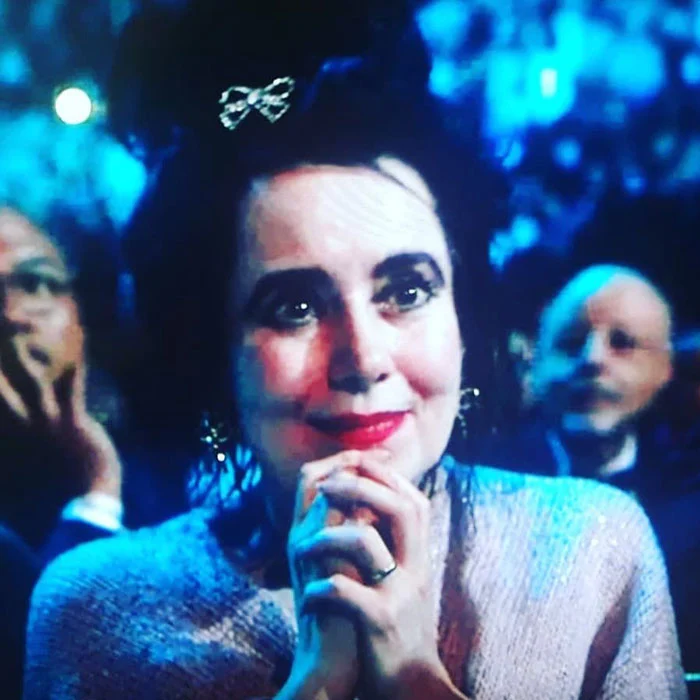
Despite her role in Robert’s life and in The Cure’s story, Mary Poole has always stayed out of the public eye. She doesn’t give interviews, she doesn’t court attention, and she rarely makes appearances. That quietness is part of what has made her so important—she gave Robert stability and privacy in a world where everything else was loud and chaotic.
Robert has often credited her with keeping him afloat during the darker or more stressful times in his life. It’s no exaggeration to say that without her, The Cure might not have endured in the way it has.
Why Mary Poole Matters
Mary Poole is not just “the wife of Robert Smith.” She is his partner, his confidant, his muse, and his steadying force. Their relationship—rooted in a teenage drama class, sealed in marriage at the height of fame, and carried quietly for more than three decades—shows a different side of rock and roll.
The Cure’s music may belong to the world, but at its core is a love story that belongs to Mary and Robert. She has never needed the spotlight because her influence runs deeper than publicity. You can hear it in the songs, you can see it in Robert’s devotion, and you can sense it in the rare kind of marriage that has lasted through decades of fame.