
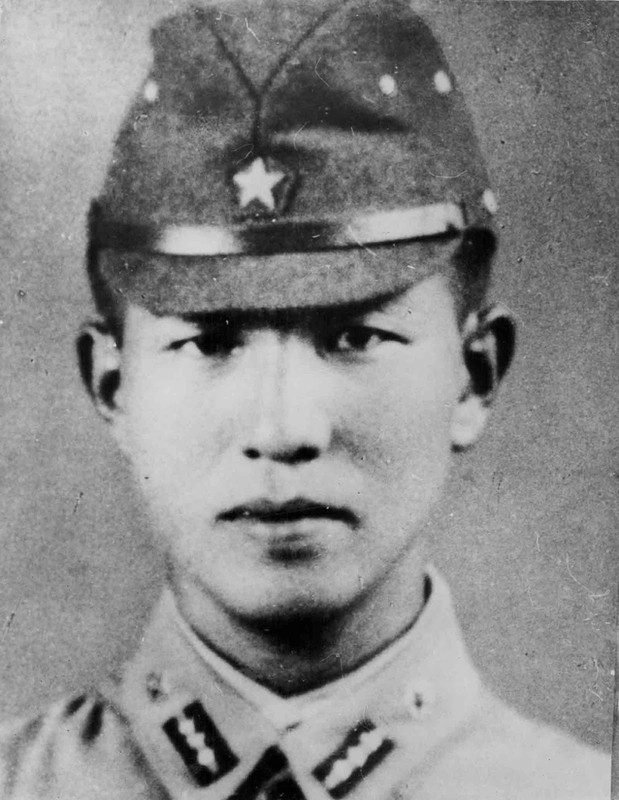
Hiroo Onoda was only twenty-two when he landed on Lubang Island in late 1944. An intelligence officer, trained in sabotage and guerrilla tactics. His final orders from a superior officer were simple, brutal, and absolute: retreat to the hills, harass the enemy, and above all—do not die. “It may take three years, it may take five,” his commander told him. “Whatever happens, we’ll come back for you.” That sentence, vague and almost casual, became the iron law that would rule Onoda’s life for the next thirty years.
Suspicion as a Way of Life
In October 1945, just weeks after Japan’s surrender, Onoda’s group found their first leaflet. It read, in plain Japanese: “The war ended on August 15. Come down from the mountain!” They studied it carefully. The paper quality looked wrong. The wording seemed too simple. If the war were really over, would the enemy still be shooting at them? They decided it was a trick. And that decision sealed their fate.
Every message that followed—air-dropped leaflets from General Yamashita, family letters, even photographs of loved ones—was dismissed the same way. “Too new. Too clean. Too convenient.” They assumed their families had been coerced into writing them. For the next thirty years, disbelief became a survival tactic.
The Guerrilla War That Wouldn’t End
From their bamboo huts hidden in the dense Philippine jungle, Onoda and his men carried out raids. They stole rice from farmers, slaughtered cows, set fire to crops. They believed they were doing their duty—denying resources to the enemy. But to the locals, they were a nightmare. Farmers whispered of the Japanese phantoms in the hills. Police organized search parties that often ended in firefights. By conservative estimates, around thirty Filipinos were killed in these clashes.
The group lived like ghosts. They patched their uniforms, cleaned their rifles obsessively, and rationed stolen rice with military precision. They boiled bananas, hunted wild boar, and trapped rats. Every sound in the jungle was interpreted as enemy movement. Every villager was a spy. Their world had shrunk to an endless cycle of hiding, raiding, and waiting.
The Long Unraveling
The men began to dwindle. In 1949, Private Akatsu slipped away. He wandered alone for months before finally surrendering to the Filipino authorities. To Onoda, this wasn’t just desertion—it was betrayal. He became even more cautious, convinced Akatsu would expose their tactics and hiding places.
In 1952, the Japanese government tried again: this time dropping family photographs and letters directly over Lubang. Onoda picked up a photograph of his childhood home. But the house looked too different—rebuilt, modern. To him, it was proof of forgery.
In 1953, Corporal Shimada was wounded in a clash with fishermen. Onoda nursed him back to health, but the following year Shimada was killed during another firefight. Now only two remained. Onoda and Kozuka became inseparable, “closer than real brothers,” he later wrote. For nearly twenty years, the two of them carried on their private war. They burned rice paddies, ambushed search parties, and stalked the villages like predators. In October 1972, Kozuka was gunned down by local police while trying to set fire to rice stores. Onoda buried him in the jungle. He was alone now, and still he fought.
The Hippie and the Soldier
For two years, Onoda survived entirely on his own. By then, he had been declared dead in Japan, his family had long given up hope, and he had become an urban legend. In 1974, a Japanese drifter named Norio Suzuki announced his bizarre quest: to find Lieutenant Onoda, a panda, and the Abominable Snowman—“in that order.” Against all odds, he found Onoda in just four days.
Suzuki befriended him, listened to his stories, and finally asked the question the world had been shouting for decades: why not come home? Onoda’s answer was simple: he was still waiting for orders from his commanding officer. Without that, he was still a soldier, and the war was still real.
Finally, the Order Arrives

The Japanese government tracked down Major Yoshimi Taniguchi, long retired and running a bookstore. In March 1974, he flew to Lubang and read out the orders releasing Onoda from duty. At that moment, the war that had ended in 1945 finally ended for Onoda. He turned over his rifle, still in working order, along with grenades, ammunition, and the dagger his mother had given him to commit suicide if captured. He had never used it.


Hero, Relic, or Warning?

Back in Japan, Onoda was celebrated as a hero. He was paraded through Tokyo, cheered by crowds, praised for his loyalty. But there’s a darker layer here. For nearly thirty years, he had killed civilians, terrorized villagers, and refused every chance at peace. Is that devotion to duty—or is it fanaticism? That’s the tension his story leaves us with: the razor-thin line between honor and delusion.
Life After the Jungle

The man who had stepped out of a time machine into 1970s Japan found the world bewildering. Skyscrapers, cars, television—everything felt decadent, hollow. He was unsettled by what he saw as a soft, materialistic society. Within a year, he moved to Brazil to raise cattle. He married a Japanese woman who taught traditional arts. Eventually, he returned to Japan, where he founded the Onoda Nature School—teaching children survival skills, discipline, and confidence, the same qualities that had kept him alive for thirty years in the jungle.
He lived until 2014, dying at the age of 91. To some, he remained a hero, a living embodiment of loyalty. To others, he was a cautionary tale of what happens when obedience and ideology eclipse reality itself.
The Unsettling Question
Onoda’s life forces us into uncomfortable territory. How far can duty carry a human being? How much of reality are we willing to ignore if it conflicts with what we’ve been ordered to believe? And when loyalty outlasts truth itself—is that noble, or terrifying?