What would you do if your child—barely eight years old—came home each night with their fingers blistered from handling molten glass? Or if your daughter, too small to reach the pedals on the sewing machine, had to work standing up for twelve hours a day… just to help the family afford dinner?
A century ago, this wasn’t hypothetical.
It was the norm.
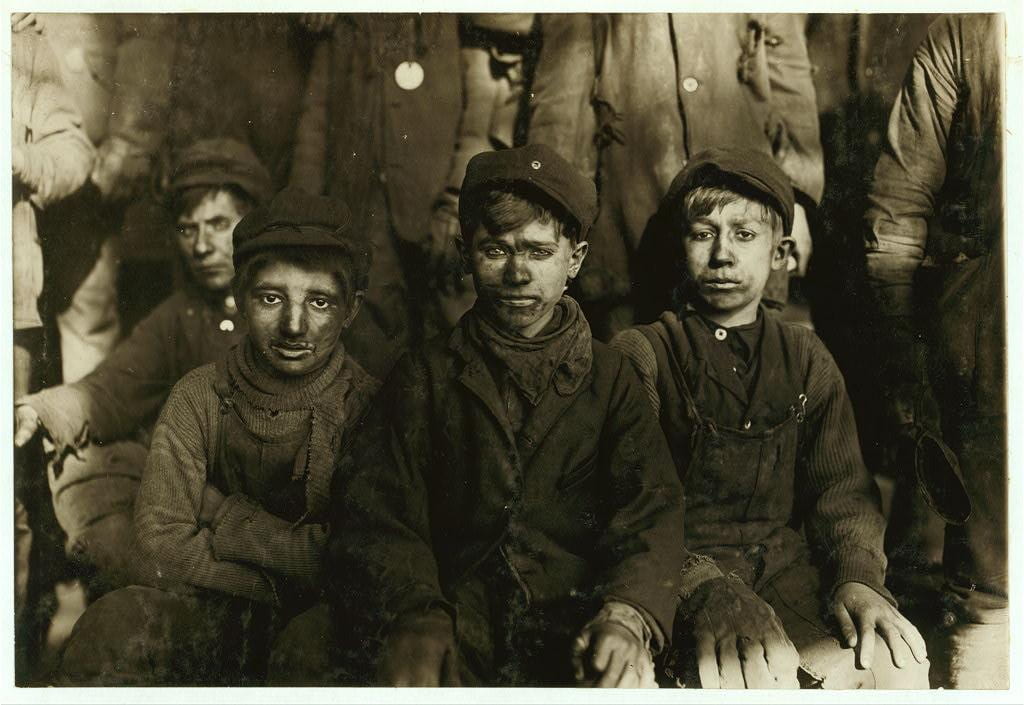
In an age of industrial might and explosive economic growth, America’s youngest citizens were the forgotten gears in the machine. Children worked in coal mines so dark they forgot the color of the sky. They hauled buckets in textile mills where the roar of looms drowned out their voices—and maybe their dreams. Not just boys. Not just girls. Not just one race or one region. Across the board.
We look back at this now and instinctively recoil. But at the time? It was just… normal. A necessary evil, they said. Everyone did it. Even some of the parents looked the other way, because feeding the family took priority over schooling or safety.
But then you see the faces.
These aren’t statistics. They’re children. Frozen in black-and-white, eyes full of exhaustion—and something else, too. Maybe resilience. Maybe resignation. Maybe both.
And that’s when it hits you: they weren’t just living through history.
They were the cost of progress.
And the question that lingers isn’t just “How could this happen?”
It’s “What are we overlooking today that will horrify future generations just as much?”

A spinner in the Globe Cotton Mill in Augusta, Georgia, in January of 1909. The overseer admitted she was regularly employed.
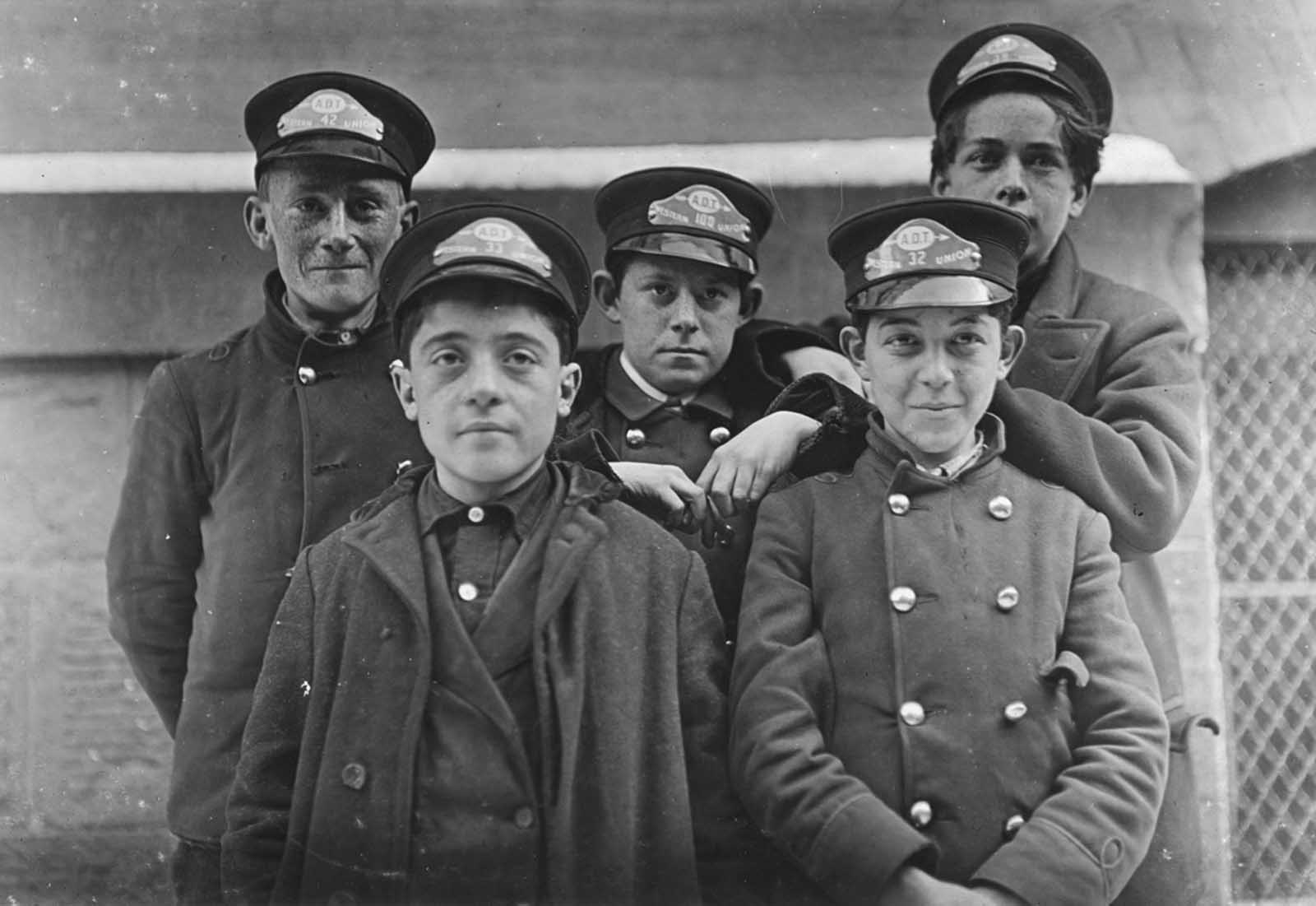
A few of the Western Union messengers in Hartford, Connecticut. They are on duty, alternate nights, until 10 P.M.

Textile mill workers in Newberry, South Carolina, in December of 1908.

Willie, one of the young spinners in the Quidwick Co. Mill in Anthony, Rhode Island. He was taking his noon rest in a doffer-box on this day in April of 1909.
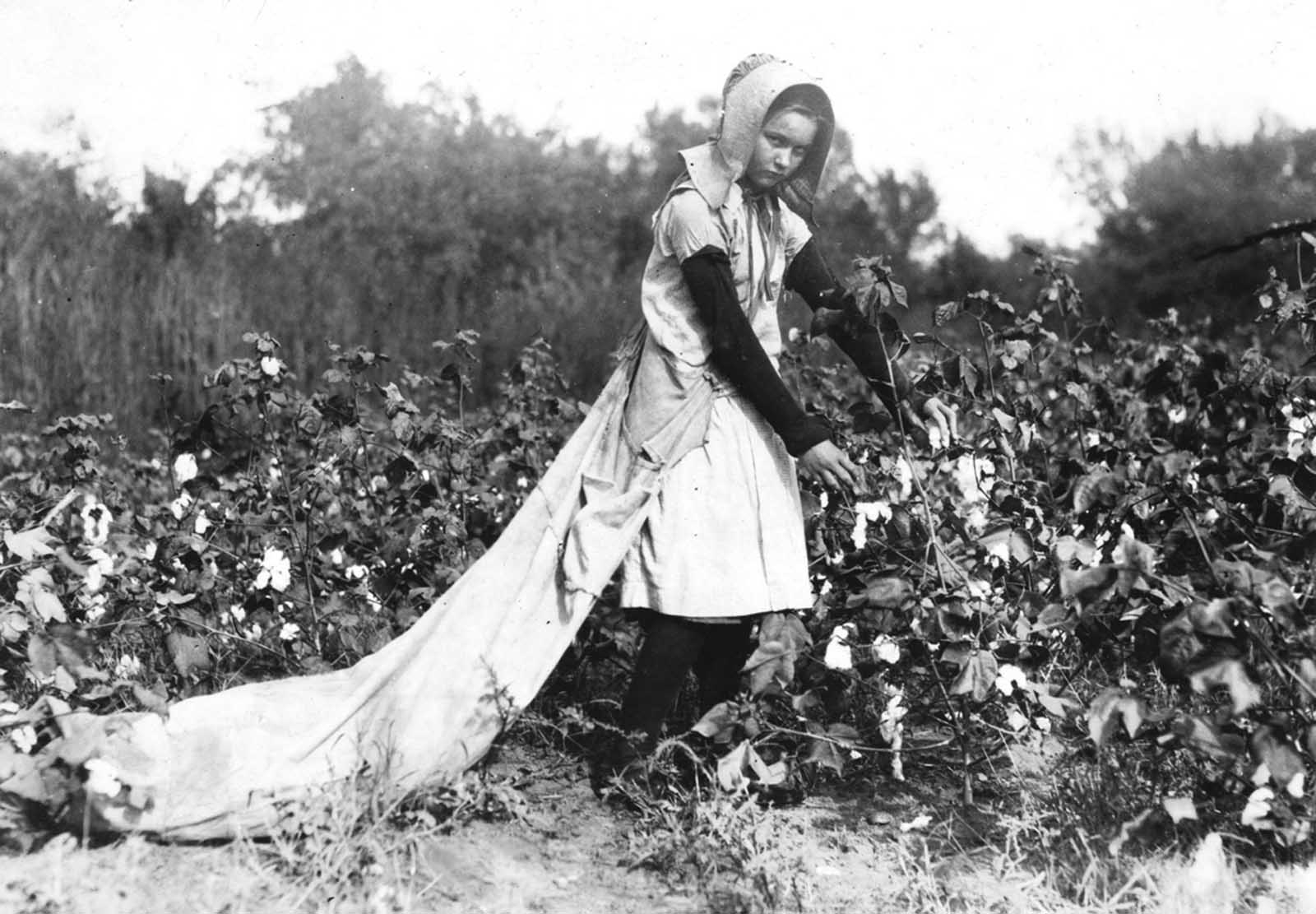
Callie Campbell, 11 years old, picks 75 to 125 pounds of cotton a day, and totes 50 pounds of it when sack gets full. “No, I don’t like it very much.” Photographed in Potawotamie County, Oklahoma. on October 16, 1916.
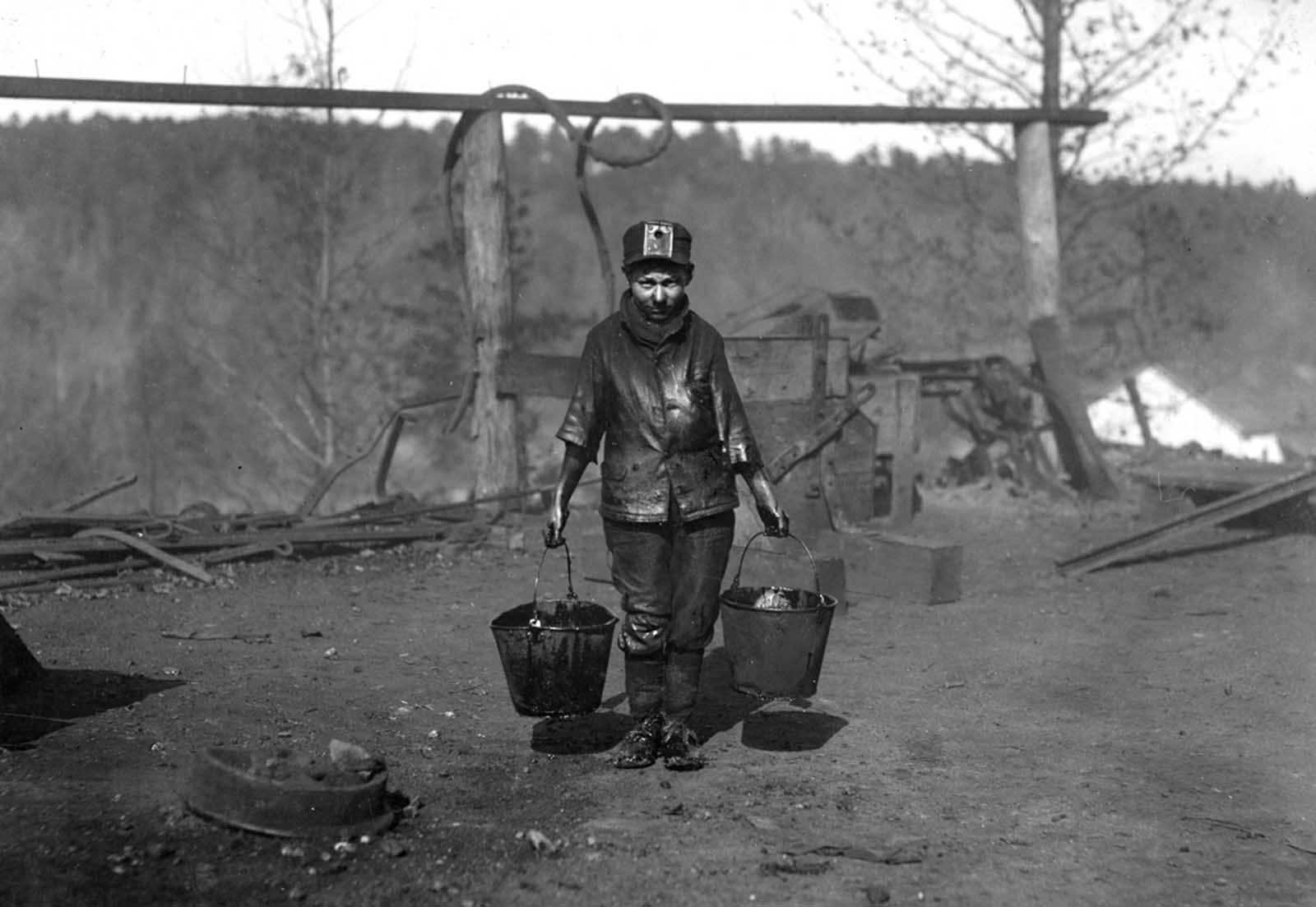
Shorpy Higginbotham, a “greaser” on the tipple at Bessie Mine, of the Sloss-Sheffield Steel and Iron Co in Alabama. He said he was 14 years old, but it is doubtful. He carries two heavy pails of grease, and is often in danger of being run over by the coal cars. Photographed in December of 1910.
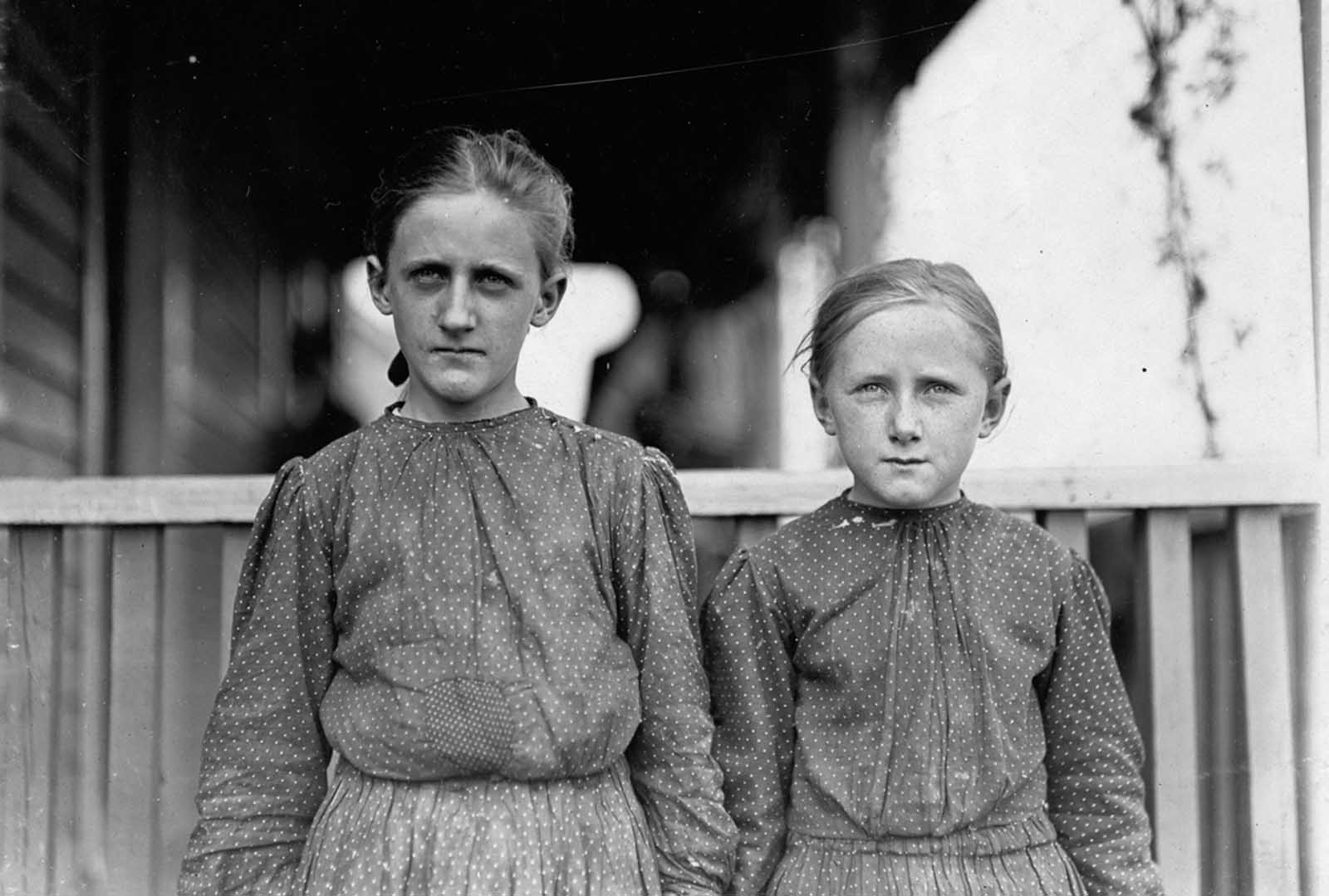
Minnie Carpenter, (left) photographed in November of 1908 at Loray Mill in Gastonia, North Carolina. Minnie makes fifty cents for a 10-hour day as a spinner in the mill. The younger girl works irregularly.
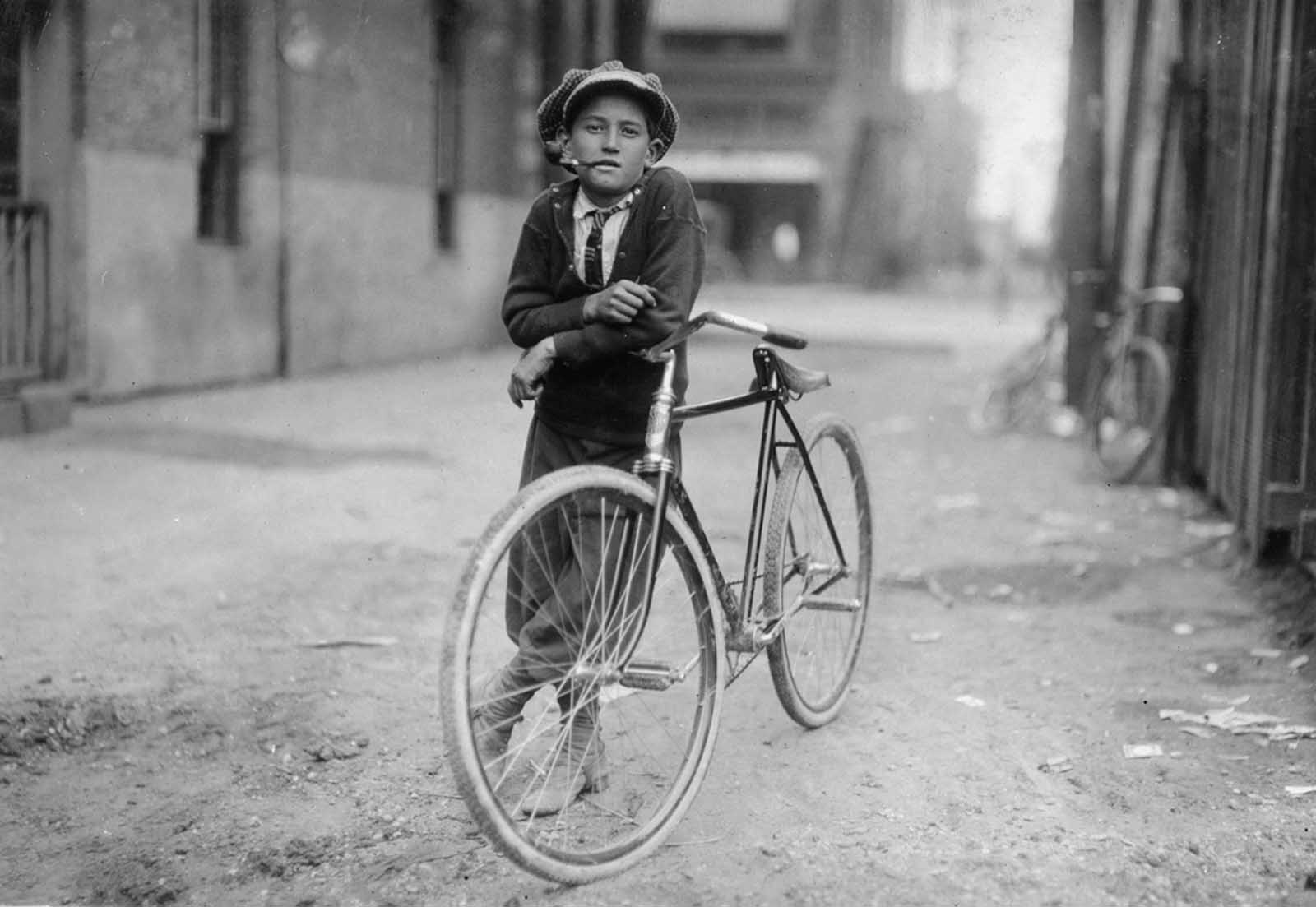
A pipe-smoking messenger boy working for Mackay Telegraph Company. He said he was fifteen years old. Photographed in Waco, Texas in September of 1913.

Pin-boys work in the Arcade Bowling Alley in Trenton, New Jersey, on December 20, 1909. The boys worked until midnight and later.
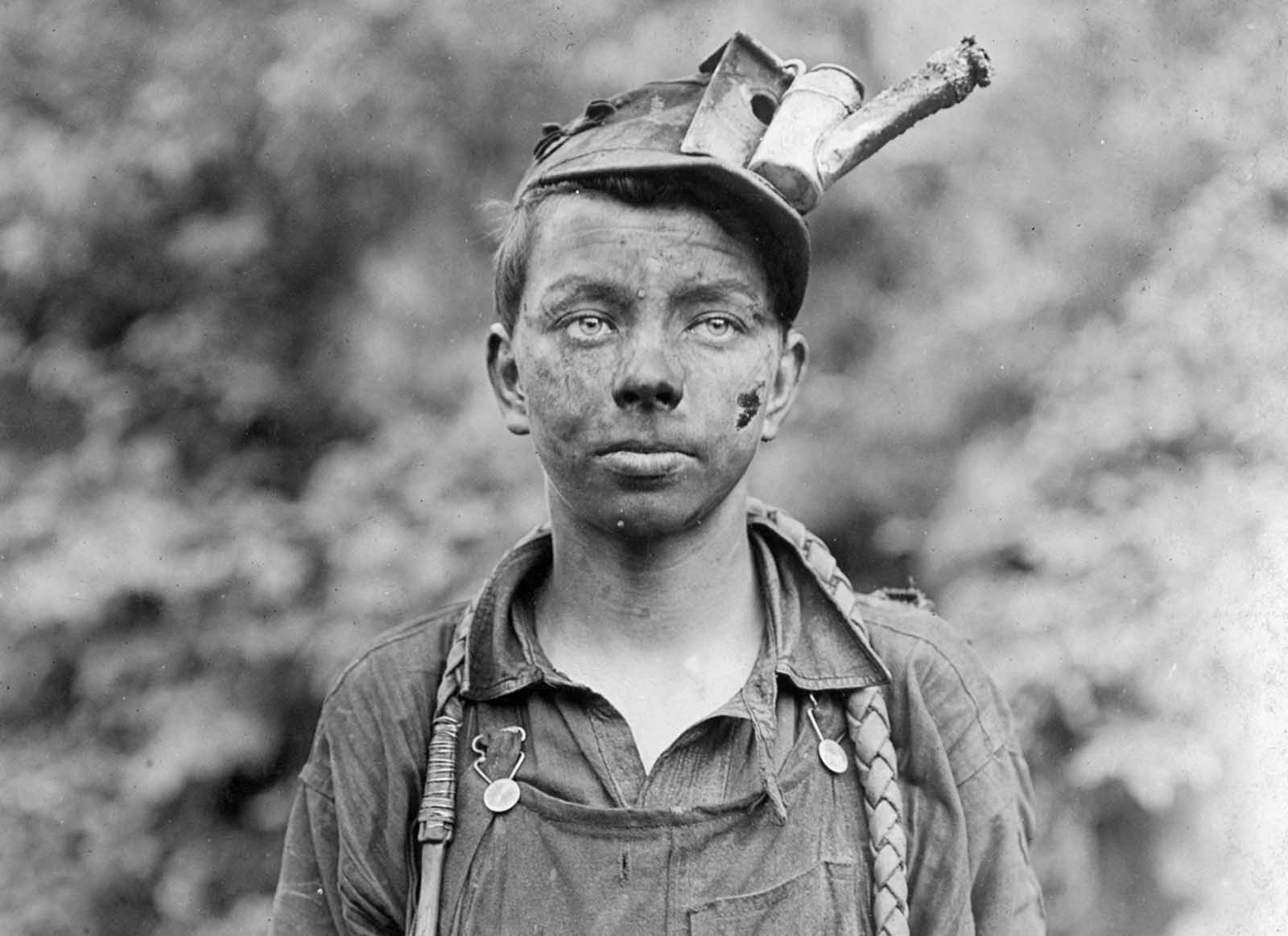
A young driver in the Brown Mine in Brown, West Virginia, in September of 1908. He had been driving pack animals for one year, working from 7 a.m. to 5:30 p.m. daily. The device attached to his cap is an oil-wick cap lamp, which would be lit when the boy was working in the mine tunnels.

Young doffers in Mollahan Mills in Newberry, South Carolina, on December 3, 1908. A doffer is someone who removes, or “doffs”, bobbins or spindles that hold spun cotton or wool from a spinning frame, then replaces them with empty ones.

“Fire! Fire! I want to make the fire!” An Italian boy on Salem Street on Saturday morning, offering to make fires for Jewish People on their Sabbath, in Boston, Massachusetts, in October of 1909.
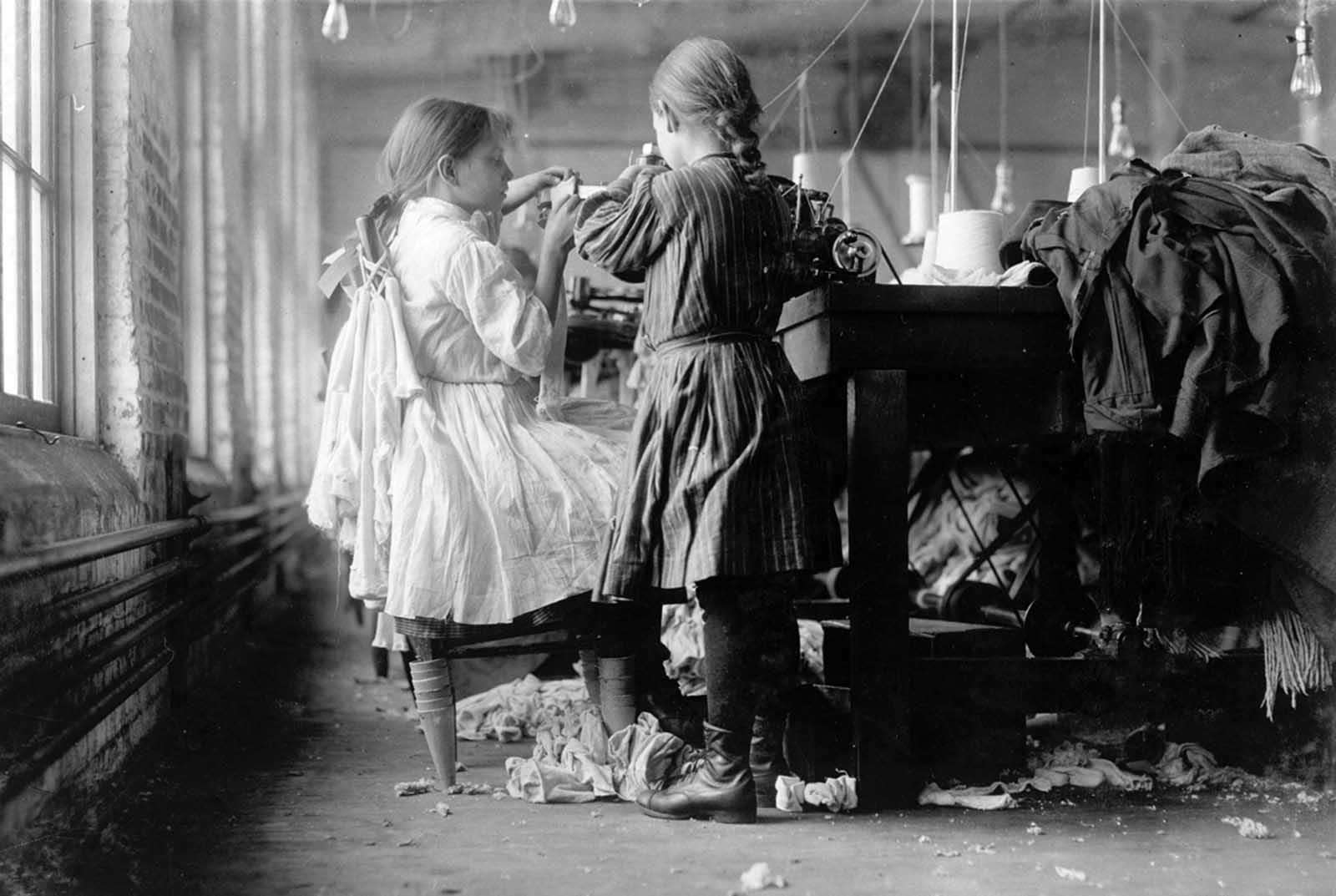
Two young workers, a raveler and a looper, in Loudon Hosiery Mills in Loudon, Tennessee, in December of 1910.

Some of Newark, New Jersey’s newsies, in December of 1909.
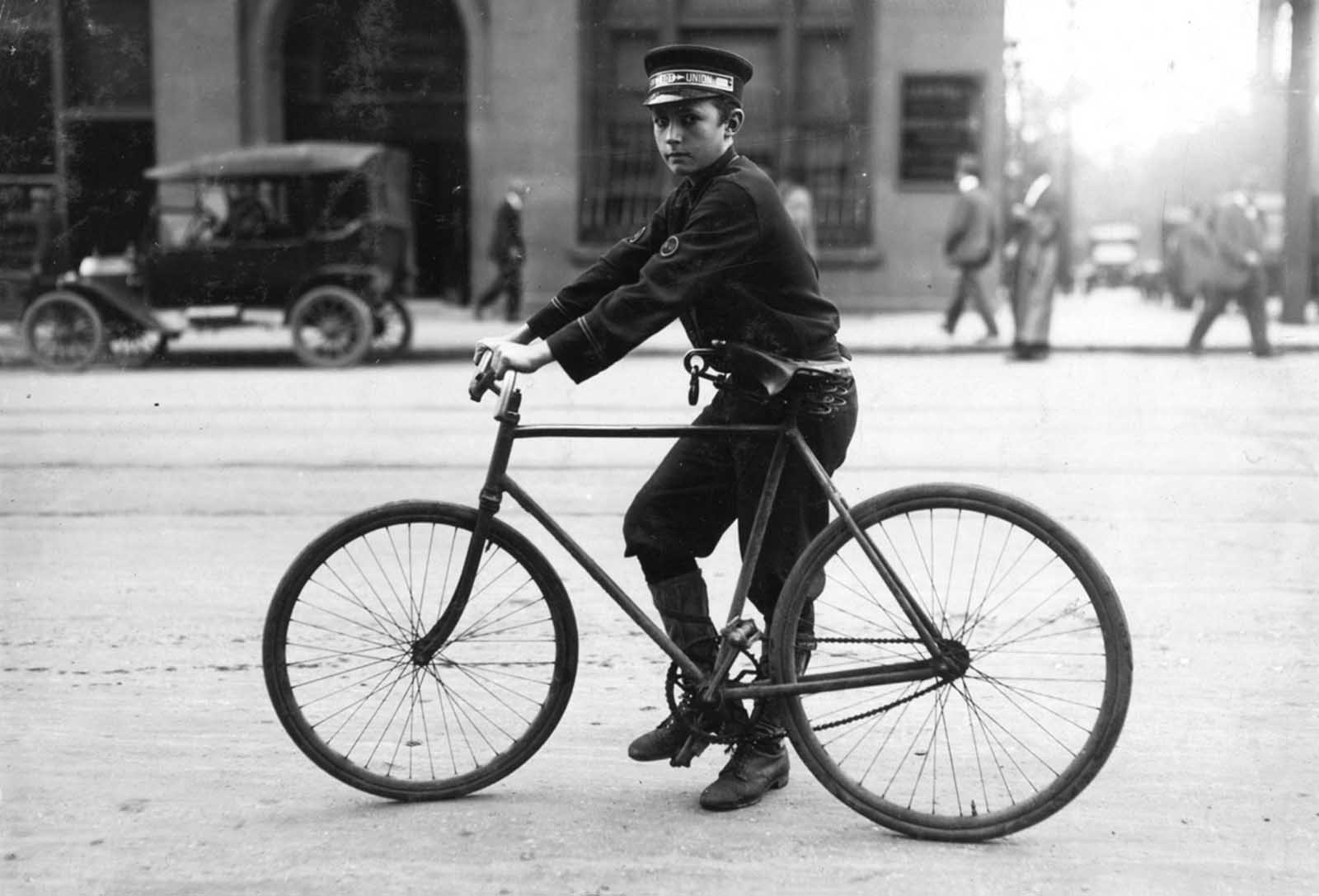
A typical Birmingham, Alabama, bicycle messenger, in October of 1914.
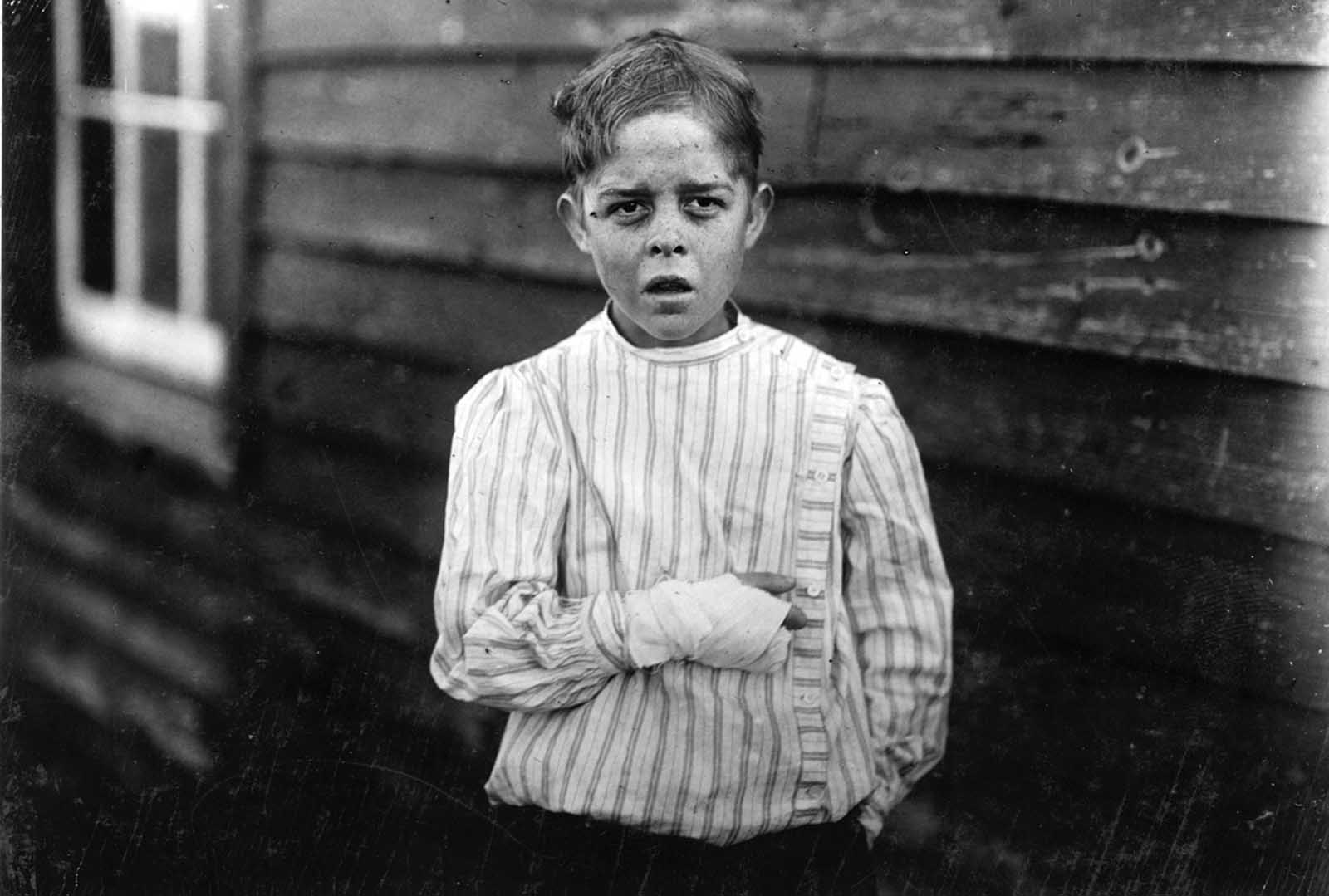
An injured young mill worker. Giles Edmund Newsom, photographed on October 23, 1912. Giles was injured while working in Sanders Spinning Mill in Bessemer City, North Carolina, on August 21st, 1912. A piece of machinery fell on his foot, mashing his toe. This caused him to fall onto a spinning machine and his hand went into unprotected gearing, crushing and tearing out two fingers. He told the investigating attorney that he was 11 years old when it happened. He and his younger brother worked in the mill several months before the accident. Their father, R.L. Newsom, tried to compromise with the company when he found the boy would receive the money and not the parents. Their mother tried to blame the boys for getting jobs on their own, but she let them work several months. Their aunt said “Now he’s jes got to where he could be of some help to his ma, an’ then this happens and he can’t never work no more like he oughter.”
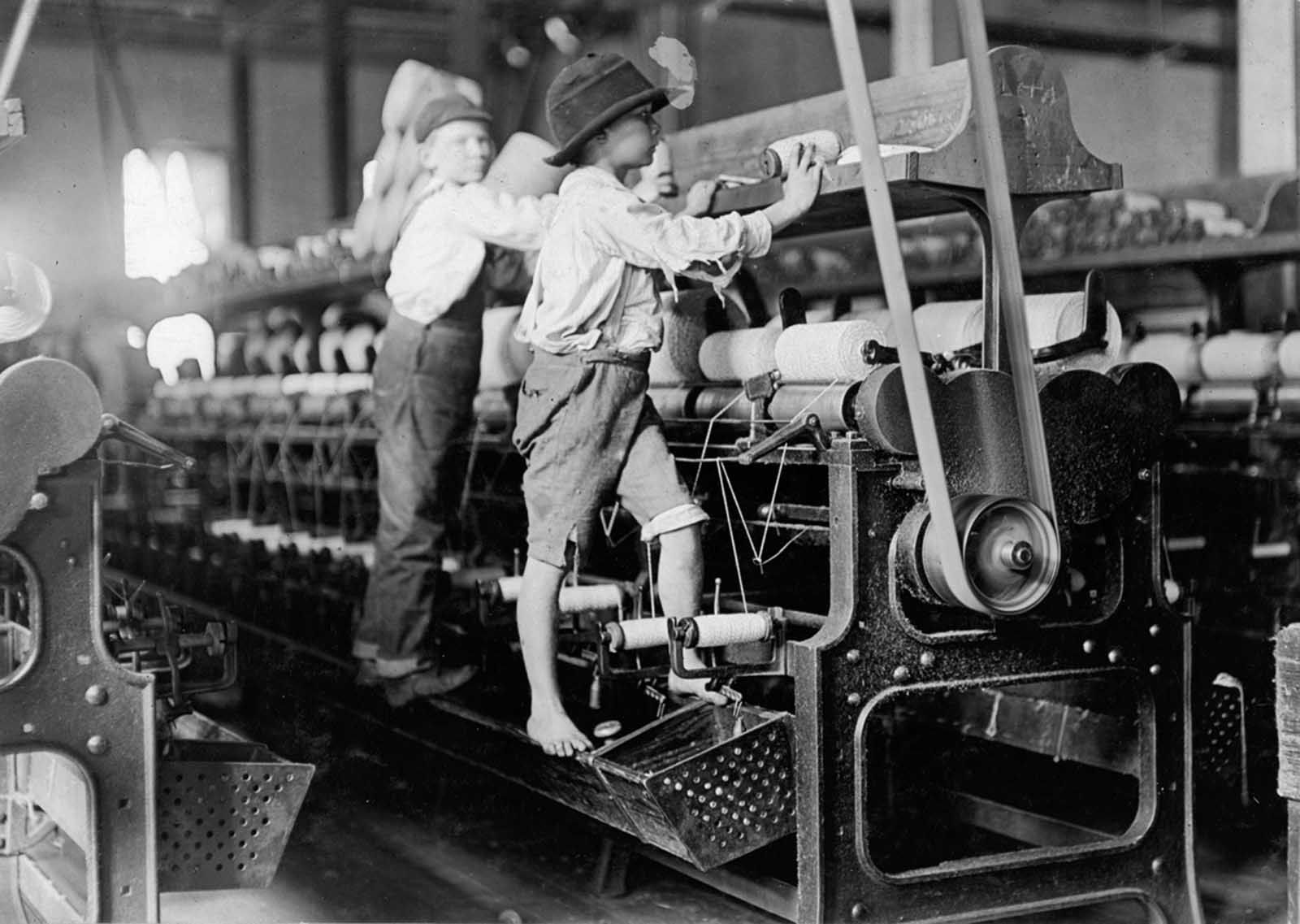
Bibb Mill No. 1 in Macon, Georgia, on January 19, 1909. Some young workers were so small they had to climb up on the spinning frame to mend the broken threads and put back the empty bobbins.

15-year-old Vance, a trapper boy, sits by a large door in West Virginia coal mine in September of 1908. Vance has trapped for several years, receiving 75 cents a day for 10 hours work. All he does is to open and shut this door. Most of the time he sits here idle, waiting for the cars to come. Due to the intense darkness in the mine, the hieroglyphics on the door were not visible until his photo plate was developed.
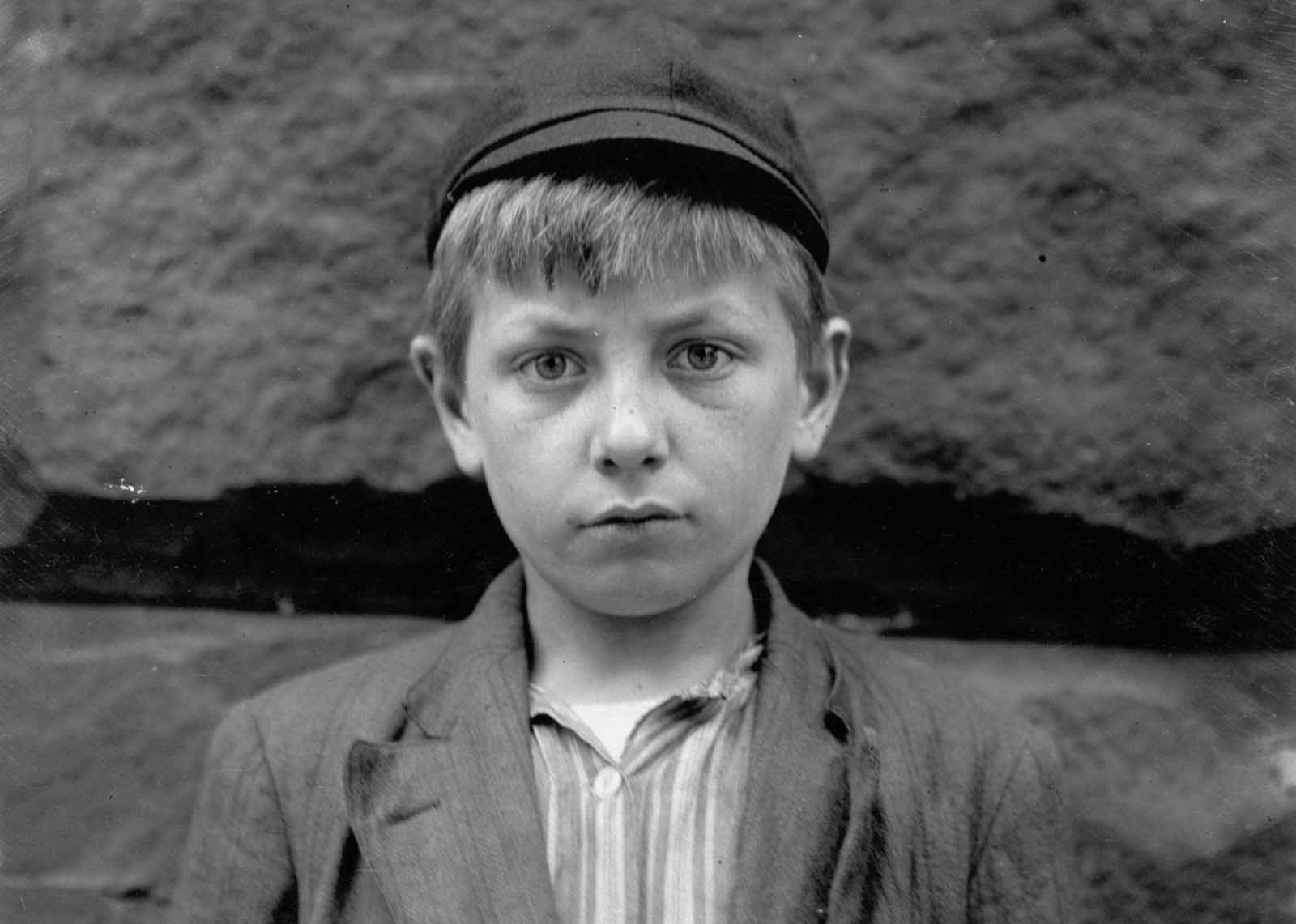
Louis Birch, age 12, a newsboy, stands at the corner of 4th and Pine St in Wilmington, Delaware, in May of 1910. Louis had just started selling, earning 10 cents in a day. His father had passed away. Louis, of his own accord, took up newspaper selling in order to help support his widowed mother. Louis stays out until 12:30 every night and accompanies his brother, Stanley, who is a messenger, on all calls because Stanley is afraid to be out on the street alone at night.
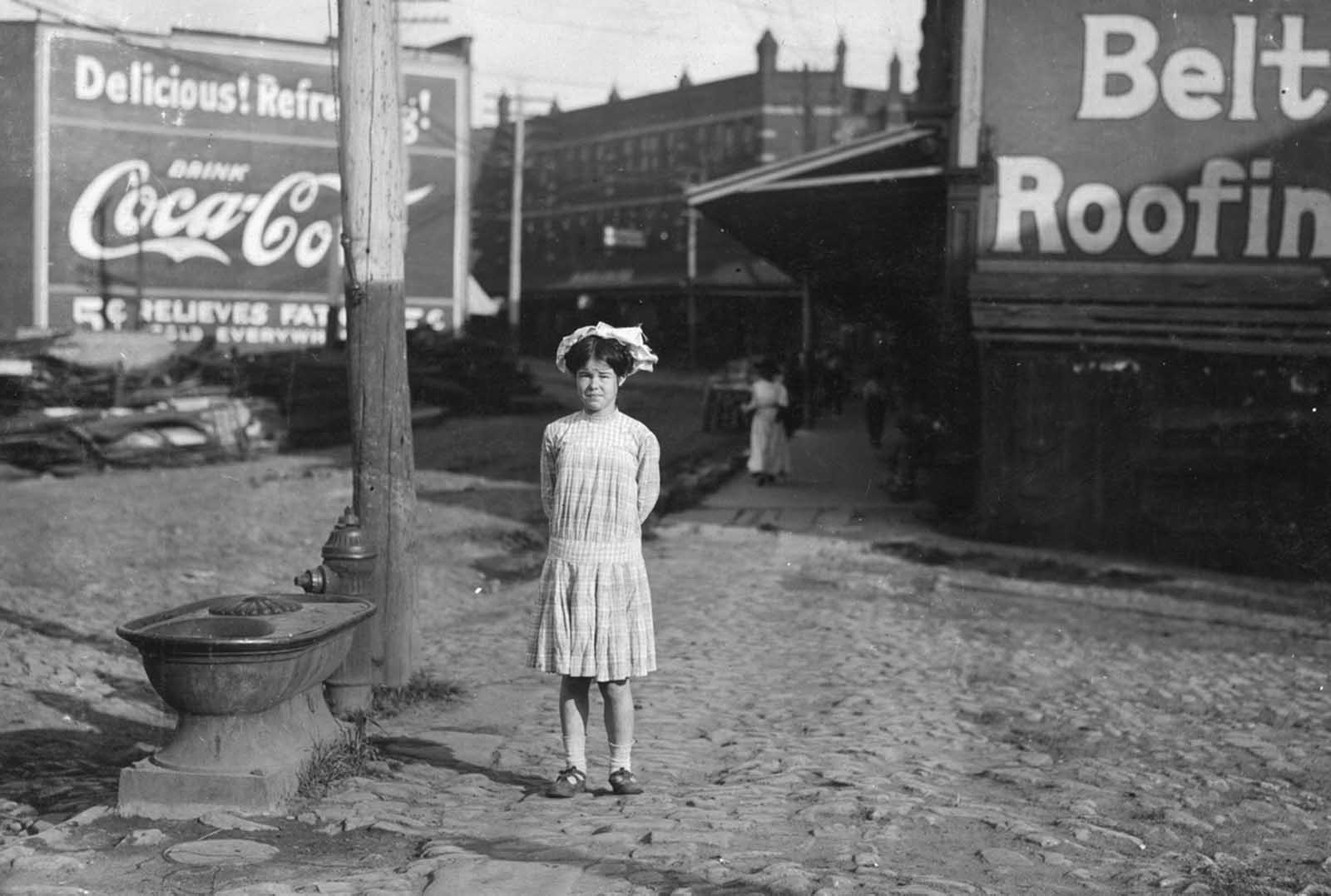
Ethel Shumate has been rolling cigarettes in a Danville Virginia factory for six months. She said she was thirteen years old, but it is doubtful. Photographed in June of 1911.
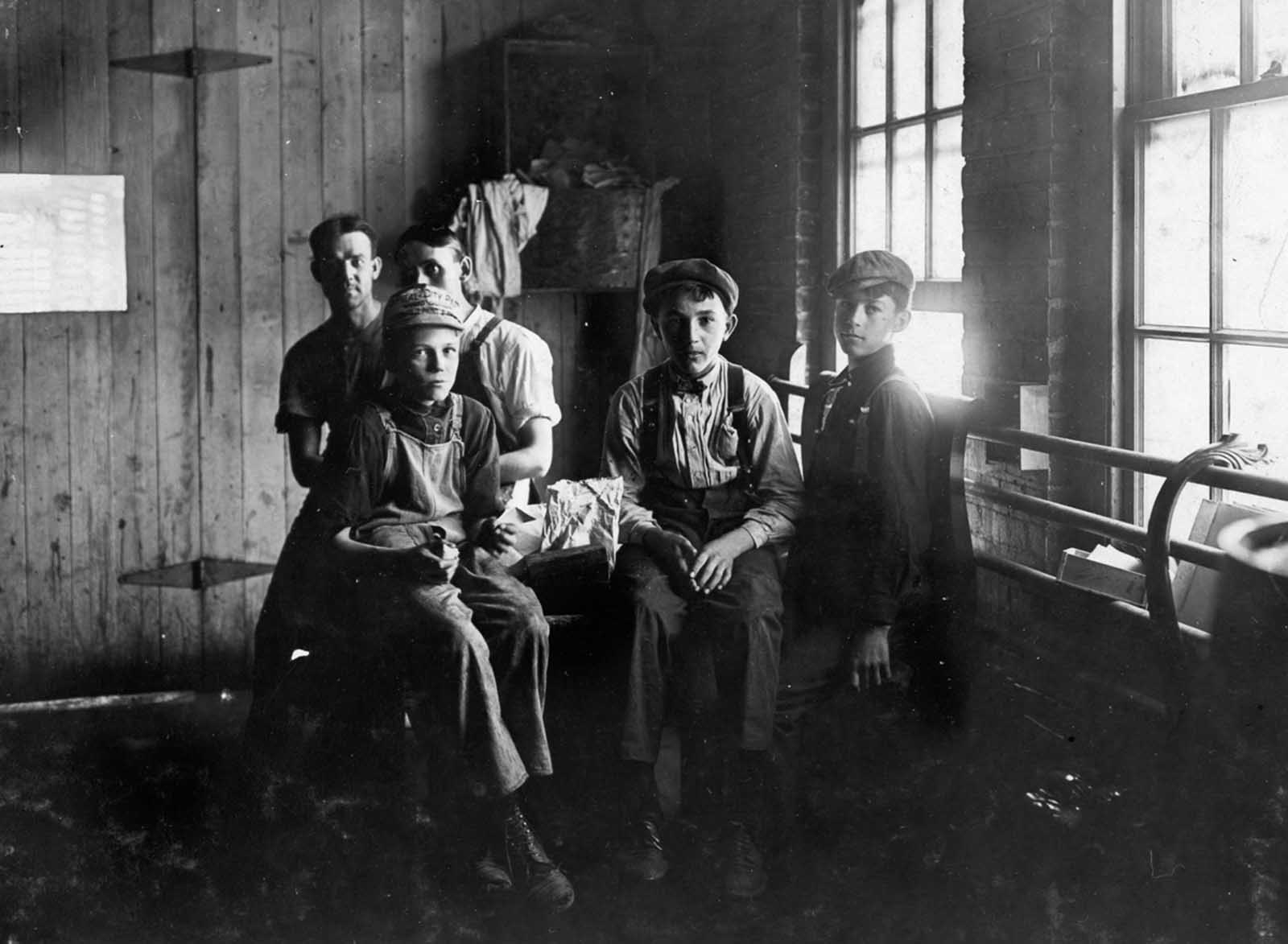
Noon Hour in an Indianapolis furniture factory, on a day in August of 1908.

The photographer found the Arnao family, children and all, working on Hichens farm in Cannon, Delaware, on May 28, 1910. Their children are 3, 6, and 9 years old.
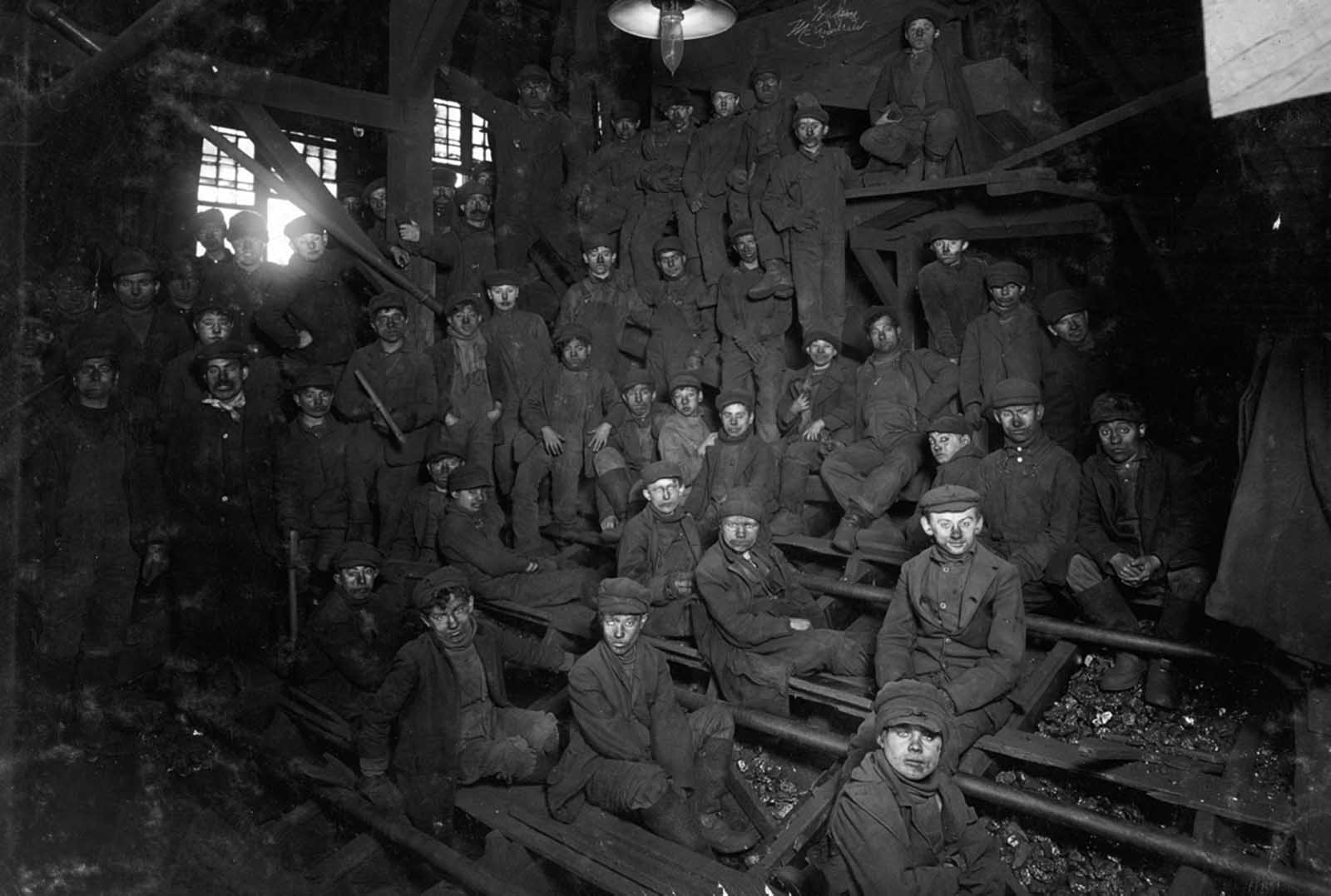
Noon hour in the Ewen Breaker, Pennsylvania Coal Co., in South Pittston, Pennsylvania, in January of 1911.
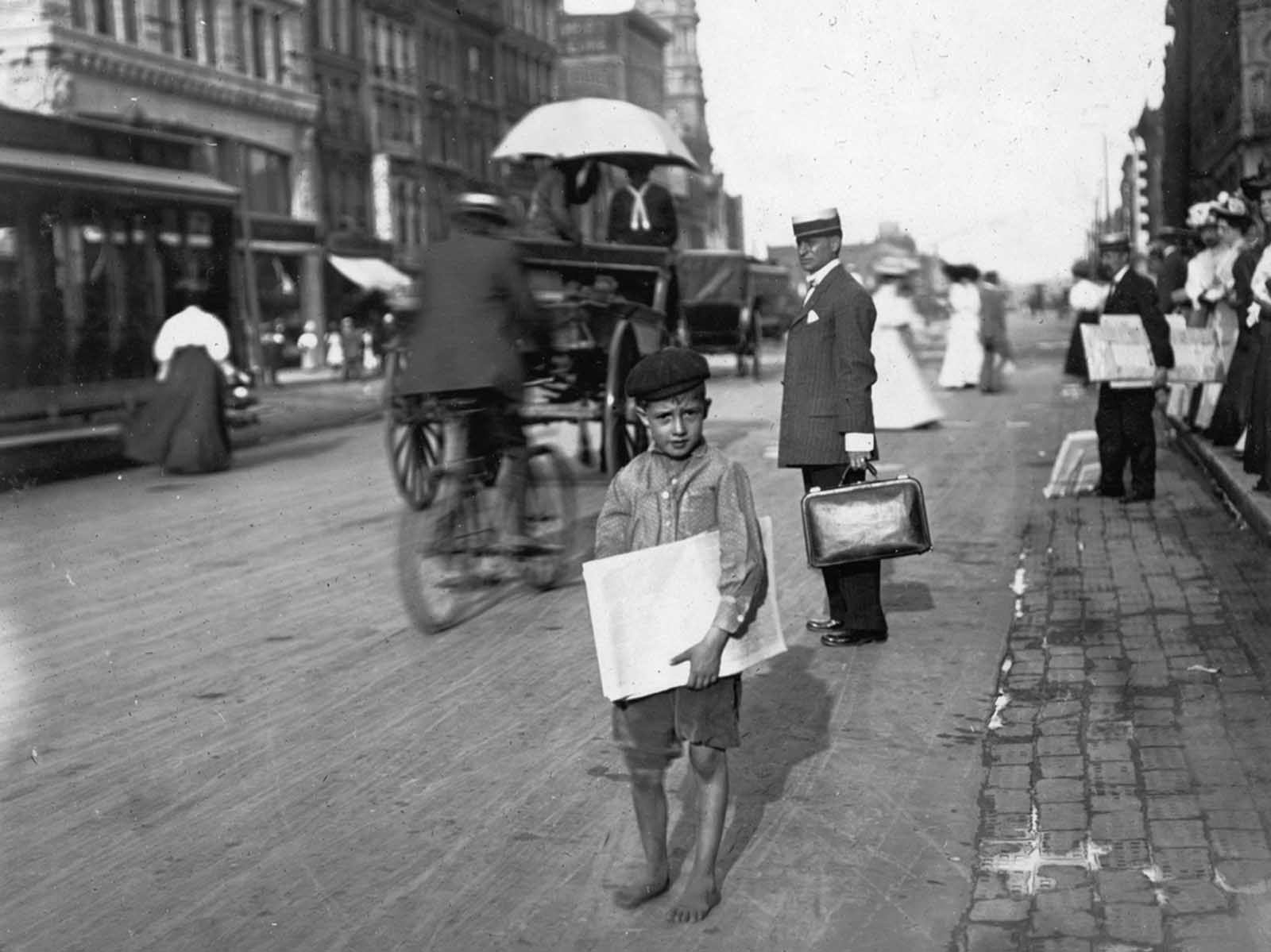
A barefoot Indianapolis newsie in August of 1908.

A 10-year-old spinner at the Rhodes Mfg. Co. takes a momentary glimpse of the outside world. She said she had been working there for more than a year. Photographed in Lincolnton, North Carolina, in November of 1908.
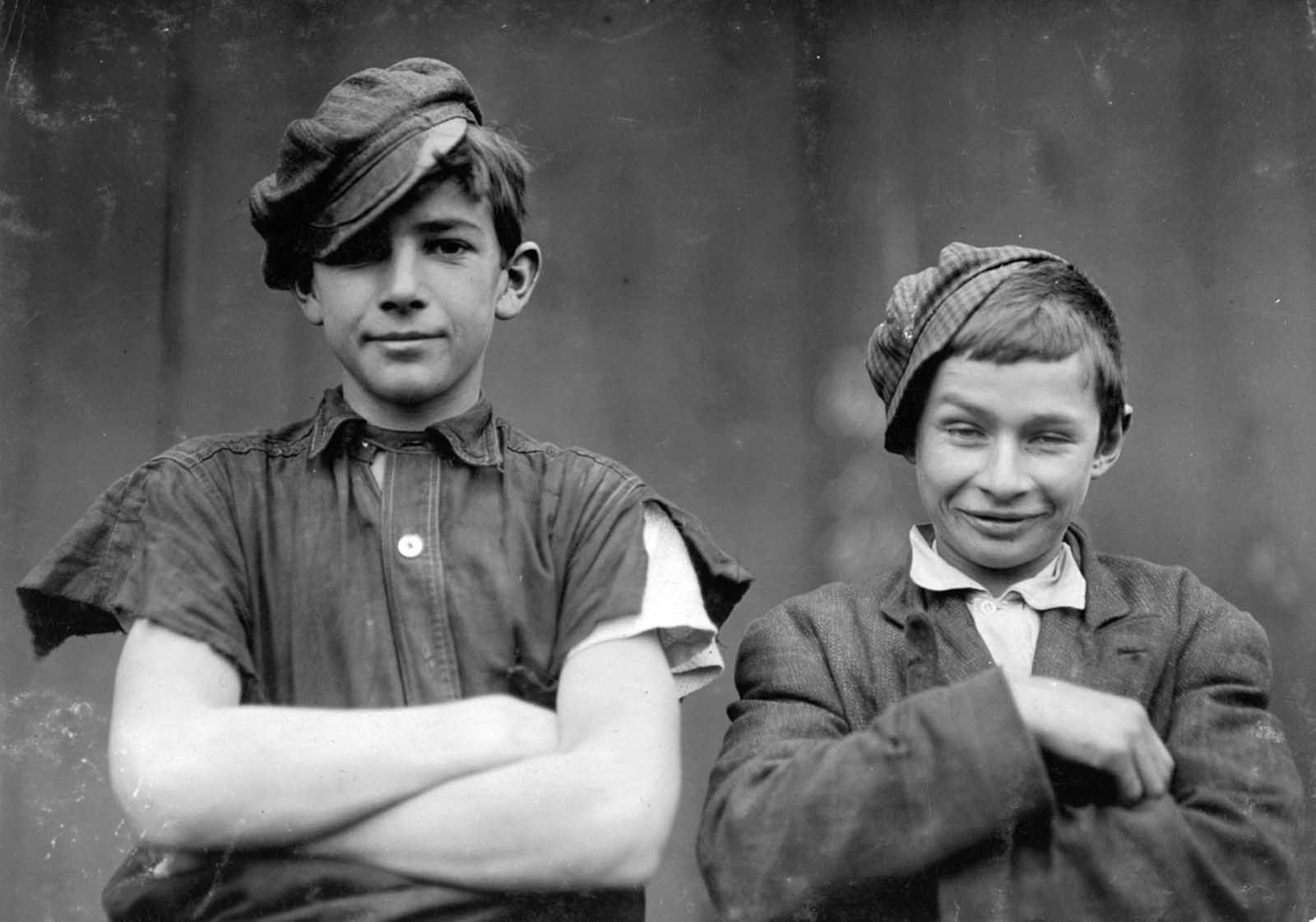
Two of the boys on the night shift in the More-Jones Glass Co., in Bridgeton, New Jersey, in November of 1909.

A young newsie asleep on a set of stairs with his papers, in Jersey City, New Jersey, in November of 1912.
(Photo credit: Lewis Hine / Library of Congress).