
There’s a certain kind of television episode that doesn’t feel old. Not because it aged well, but because it never stopped aging. It keeps mutating, like a radioactive metaphor buried in a salt mine that still leaks into the water supply. That’s what The Brain Center at Whipple’s is.
It first aired in 1964, but it doesn’t feel like 1964. It feels like a documentary shot in the future and somehow broadcast in reverse. Rod Serling didn’t just write an episode about machines replacing people—he wrote the first draft of the job market in 2025.

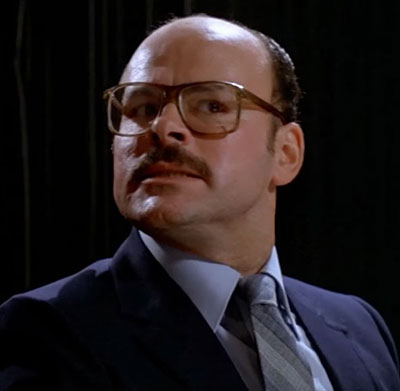
Wallace V. Whipple is a man who loves machines more than people. He believes the future belongs to devices with blinking lights and wires that don’t take bathroom breaks. He replaces his factory workers with robots. He replaces his secretary. He replaces his friends, his instincts, his legacy—until eventually, he himself is replaced. By the end, Whipple is a portrait of redundancy: a man sitting in an empty office, talking to himself until even that is too inefficient to be tolerated.
The episode isn’t subtle and it doesn’t pretend to be. That bluntness is its strength. It keeps the moral question blunt and direct: what happens when we prioritize output over meaning? When efficiency becomes an ethic rather than a tool? Whipple isn’t a cartoon villain. He’s a very modern figure: the executive whose metrics look beautiful on a spreadsheet and tragic in human terms.
We like to think the danger of AI is exotic: systems so complex we can’t comprehend them, logic so pure it becomes lethal. But Serling’s point — and the terrifyingly modern one — is simpler: it’s not the machines that are dangerous. It’s the people who want to be them.

Whipple confuses productivity with righteousness. He equates the removal of friction with moral progress. “Tell me, Mr. Whipple,” one character asks, “ever occur to you that you might be trading efficiency for pride?” It’s an economy of soul-versus-output. He answers, in effect, that pride is inefficient. Pride is a cost to be minimized.
Fast-forward to today. AI writes emails and legal summaries. AI evaluates résumés and drafts the narratives that once required human judgment. It can simulate empathy in short, plausible bursts. That simulation often passes for compassion, for competence, for counsel. And for every tool it replaces, there’s a Whipple somewhere who points and says, “See? It’s working.”
Maybe it is. The future might be a series of increasingly accurate simulations of who we used to be. But accuracy isn’t the same as meaning. A photorealistic recreation of sorrow isn’t sorrow. An algorithmically optimized career path is still a path someone else drew for you.

There’s a particular, small cruelty embedded in the episode that becomes unbearable in the present: the sound of a workplace emptied not by catastrophe but by choice. The factory becomes a mausoleum by consensus. The story doesn’t stage a massacre; it stages a migration toward cold efficiency that everyone — somehow, quietly — accepts. That’s the most corrosive thing. We didn’t get kicked out of the building. We were invited to leave, reassured by the promise of better margins and smoother operations. The machines didn’t have to win us over. We walked ourselves into the mothership.
Serling ends on a line that reads now like an indictment: “Too often, Man becomes clever instead of becoming wise.” We are cleverer than we’ve ever been. We can build systems that simulate judgment, craft narratives at scale, and manufacture presence on command. But wisdom — the capacity to reckon with consequence, to see the human cost on the other side of a quarterly report — is harder to automate, and rarer to cultivate.
If we aren’t careful, Whipple’s brain center won’t be confined to a single Midwest plant. It will be the architecture of the everyday. It will be the quiet replacement of presence with pattern, of jobs with processes, of risk with remote controls. Every templated conversation, every outsourced care task, every curated emotional byte is another tile in that cold mosaic.
And in that quiet, there will be a hollowing. Not dramatic. Not cinematic. Slow and patient and profoundly ordinary. The machines won’t need to overthrow us. We’ll do most of the work by mistaking clean lines for moral clarity.
The episode asks, in the blunt way only television from a certain era could: what will mourn us when we’re gone? Who will carry forward what we considered human? Serling’s answer—economically literal and morally chilling—is that unless we decide otherwise, no one will.
That’s the unsettling part. The machinery isn’t the main event. The main event is the moment we accept the machinery as the definition of better. And when that happens, the question we need to ask is not whether a machine can do a job, but whether doing fewer jobs will do anything to preserve the need to be human.