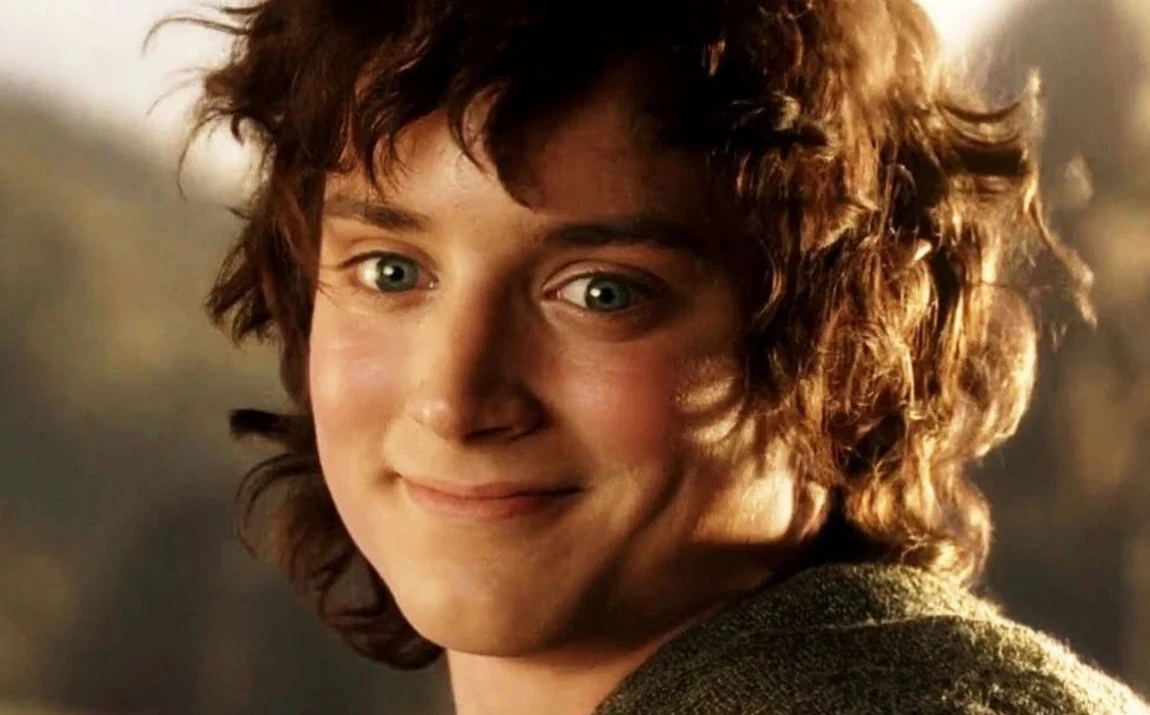
Before The Lord of the Rings transformed fantasy filmmaking and reshaped blockbuster cinema, the project was an enormous gamble. New Line Cinema had committed to producing three massive films simultaneously, filming them back to back in New Zealand, under the direction of Peter Jackson, a filmmaker best known at the time for cult horror titles rather than epic fantasy.
The scale was unprecedented. The risk was enormous. And for the actors auditioning, it was immediately clear that landing a role in The Lord of the Rings would not be like landing any other job.
Elijah Wood sensed that immediately.
He was already a working actor with recognizable roles in films like The Good Son, The Faculty, and Deep Impact, but Tolkien’s world represented something different. This was not simply another studio picture. It was a chance to be part of a cinematic event that felt both timeless and transformative. Wood later admitted that when he heard Jackson was adapting Tolkien’s novels, the project felt “significant” in a way that few others ever had.
Rather than approaching the audition as a routine professional obligation, Wood approached it as a personal mission.
A Casting Process Unlike Any Other
In the late 1990s, the audition process was rigid and traditional. Actors went to casting offices, stood against neutral walls, and read their lines on videotape. There were no smartphones, no personal editing software, and no expectation that performers would produce their own material. Self-taping was not an industry norm. It was unusual and sometimes even discouraged.
Wood, however, believed that a conventional audition would not capture what made Frodo Baggins unique. Frodo was not a standard action hero. He was a quiet, emotionally driven character burdened by fear, loyalty, moral conflict, and growing isolation. Wood felt that the character required context and atmosphere to truly come alive.
So instead of walking into a casting room, he decided to create something far more ambitious.
Turning an Audition Into a Short Film

Wood began by working with a dialect coach to find Frodo’s voice. He studied illustrated Tolkien guides to understand how hobbits had historically been imagined by artists and readers. These details were not just cosmetic. They informed how Wood imagined Frodo’s posture, movement, and emotional presence.
He then visited Western Costume in the San Fernando Valley, where he rented period-style clothing resembling classic hobbit attire. The outfit included knee-length trousers, suspenders, and a waistcoat. Years later, Wood would note how closely this improvised look resembled what eventually appeared in the finished films.
Instead of filming at home, Wood and a small team went into Griffith Park. They staged multiple scenes inspired by Frodo’s emotional arc throughout the story, capturing different moods and psychological stages. They filmed with multiple angles and treated the footage like a real production rather than a simple audition tape.
A friend who was also a professional filmmaker edited the footage together into a polished short film. The finished tape was cohesive, cinematic, and deeply personal. It did not feel like a reading. It felt like a character study.
Crossing an Ocean
Wood personally delivered the tape to casting director Victoria Burrows. From there, the VHS was shipped overseas to Peter Jackson, who was working in England at the time. Then came silence.
Months passed with no word.
Eventually, Wood received notice that Jackson and his producing partner Fran Walsh were coming to Los Angeles and wanted to meet him in person. When Wood arrived at the casting office, he learned that his tape had resonated strongly with the creative team. The emotional vulnerability and sincerity he hoped to communicate had come through clearly.
In that moment, Wood realized his unconventional decision had paid off.
The Phone Call That Changed Everything

Not long after the callback, Wood’s agent told him to remain near his phone. Another call was coming.
When it finally arrived, it was from Peter Jackson himself. In a brief but unforgettable conversation, Jackson offered Wood the role of Frodo Baggins.
There were no grand speeches. Just a simple question.
Would he like to come to New Zealand and play Frodo?
Wood accepted immediately.
The role would carry him into global fame and cement his place in cinematic history. Frodo became one of the most recognizable heroes of modern film, and The Lord of the Rings went on to earn billions of dollars and dozens of Academy Award nominations, including a historic Best Picture win for The Return of the King.
Why Wood’s Decision Still Matters
Today, self-taped auditions are standard practice. Actors routinely produce their own reels, edit footage, and submit elaborate digital auditions. In many ways, the industry has shifted to match what Wood instinctively did decades earlier.
His approach demonstrated that preparation and imagination can redefine opportunity. Wood did not simply show up to audition. He showed what the character could be. He presented Frodo as a living person rather than a set of lines.
It is a reminder that sometimes the most effective way to stand out is not by trying to be different, but by caring more deeply than anyone else in the room.
Elijah Wood did not hack the casting system by exploiting loopholes or shortcuts. He hacked it by doing something far rarer.
He treated an audition like art.
And in doing so, he earned his place in Middle-earth.