
Adolf Hitler shakes hands with Paul von Hindenburg at the opening of the new Reichstag in Potsdam, March 21, 1933
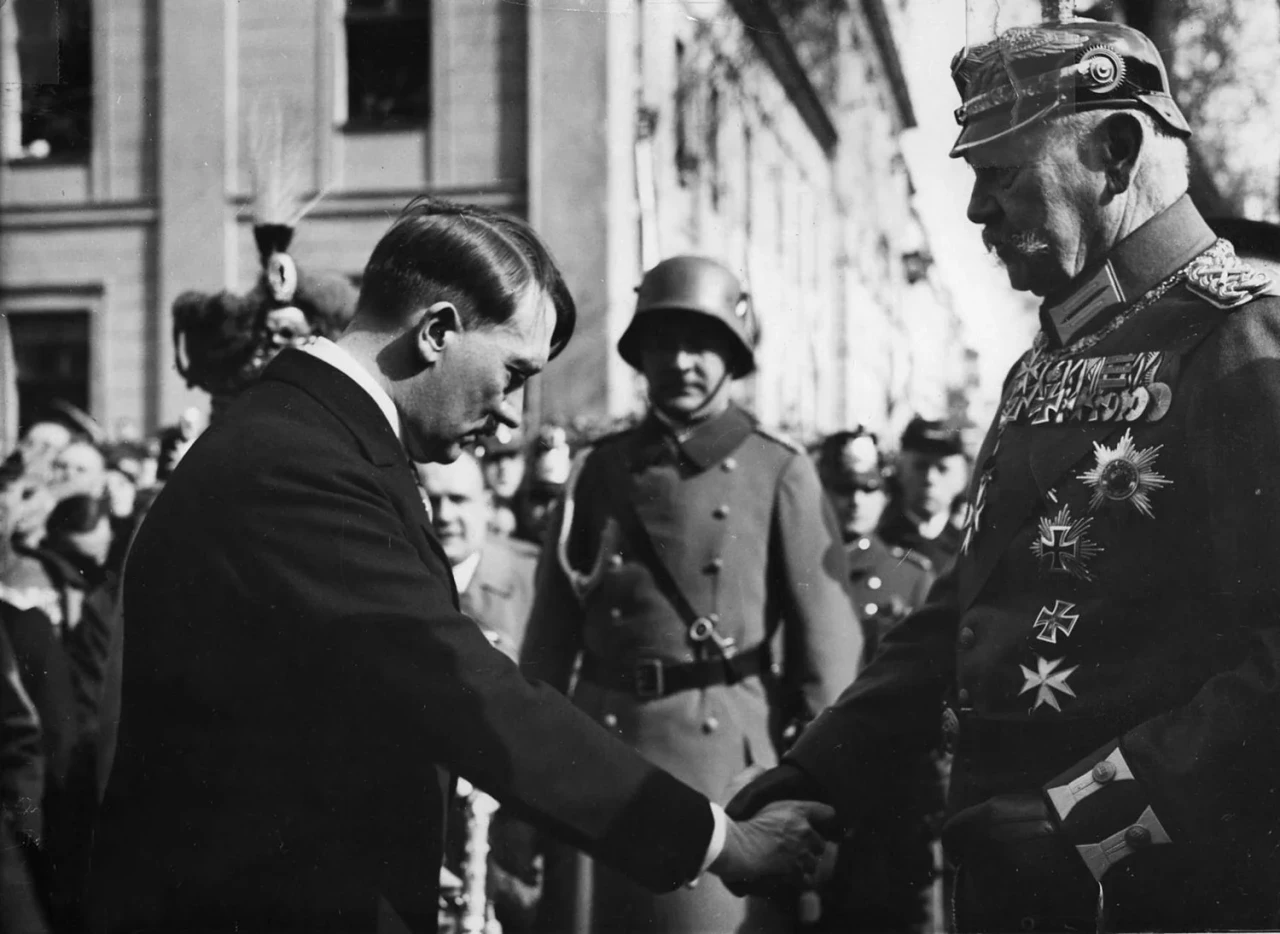
On March 21, 1933, Adolf Hitler walked toward President Paul von Hindenburg and bowed deeply before shaking his hand.
The symbolism was almost too perfect.
Hindenburg was 85 years old, a field marshal from Imperial Germany, hero of the First World War and living embodiment of the old conservative order. Hitler was the 43-year-old leader of a radical political movement that had spent years fighting its way into the German mainstream.
Now they were standing together.
The occasion became known as the Day of Potsdam, a carefully staged ceremony marking the opening of the newly elected Reichstag. The actual Reichstag building in Berlin had burned less than a month earlier, so the main ceremony took place at Potsdam’s Garrison Church, a place saturated with Prussian military tradition.
Hitler understood exactly what the setting offered him.
He arrived in formal civilian clothing rather than his usual Nazi Party uniform. He bowed deferentially before Hindenburg. The message was designed for Germany’s conservatives, military officers, aristocrats and middle classes: the Nazi revolution was not here to destroy the old Germany. It was supposedly here to join with it.
That handshake was political theater.
And it worked.
To conservative Germans nervous about Hitler’s radicalism, the image suggested continuity. Hindenburg seemed to represent the Germany of Bismarck, the Kaiser and the Prussian officer corps. Hitler could present himself as the energetic new leader who would restore national greatness while respecting those traditions.
But the reassuring image concealed what was already happening.
Since becoming chancellor on January 30, Hitler had moved rapidly to dismantle German democracy. After the Reichstag fire, the government suspended fundamental civil liberties. Communists were arrested in large numbers. Political opponents were intimidated, beaten and imprisoned. The Nazis were turning the machinery of the state against anyone capable of resisting them.
And just two days after Hitler bowed before Hindenburg, the Reichstag passed the Enabling Act.
That law allowed Hitler’s government to enact legislation without parliamentary approval, effectively giving him the legal mechanism to establish a dictatorship.
That is what makes the handshake at Potsdam so remarkable.
It looks like the old Germany welcoming the new.
In reality, the new Germany was preparing to swallow the old one.
Hindenburg would die the following year. Hitler then merged the powers of president and chancellor and declared himself Führer.
The generals, conservatives and aristocrats who believed they could contain Hitler would discover that they had badly misunderstood the relationship.
They thought they were bringing him into their system.
He was taking over theirs.
Devastated North Koreans flock to the statue of their nation’s founder Kim il sung after the announcment of this death 1994
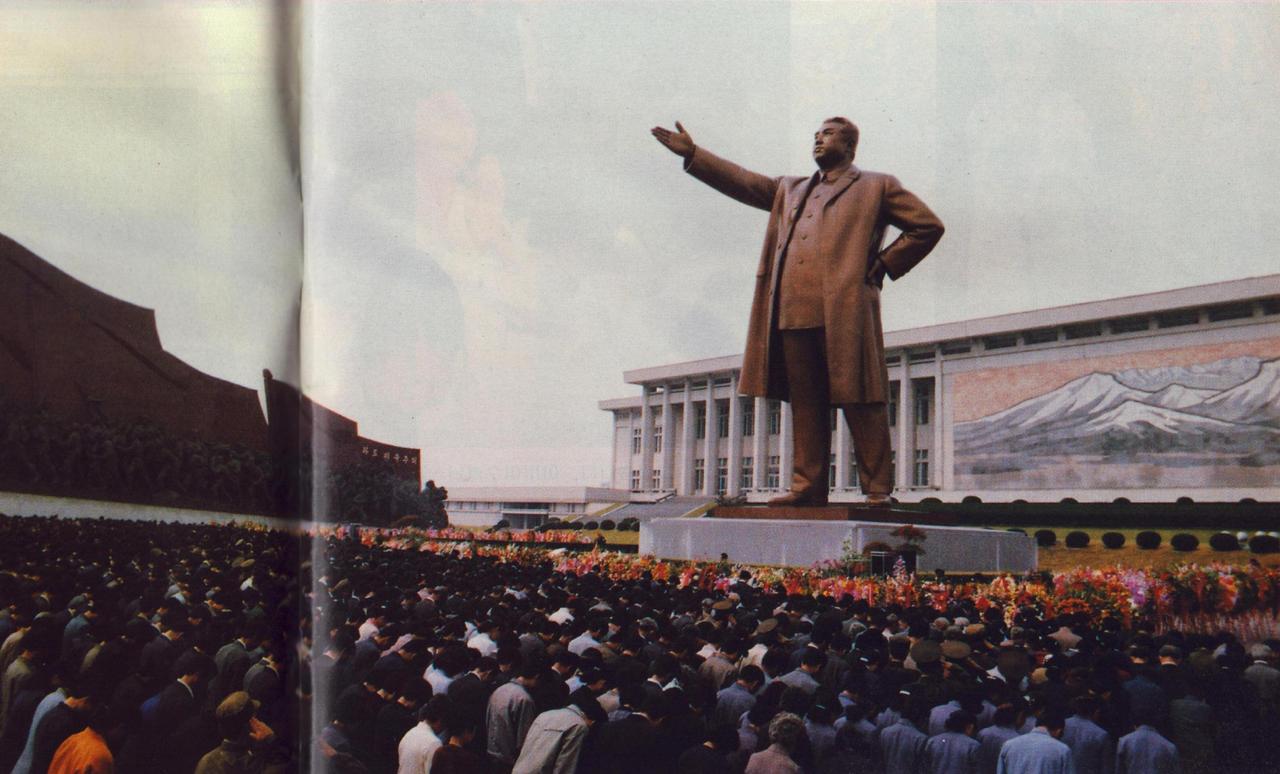
When Kim Il Sung died on July 8, 1994, North Koreans poured into the streets.
They gathered beneath enormous statues of the Great Leader, sobbing, screaming, collapsing onto the pavement and reaching toward his image as though they had lost a parent.
The obvious question is: How much of it was real?
Certainly, some of it was performance. North Korea was already one of the most tightly controlled societies on Earth, and public loyalty mattered. When everyone around you is wailing for the dead leader, standing quietly with your hands in your pockets could be dangerous.
But dismissing the entire spectacle as forced theater misses something much stranger.
Kim Il Sung had ruled North Korea for nearly half a century. For most people alive in 1994, there had never been another leader. His portrait hung in homes, schools and workplaces. Children learned his mythology almost from the moment they could speak. Newspapers praised him. Radio praised him. Teachers praised him.
And there was virtually no competing version of reality.
He wasn’t presented as a politician. He was the father of the nation, the revolutionary hero, the protector who had supposedly delivered his people from foreign enemies and built the country around them.
Imagine hearing that from every authority figure in your life from childhood onward, with almost no access to information telling you otherwise.
At some point, propaganda and genuine belief become difficult to separate.
Some people were probably pretending. Some were frightened. Some were simply swept up by the crowd.
And some almost certainly believed they had just lost the most important human being in the world.
Those things can all be true at once.
Crowds amplify emotion, too. One person begins sobbing, another follows, and soon thousands of people are feeding off one another’s grief. Add monumental statues, decades of political mythology and the sudden death of the seemingly permanent figure at the center of your society, and you get something approaching mass emotional combustion.
There was also genuine uncertainty beneath the grief. The Soviet Union had collapsed, North Korea’s economy was deteriorating, and the catastrophic famine known as the Arduous March was approaching.
Kim Il Sung had been presented as stability itself.
Then suddenly he was gone.
Perhaps that’s the most unsettling part.
A successful personality cult doesn’t merely force people to pretend that the leader is extraordinary.
Eventually, some of them don’t have to pretend.
Iraqi dictator Saddam Hussein feigns tears during his infamous 1979 purge of the Ba’ath party, in which 68 high-ranking members were publicly accused of treason & arrested on the spot. Saddam, who’d been de facto ruler of Iraq for years, replaced President Al-Bakr in a coup 6 days earlier

On July 22, 1979, Saddam Hussein assembled the leadership of Iraq’s ruling Ba’ath Party in a hall in Baghdad.
He had been president for six days.
But Saddam had been the power behind the throne for years, building control over Iraq’s security apparatus while the aging President Ahmed Hassan al-Bakr gradually faded into the background. Now al-Bakr was gone, Saddam had the title, and he was about to demonstrate what that meant.
The meeting was filmed.
That detail matters.
A senior Ba’athist official, Muhyi Abdul-Hussein Mashhadi, appeared before the assembled party leadership and confessed to participating in a Syrian-backed conspiracy against the Iraqi government. Then came the names.
One after another.
Sixty-eight alleged conspirators were identified. As each man’s name was called, guards removed him from the room.
Imagine sitting there.
You don’t know how long the list is. You don’t know whether your name is on it. The man sitting three seats away disappears. Then another. Then another.
And Saddam is watching.
At moments during the proceedings, he appears emotional, wiping his eyes as though devastated that trusted comrades could betray the revolution. Whether those tears were genuine almost doesn’t matter. The performance communicated something more important: Saddam wasn’t portraying himself as a man eliminating rivals. He was portraying himself as the wounded leader reluctantly discovering traitors in his own family.
Meanwhile, the men who remained in the hall began applauding, chanting and declaring their loyalty.
What else do you do?
Every name called makes the survivors more enthusiastic.
This is where the episode becomes something beyond an ordinary political purge. Saddam wasn’t simply removing enemies. He was making the rest of the leadership participate psychologically in what was happening.
Those arrested were later tried for treason. Twenty-two were reportedly sentenced to death, with contemporary accounts commonly putting the number actually executed at 21. Some surviving Ba’ath Party members were reportedly made to participate in executing their former comrades.
The message was difficult to misunderstand.
Your position wouldn’t save you.
Your history with the party wouldn’t save you.
And friendship with Saddam certainly wouldn’t save you.
The safest place in Saddam Hussein’s Iraq was wherever Saddam Hussein wanted you to be standing.
The purge helped transform what had been an authoritarian party dictatorship into something much more personal.
From that point forward, everyone in the room understood the new political system.
Saddam wasn’t merely the president.
Saddam was the man who decided who left the room.
Jewish-Nazi collaborator Ans van Dijk stands trial for treason. During the war, she baited fellow Jews out of hiding and got them arrested by the Gestapo. Amsterdam, 1947
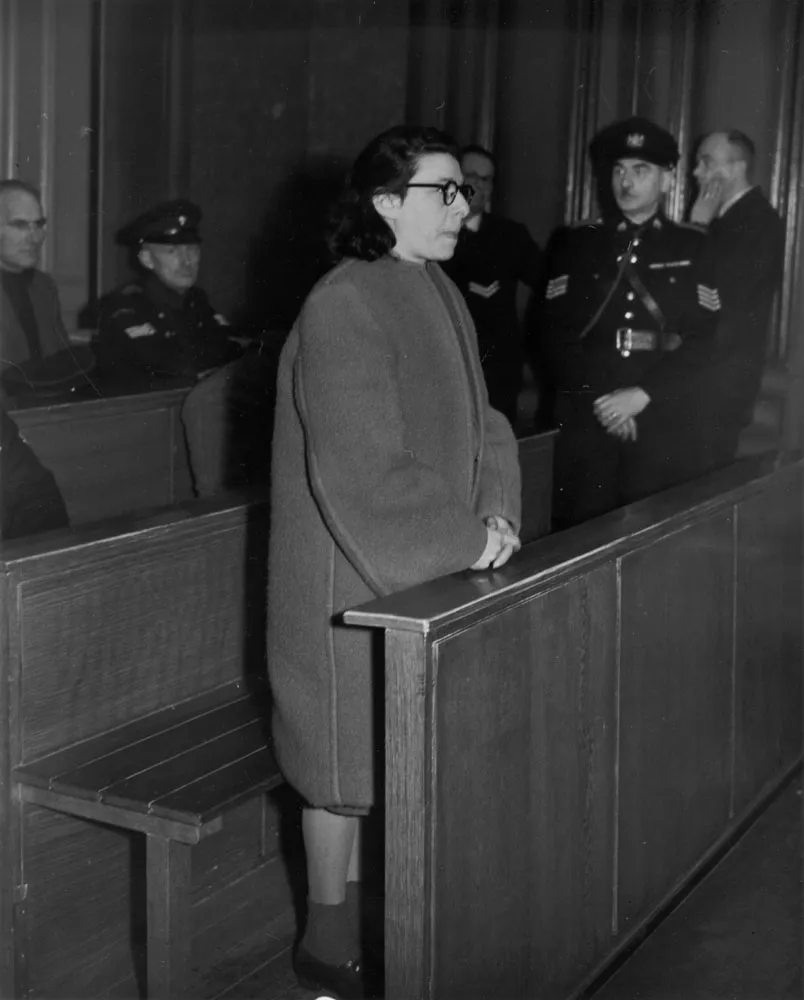
When Ans van Dijk stood before a Dutch court in 1947, there was something about her case that made it especially difficult to comprehend.
She was Jewish.
And during the Nazi occupation of the Netherlands, she helped hunt other Jews.
Van Dijk had initially been a victim herself. After the Germans occupied the Netherlands, anti-Jewish laws destroyed her livelihood and forced her into hiding. In 1943, she was arrested by the Sicherheitsdienst, the Nazi security service.
Then she was given a choice that would define the rest of her life.
Cooperate or face deportation.
Van Dijk cooperated.
But what began as an act of self-preservation became something much darker. She became an informant, using the fact that she was Jewish to gain the trust of people hiding from the Nazis.
She could approach frightened families in a way a German officer never could. She reportedly offered help, promised hiding places or pretended to be part of the underground. Once people trusted her, she passed their locations to the Nazi security apparatus.
Then the Germans came.
More than a hundred people have been linked to her betrayals, the overwhelming majority of them Jews. Many were deported to concentration and extermination camps, and dozens did not survive the war.
And this is where the story becomes morally uncomfortable.
Van Dijk had originally cooperated because she was terrified of being deported herself. Under Nazi occupation, that was not an irrational fear. Deportation for a Dutch Jew could easily mean death.
But there is a point where survival under coercion becomes active collaboration, and Dutch prosecutors believed Van Dijk had crossed it long before the war ended.
She didn’t simply answer questions after being arrested. She repeatedly gained people’s confidence and delivered them into the hands of the regime hunting them.
After the liberation of the Netherlands, Van Dijk was arrested and charged with treason. Her Jewish identity did not protect her from the enormous anger surrounding her case. If anything, it made her actions seem even more horrifying to many of her contemporaries.
She was convicted and sentenced to death.
On January 14, 1948, Ans van Dijk was executed by firing squad.
She would become the only Dutch woman executed by the state for wartime collaboration.
Psychiatric Hospital, 1938
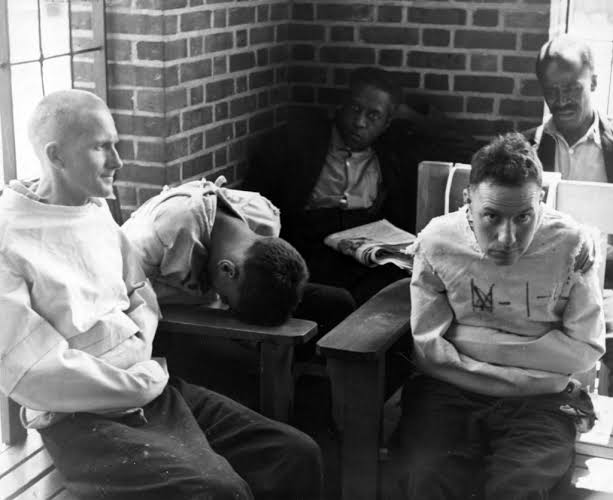
Psychiatric Hospital, 1938
There is something unsettling about photographs from psychiatric hospitals in this era, because you’re looking at a world where the ability to treat severe mental illness was extraordinarily limited.
In 1938, there were no modern antipsychotics. No SSRIs. Lithium had not yet become an established psychiatric treatment. Doctors could diagnose schizophrenia, severe depression, mania and psychosis, but for many patients they had remarkably few reliable ways to make those conditions better.
So the institution itself often became the treatment.
Patients might spend months, years, or even decades inside enormous state hospitals. Some genuinely needed a protected environment because they were severely ill or unable to care for themselves. Others ended up institutionalized for conditions that today might be managed successfully while living in the community.
And the treatments could be formidable.
The 1930s saw the rise of insulin coma therapy, in which patients were deliberately given enough insulin to produce hypoglycemic comas. Metrazol was used to induce violent seizures. Electroconvulsive therapy appeared at the end of the decade. The first prefrontal lobotomies had already been performed.
Many of the physicians involved weren’t necessarily trying to be cruel. They were confronting devastating illnesses with an extremely primitive toolbox, and when something appeared to produce improvement, even occasionally, medicine could embrace it with an enthusiasm that looks horrifying in retrospect.
Then there were the hospitals themselves.
Overcrowding became a chronic problem in many institutions. Patients could be restrained, isolated or heavily sedated. Straitjackets could prevent someone who was severely agitated from hurting themselves or others, but in understaffed institutions restraints could also become a means of simply managing difficult patients. Privacy was minimal. Daily life could become an endless routine of meals, wards, corridors and waiting.
Look at the men in a photograph like this and another uncomfortable reality emerges: we don’t know what happened to them afterward.
One might have been experiencing schizophrenia. Another severe depression. Another an intellectual disability, neurological disorder or condition that would be readily treatable today. The photograph doesn’t tell us, and their appearances cannot diagnose them.
But it captures a moment just before psychiatry began changing dramatically.
Within about 15 years, chlorpromazine would introduce the age of modern antipsychotic medication. Other psychiatric drugs followed, and enormous numbers of patients eventually left institutions that previous generations might never have escaped.
For someone suffering a severe psychiatric disorder in 1938, the tragedy wasn’t simply that medicine didn’t understand everything happening inside the mind.
It was that even when doctors understood that something was terribly wrong, they often had very little with which to fight it.