
The Sherpa Who Survived Six Days Alone on Everest
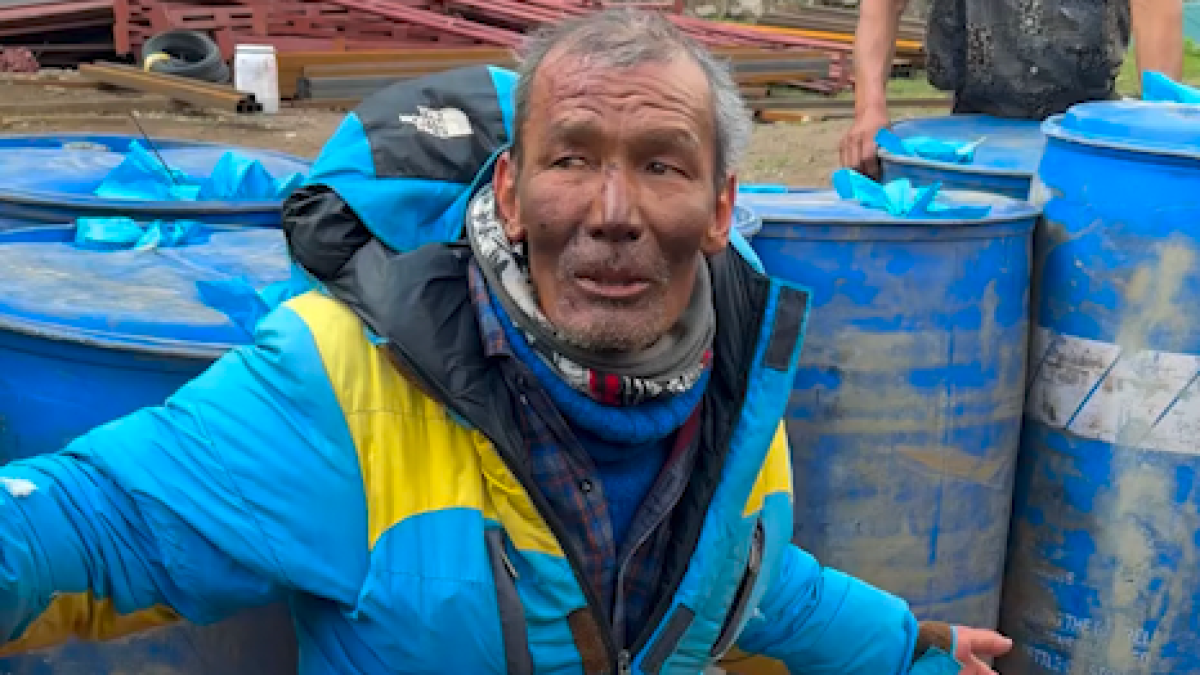
By the time Dawa Sherpa’s family began performing his funeral rites in Kathmandu, there seemed to be little reason to believe he was still alive.
He had last been seen on May 29, 2026, high on Mount Everest, somewhere above Camp Three at roughly 7,500 meters, or about 24,600 feet. Dawa was an experienced Nepali mountain guide, but experience only gets you so far at that altitude. He was exhausted, his supplemental oxygen had run out, and the climbing season was coming to an end.
One of the last people to see him was British climber Chris Thrall, who remembered Dawa sitting on his backpack above Camp Three. Thrall continued downward while helping another climber who was suffering from severe frostbite. When he looked back, Dawa didn’t appear to be moving.
Dawa later insisted that he hadn’t simply gotten lost. His oxygen had run out, and eventually he became physically unable to keep walking.
For the first two days, he said, he ate nothing. Desperate for water, he began chewing ice despite the pain it caused his teeth. Then he searched his pockets and discovered a small stash of chocolates. They became essentially his only source of calories as he tried to work his way down the mountain.
Then things got even worse.
While descending through the Khumbu Icefall, Dawa fell into a crevasse. He was trapped deep inside it, injured and unable to climb the smooth walls surrounding him. According to later accounts, he remained there for roughly two and a half days.
There was little he could do except wait and wonder whether anyone would find him. At one point he could hear a helicopter searching overhead, but from inside the crevasse there was no way for the crew to see him.
Then something happened that would normally be considered another disaster on Everest.
An avalanche came down.
Snow poured into the crevasse, but instead of burying Dawa, it partially filled the hole. Suddenly the floor beneath him was higher. Dawa realized that the avalanche had created something resembling an escape route.
He began climbing.
Using the accumulated snow, ice and his crampons for leverage, Dawa slowly managed to pull himself out. Once back on the surface, he found ropes that helped him continue downward.
He was still nowhere near safe. He was dehydrated, frostbitten and had suffered a fractured bone. Much of the infrastructure normally used by climbers in the Khumbu Icefall was also being removed because the Everest climbing season was ending.
So Dawa kept moving however he could.
He walked when he could walk. He slid when he could slide. Eventually, he crawled.
Meanwhile, his family had begun accepting what seemed inevitable. After days without any sign of him, they believed he had died somewhere on Everest. Buddhist funeral rites had already begun in Kathmandu.
Then, six days after Dawa had last been seen, members of a mountain clean-up crew spotted something moving near the Khumbu Icefall.
It was Dawa.
He was crawling down the mountain toward Base Camp.
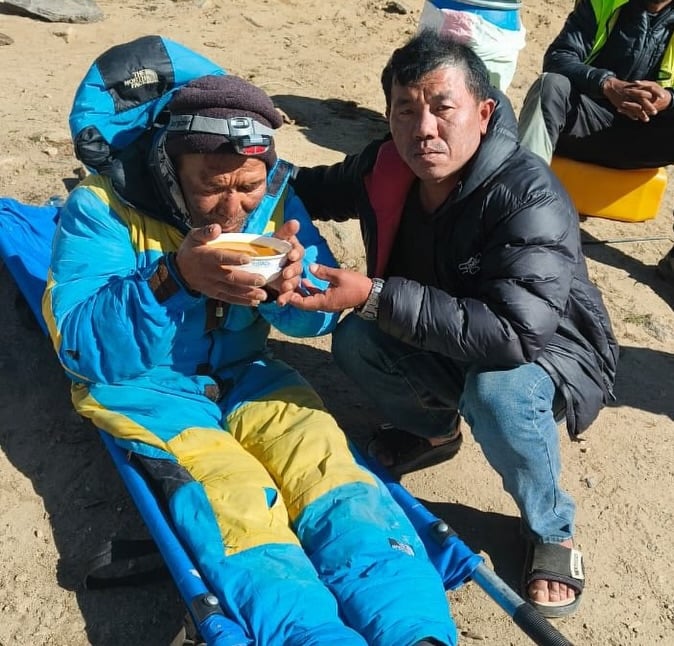
The crew helped carry him down, and he was eventually evacuated by helicopter to a hospital in Kathmandu, where doctors treated him for dehydration, frostbite and his fracture.
Looking back on the ordeal, Dawa admitted that there were moments when he was convinced he was going to die. Few people could have blamed him. He had been stranded at extreme altitude without supplemental oxygen, survived on scraps of chocolate and ice, fallen into a crevasse, spent days trapped inside it and then escaped only because an avalanche happened to dump enough snow beneath him to give him a way out.
Back home, his family had already begun mourning him.
Instead, six days after disappearing on the world’s highest mountain, Dawa Sherpa crawled back into civilization alive.
The Miami Mother Who Tried to Hire a Hitman Through a Parody Website

In July 2023, the owner of a website called Rent-A-Hitman received a request that immediately stood out.
The person filling out the form wanted someone killed. That wasn’t necessarily unusual. Despite the name, Rent-A-Hitman isn’t actually a murder-for-hire service. It’s a parody website, and its owner, Robert Innes, had grown accustomed to receiving messages from people who somehow believed it was real.
But this request was different.
The intended target was a three-year-old boy.
According to police, the request came from 18-year-old Miami resident Jazmin Paez, the child’s mother. She didn’t just make a vague inquiry. Authorities said she supplied a recent photograph of her son, his name and the address where he was living with his grandmother. She also indicated that she wanted the job completed within days.

Asked on the website why she wanted the service, Paez allegedly wrote that she wanted “to get something done once and for all.” She also asked that her son be taken “far, far, far away” and possibly killed as soon as possible.
Innes realized that this wasn’t something he could dismiss as someone making a sick joke. The information about the child was specific enough to be verified, so he contacted law enforcement.
Miami-Dade police began investigating and found the boy alive at the address Paez had provided. His grandmother confirmed his identity. Even more disturbing, according to the arrest report, the photograph submitted to the website was recent: the grandmother said she had taken it just the day before and sent it to Paez.
Investigators then decided to find out how serious Paez actually was.
A detective contacted her while posing as the hitman she believed she had hired. Police said Paez confirmed that she wanted the killing carried out and agreed to pay $3,000.
She was arrested that night.
The case was bizarre enough on its own, but the website involved has an equally strange history. Rent-A-Hitman wasn’t originally created as a sting operation. Innes registered the domain in 2005 for a cybersecurity business venture. When the business failed, he kept the domain and eventually discovered that people were visiting it while apparently looking for actual contract killers.
Rather than shut it down, he turned it into an elaborate parody. The site advertised fictional “hitmen,” made jokes about complying with the federal HIPAA privacy law and included obviously ridiculous testimonials.
Yet people kept trying to hire killers through it.
Innes began forwarding requests that appeared credible to law enforcement, turning what began as a failed business website into an accidental trap for people allegedly attempting to arrange murders.
Paez’s case eventually took nearly three years to resolve.
In March 2026, she pleaded guilty to solicitation of first-degree murder, unlawful use of a communications device and tampering with evidence. Despite facing the possibility of decades in prison, she received no additional jail time under a plea agreement.
Instead, she was sentenced to two years of community control followed by 12 years of probation and was ordered to undergo behavioral therapy. During the proceedings, Paez stated that she had been diagnosed with schizophrenia.
Her parental rights had already been terminated. Her son was adopted by Paez’s mother, the same grandmother with whom he had been living when the murder request was submitted. Paez is prohibited from contacting him until her probation ends in 2040.
It is difficult to imagine a stranger intersection of the internet and real-world crime: a website created for a failed cybersecurity company became a joke about hiring assassins, and the joke became convincing enough that actual people allegedly began submitting murder requests.
In this case, believing the parody was real may have saved a three-year-old boy’s life.
The Scientist Who Dropped a Brick and Triggered a Nuclear Reaction
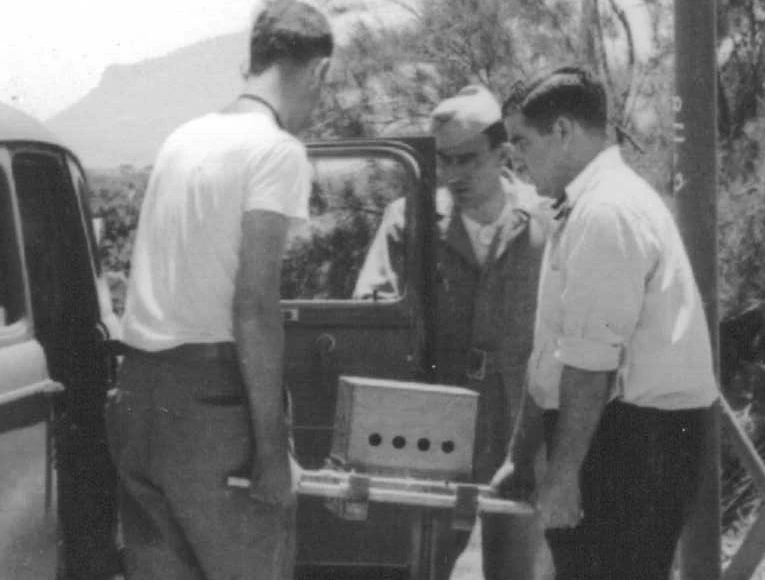
On the night of August 21, 1945, 24-year-old physicist Harry Daghlian was working alone at a remote laboratory at Los Alamos, New Mexico.
World War II had effectively just ended. Japan had announced its surrender less than a week earlier, and Daghlian had been part of the Manhattan Project, the secret American effort that produced the first atomic bombs. He had even helped prepare the plutonium core used in the Trinity nuclear test the previous month.
Now he was experimenting with another sphere of plutonium.

It was a 6.2-kilogram plutonium core originally intended for another atomic bomb. With the war ending, scientists at Los Alamos were using it for experiments designed to better understand exactly how close fissile material could be brought to criticality.
Daghlian’s experiment sounds almost unbelievably crude by modern standards. He was stacking 9.7-pound tungsten carbide bricks by hand around the plutonium sphere.
The bricks acted as neutron reflectors. Instead of allowing neutrons released by the plutonium to escape, they bounced some of them back toward the core. Every additional brick therefore pushed the assembly a little closer to sustaining a nuclear chain reaction.
Daghlian carefully added brick after brick while watching a neutron counter.
Eventually, he picked up another brick and moved it toward the top of the assembly. His instruments warned him that adding it would push the plutonium into a supercritical state.
Daghlian pulled his hand back.
The brick slipped.
It landed directly on top of the assembly.
In an instant, the plutonium went supercritical. A burst of nuclear fission erupted from the core, exposing Daghlian to an enormous dose of neutron radiation.
He immediately tried to knock the brick away but couldn’t. With the reaction continuing, Daghlian began pulling apart the tungsten carbide bricks with his bare hands until he managed to stop it.
By then, the damage had already been done.
Daghlian had received a massive dose of radiation. There was no explosion in the conventional sense and no mushroom cloud. The accident lasted only moments. But an invisible burst of radiation had passed through his body.
He was taken to the Los Alamos hospital, where the effects of acute radiation sickness gradually appeared. His hands became swollen and badly damaged. His condition continued to deteriorate despite intensive medical care.
His mother and sister were flown to New Mexico to be with him.
Twenty-five days after the accident, on September 15, 1945, Harry Daghlian died. He became the first known person to die from radiation exposure caused by a laboratory criticality accident.
Los Alamos responded by tightening its safety procedures. Criticality experiments were no longer supposed to be conducted by a scientist working alone, and researchers began considering ways to perform dangerous experiments remotely.
But the strangest part of the story was still to come.
The plutonium sphere that killed Daghlian remained at Los Alamos.
Less than a year later, on May 21, 1946, physicist Louis Slotin was conducting another criticality experiment using the exact same core. Slotin accidentally allowed two neutron-reflecting hemispheres to close around it, sending the plutonium supercritical once again.
Slotin received a fatal dose of radiation and died nine days later.
After two scientists had been killed in separate accidents involving the same 14-pound sphere of plutonium, the core acquired a name that has followed it ever since:
The Demon Core.
The accidents finally ended the practice of scientists manipulating near-critical assemblies by hand. Future experiments at Los Alamos were performed remotely, with researchers separated from the radioactive material by enormous distances.
The Demon Core itself never became a bomb. It was eventually melted down and recycled into other plutonium cores.
Harry Daghlian had been only 24 years old.
One dropped brick had turned an ordinary-looking metal sphere into a lethal nuclear reaction and helped teach the early atomic age one of its most important lessons: when working at the edge of criticality, the difference between a controlled experiment and a fatal accident can be measured in inches.