What happened to the film industry and why are people struggling?
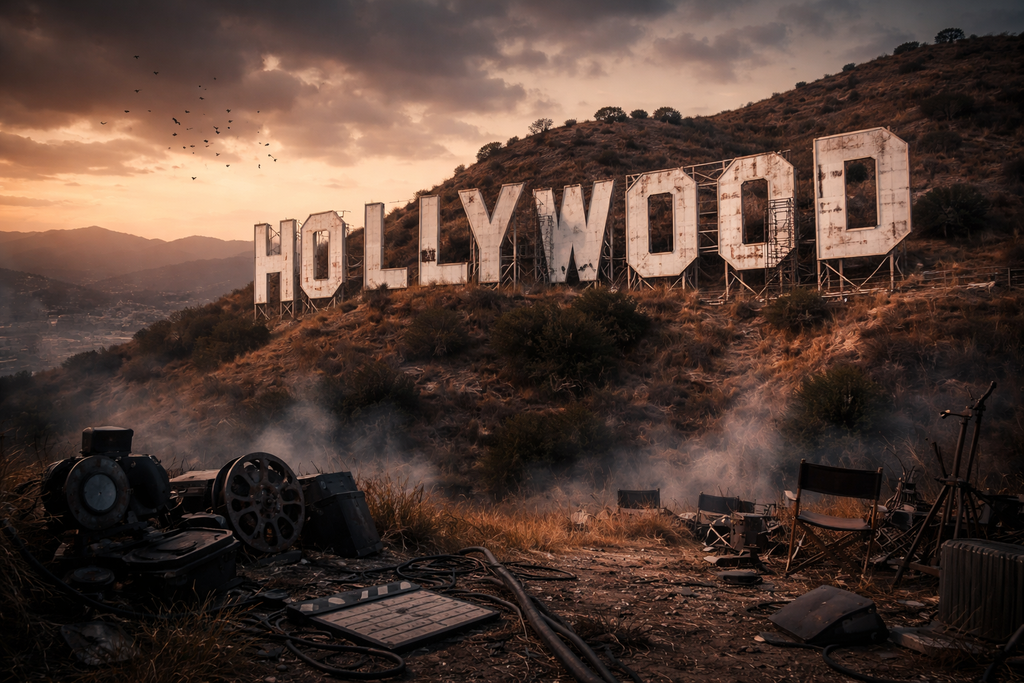
What’s happening to the film industry right now isn’t one single collapse—it’s more like a slow, uneven reshaping that’s leaving a lot of people behind.
For decades, the business ran on a pretty stable machine: studios made movies, theaters showed them, TV networks paid for content, and a huge ecosystem of writers, crew members, editors, and actors could make a living moving from project to project. It wasn’t easy, but it was predictable enough that you could build a career.
That machine got disrupted hard by streaming. When companies like Netflix proved that audiences would watch at home instead of going to theaters, every major studio panicked and tried to become a streaming platform overnight. The problem is, streaming doesn’t generate money the same way the old system did. Instead of big box office hits and syndication deals that paid out for years, you now have subscription revenue that gets spread thin across tons of content.
So studios started spending wildly to compete, with huge budgets and endless shows, but eventually realized the math didn’t work. That’s when the pullback started. Fewer projects get greenlit. Shows get canceled quickly. Movies are shelved for tax write-offs. The volume of work shrinks, and the stability disappears.
At the same time, theaters haven’t fully recovered. The pandemic broke the habit of going to the movies, and even now, audiences mostly show up for big spectacle films. Mid-budget movies, the kind that used to employ a lot of people steadily, have largely vanished. That middle layer of the industry was a major source of jobs, and it’s much thinner now.
Then you layer on the strikes. The writers’ and actors’ strikes in 2023 didn’t just pause production, they exposed how fragile things had become. Writers and actors were fighting over shrinking pay, lack of residuals from streaming, and fears about AI replacing parts of their work. Even after the strikes ended, production didn’t just bounce back. Studios stayed cautious, and a lot of projects never restarted.
For workers, this all translates into something pretty simple but brutal: less work, less consistency, and less pay. A lot of people in film don’t have salaries. They rely on jumping from gig to gig. When there are fewer gigs and longer gaps between them, it becomes really hard to survive. People who used to work year-round are now scrambling to piece together a few months of employment.
There’s also a quiet shift in how content is made. Studios are leaning toward safer bets, like sequels, franchises, and known intellectual property, because they’re terrified of losing money. That means fewer original projects, fewer risks, and fewer opportunities for new voices or mid-level creators to break in. At the same time, some production is moving to cheaper locations or being trimmed down with smaller crews, which cuts even more jobs.
And hanging over all of this is uncertainty. Nobody in the industry fully knows what the new normal is yet. Streaming hasn’t settled into a profitable model, theaters aren’t what they used to be, and technology, especially AI, is starting to change how content gets made. When an industry doesn’t know where it’s going, companies freeze, and workers feel that first.
So people working in film aren’t just struggling because Hollywood is dying. They’re struggling because the old system that supported their careers has been dismantled, and the new system hasn’t figured out how to support them yet.
How does power actually operate behind the scenes, beyond what we’re told?

Power doesn’t usually look like power when you’re up close to it. It doesn’t announce itself. It doesn’t need to. What most people see, the speeches, the votes, the press conferences, is the surface layer. The real action tends to happen before any of that, in the quiet shaping of what’s even possible to begin with.
Take politics. By the time a bill is being debated publicly, the outcome is often already heavily influenced. Lobbyists, donors, industry groups, and political operatives have spent months or years refining language, negotiating trade-offs, and deciding what will and won’t be included. It’s not always some cartoon version of corruption. A lot of it happens through relationships. People who went to the same schools, worked in the same agencies, rotated through the same consulting firms. There’s a shared understanding of how things get done, and if you’re outside that network, you’re not even in the room where those decisions take shape.
Money plays a role, but not always in the blunt way people imagine. It’s less about a suitcase of cash and more about access. Who gets meetings. Who gets their calls returned. Who gets early drafts of policy to give feedback on. If you can consistently be part of those early conversations, you don’t need to control everything. You just need to nudge things in your favor before anyone else notices.
The same pattern shows up in business. Big decisions, mergers, layoffs, strategic pivots, are rarely spontaneous. They’re the result of long chains of incentives. Executives respond to shareholders, boards respond to market expectations, and everyone responds to what they think will be rewarded or punished. That’s why you’ll sometimes see companies make decisions that seem obviously bad for employees or even customers. From the inside, those decisions often make perfect sense within the incentive structure they’re operating in.
Culture works the same way, just more invisibly. What people talk about, what gets amplified, what feels normal, that’s shaped by algorithms, media narratives, and social pressure. No single person is controlling it, but there are still forces guiding it. Platforms decide what gets seen. Influential voices set tones. Over time, those small pushes shape what millions of people believe is important, acceptable, or desirable.
There’s also something more subtle: power is often about deciding what doesn’t happen. Which ideas never get funded. Which stories never get told. Which candidates never get viable support. It’s easy to focus on visible outcomes, but one of the most effective ways to exercise power is to quietly narrow the field of options until only a few paths remain, and then let the system choose among them.
And then there’s risk. People in positions of power tend to avoid it unless they’re protected from the consequences. That creates a bias toward safe, incremental decisions publicly, while bigger, riskier bets get made in more controlled or insulated environments. It’s part of why change can feel slow and sudden at the same time. Nothing seems to happen, until suddenly something big does, and it turns out the groundwork had been laid long before anyone noticed.
None of this requires a grand conspiracy. That’s what makes it harder to see. It’s a system of incentives, relationships, and information flows that rewards certain behaviors and quietly filters out others. People inside the system often believe they’re just doing their jobs, making reasonable decisions, following the logic in front of them. And in many cases, they are.
But when you step back, you start to see the pattern: power isn’t just about who wins the vote or who holds the title. It’s about who shapes the choices, who frames the conversation, and who gets heard early enough to matter.
What cultural norms today will look absurd in 50 years?

What’s normal right now rarely feels strange while you’re inside it. It just feels like how things are. That’s the trick culture plays on you. It wraps habits, values, and behaviors in a sense of inevitability, as if this is the way it’s always been and always will be. And then, a few decades pass, and people look back and wonder how anyone thought it made sense.
Fifty years from now, people will probably look at our relationship with our phones the way we look at people smoking on airplanes. Not just that we used them, but how constantly we used them. The idea that we carried a device that could access the entire world, and then spent hours scrolling through fragments of outrage, validation, and distraction, will feel unsettling. Not because technology itself was bad, but because of how casually we let it consume our attention. Future generations might see it as a kind of ambient addiction that everyone just agreed not to question too much.
Work culture is another one that won’t age well. The expectation that people should be reachable at all times, that productivity is tied to constant output, that burnout is a normal phase rather than a warning sign, all of that may look primitive. The idea of structuring your life around work to the extent that relationships, health, and time are secondary might seem like a strange trade that people accepted without fully realizing the cost. Especially as automation and AI continue to shift what work even means, future generations may look back and wonder why we clung so tightly to systems that exhausted us.
Then there’s how we present our lives to each other. Social media has normalized a kind of performative existence, where moments are filtered, curated, and subtly optimized for reaction. Not necessarily fake, but selectively real. In the future, this might feel like a strange middle phase between private life and something more transparent or more consciously bounded. People might be confused by how much we documented, how much we compared, and how much value we placed on being seen rather than being known.
Our relationship with consumption will probably stand out too. The sheer volume of things people buy, use briefly, and discard might look excessive in hindsight, especially as environmental consequences become harder to ignore. Fast fashion, constant upgrades, the quiet pressure to keep up, it all might read as a kind of collective overindulgence that people were slow to question because it was so embedded in the economy and identity.
Even dating and relationships could look strange from a distance. The idea of reducing people to profiles, swiping through potential partners, and making decisions based on a handful of photos and lines of text might feel transactional in a way that future cultures move away from. Not because technology disappears, but because people may become more aware of how it shapes connection, and what gets lost when relationships start to feel like choices on a menu.
And then there are the things we tolerate without thinking too much about them. The level of background stress people carry. The normalization of anxiety. The way people joke about being exhausted, overwhelmed, or disconnected as if it’s just part of adulthood. Future generations might look at that and see a society that was quietly struggling while insisting everything was fine.
None of this is to say people today are uniquely misguided. Every era has its blind spots. People in the past believed things just as deeply that now seem bizarre or harmful. What’s different is that you can’t see your own blind spots clearly while you’re living inside them. They feel rational. They feel justified. They feel normal.