
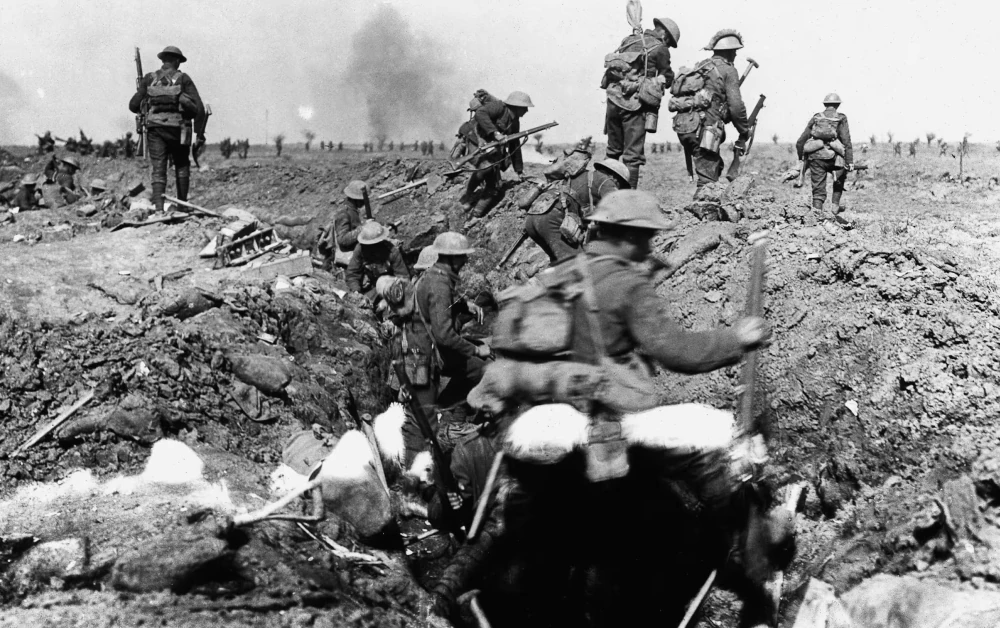
The trenches of World War I didn’t just punish bad luck, they punished ordinary human instincts.
When shells fell, when poison gas drifted in, or when the battlefield suddenly went quiet, the obvious decision was often the wrong one. The soldiers who survived weren’t necessarily the strongest or the bravest. They were the ones who learned to think like veterans, replacing natural reactions with habits forged through bitter experience.
This quiz isn’t about dates, generals, or memorizing historical facts. It’s about judgment. Each scenario is based on the kinds of split-second decisions British, French, and German soldiers faced on the Western Front. Choose the option you think gives you the best chance of making it home—and see whether your instincts would have helped you survive one of history’s deadliest battlefields.
WW1 Trench
A greenish-yellow cloud drifts toward your trench and the gas alarm sounds. You have a few seconds. Where do you put yourself?
A shell lands a few feet away in the mud and doesn't go off. What's the right move?
Hours of relentless artillery fire suddenly stop. The trench goes quiet. What's your first assumption?
You need to check on the wire in No Man's Land after the night's repairs. It's a quiet morning. How do you look?
Your boots have been soaked for days. You finally get a few hours' rest and have one dry pair of socks. What's the priority?
Your officer orders the barbed wire repaired after dark. Why wait for night, when it's harder to see?
A man in your section spots an abandoned enemy rifle out in No Man's Land and wants to crawl out for it. What do you tell him?
You're exhausted and not hungry, but a veteran tells you to eat your full ration now anyway. Why?
A barrage is falling and a soldier near you panics and starts running blindly down the trench. What's the safest thing to do?
Between the big set-piece battles, what should you actually expect day to day at the front?