
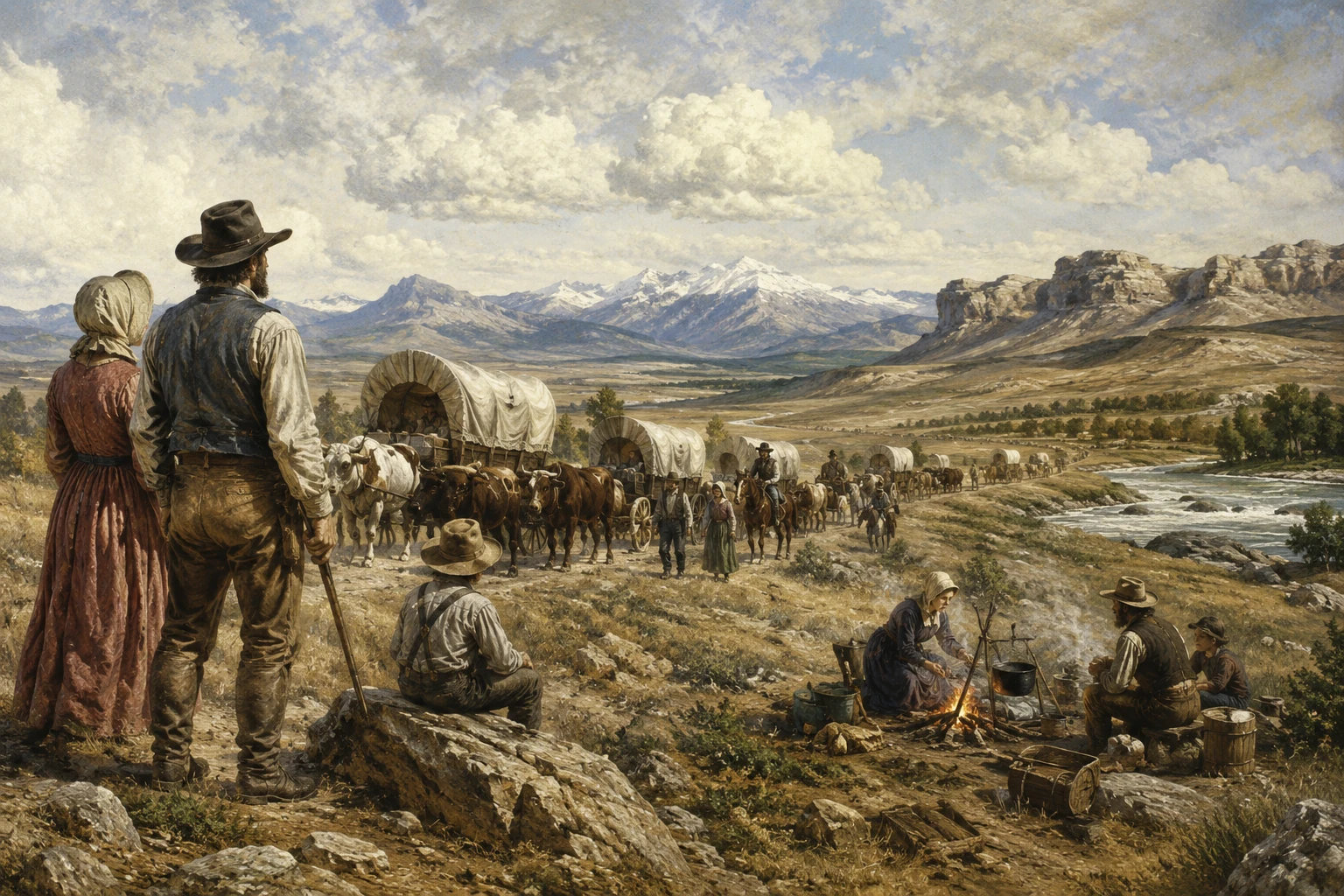
For hundreds of thousands of Americans, the Oregon Trail represented hope: cheap land, a fresh start, and the promise of a better life in the West. But the journey was anything but easy. Covering more than 2,000 miles, it demanded months of endurance, difficult decisions, and a little luck.
Nearly one in every ten emigrants never reached Oregon. Some turned back. Others were forced to abandon everything they owned. Many never made it home.
This quiz puts you in the boots of a pioneer heading west in the 1840s. Each scenario is inspired by the real choices emigrants faced along the trail. Your goal is simple: make the decisions that give you the best chance of reaching Oregon alive.
The Oregon Trail
You're outfitting your wagon in Missouri and money is tight. What's the single most dangerous thing you could underestimate on this trip?
One of your oxen begins limping badly halfway through the journey. What should worry you most?
A wide river lies across your path. It looks calm and runs only waist-deep at the edge. Several wagons are already lining up to ford it. Do you join them?
Each morning, wagons jockey over their place in the day's line of march. Why did this order matter enough to set rules over?
You notice most of the adults are walking beside their wagons mile after mile rather than riding. Why?
It's mid-July and you've fallen behind schedule, still only halfway to Oregon. Some want to rest the exhausted party for a couple of weeks. Your call?
Cholera is sweeping through the wagon trains ahead of you, and several parties have stopped to care for their sick before moving on. What's the wiser course for your own train?
Parched and out of water, you come upon a still, stagnant pool beside an old, refuse-littered campsite. What do you do?
A stranger rides up offering a "shortcut" that he promises will save your party several days. How do you weigh it?
After months of hardship, what truly gave a family the best odds of reaching Oregon alive?