
1. A duck became an emotional-support animal for a Golden Retriever
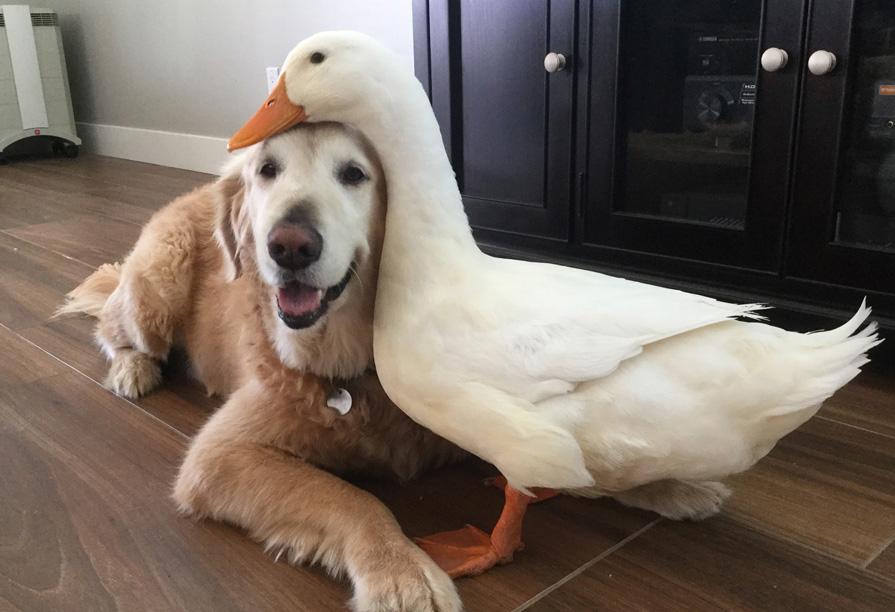
Biscuit the Golden Retriever has epilepsy.
Medication helped control her seizures, but her family noticed that their once-energetic dog had become lethargic and withdrawn.
Then Goose arrived.
Goose is a duck.
Naturally, Goose and Biscuit became best friends.
They play together. They nap together. They follow each other around. And Biscuit’s family says the friendship seemed to bring their dog’s old personality back.
There is probably a very complicated scientific explanation involving companionship, stimulation and animal behavior.
We prefer the simpler explanation.
Sometimes you just need a duck.
See Biscuit and Goose at Good News Network
2. A 12-year-old girl who was told she might never walk again just walked out of rehab

Earlier this year, 12-year-old Morgan Lopez suffered an extraordinarily rare spinal cord stroke after injuring her neck during dance practice.
She went from dancing to being unable to move her arms or legs.
Her doctors weren’t sure she would ever walk again.
Then came months of rehabilitation.
First, tiny movements returned. Then bigger ones. Eventually Morgan was doing bridges and push-ups. Then she started taking steps.
On August 11, she did something that once seemed almost impossible.
She walked out of the rehabilitation facility.
Morgan still has work ahead of her, and recovery from something this serious doesn’t suddenly become easy because you hit one incredible milestone.
But there is something wonderful about watching a kid walk through doors she once didn’t know she’d ever be able to walk through at all.
And Morgan already has her eyes on the next goal.
She wants to dance again.
3. A woman taught her dog how to call her at work. This was a mistake.

A little bichon named Aly missed her mom while she was at work.
So her human came up with an ingenious solution: she taught Aly to press a button that would call her.
Problem solved.
Except Aly quickly discovered something important.
There was apparently no limit on how many times she could call.
Soon, Mom’s phone was ringing again. And again. And again.
Which, honestly, is exactly what should have been expected when someone gave a needy dog unrestricted telecommunications privileges.
The best part is that Aly doesn’t even necessarily have anything to say. Sometimes she apparently just wants to check that Mom is still available.
Dogs have spent thousands of years figuring out how to manipulate humans.
Giving them phones may have been our greatest tactical error yet.
4. Women’s professional baseball is back — and a 99-year-old former player was there to see it

Maybelle Blair pitched professionally in 1948.
She played in the All-American Girls Professional Baseball League, the league whose story would eventually help inspire A League of Their Own.
The league folded in 1954.
For the next seven decades, there was no professional women’s baseball league in the United States.
Then, this month, something remarkable happened.
Women’s professional baseball came back.
And Blair was there.
Now 99 years old, she got to stand on a professional baseball field again and watch a new generation of women play the game she helped pioneer nearly eight decades earlier.
Imagine being around long enough to watch something disappear from the world.
And then being around long enough to watch it come back.
Read the story at Good News Network
5. After disappearing for 70 years, tigers are returning to Kazakhstan
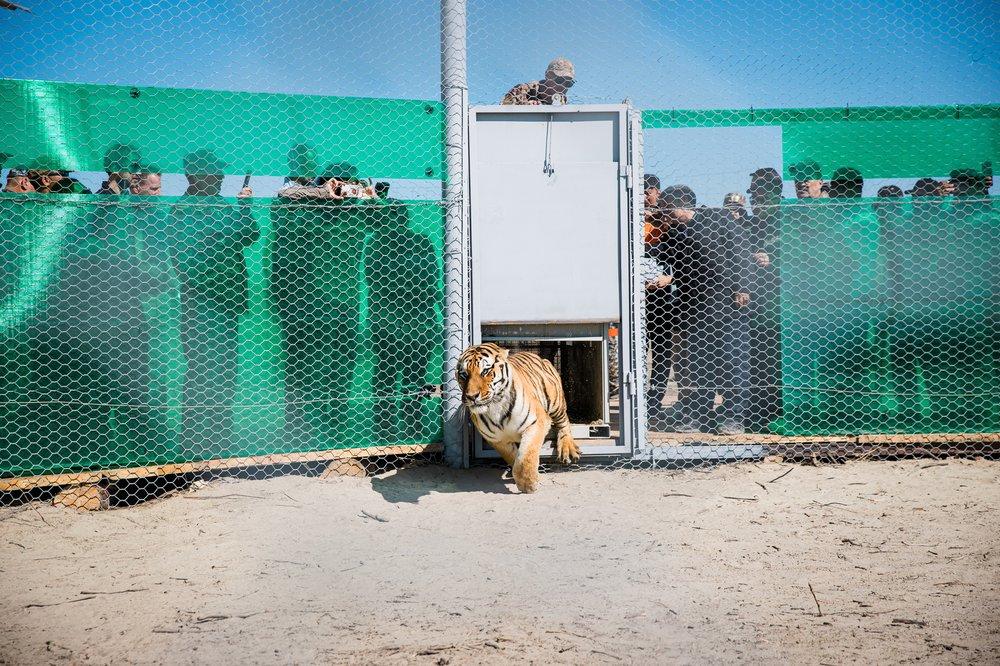
For most of the 20th century, Caspian tigers roamed the forests and wetlands of Central Asia.
Then they disappeared.
Kazakhstan’s last wild tigers vanished roughly 70 years ago, and eventually the Caspian tiger was declared extinct.
But conservationists didn’t entirely give up on the idea of bringing tigers back.
For years, Kazakhstan has been restoring habitat, increasing prey populations and preparing an enormous nature reserve for their return.
Now the project has reached the part that once sounded almost impossible: tigers are actually being reintroduced.
The animals are Amur tigers, close relatives of the extinct Caspian tiger, and the effort represents one of the world’s most ambitious big-cat rewilding projects.
It’s easy to think of extinction and habitat destruction as one-way doors.
Sometimes they are.
But every once in a while, people spend years doing the slow, difficult work required to push one of those doors back open.
And somewhere that hasn’t heard a tiger roar in generations gets another chance.