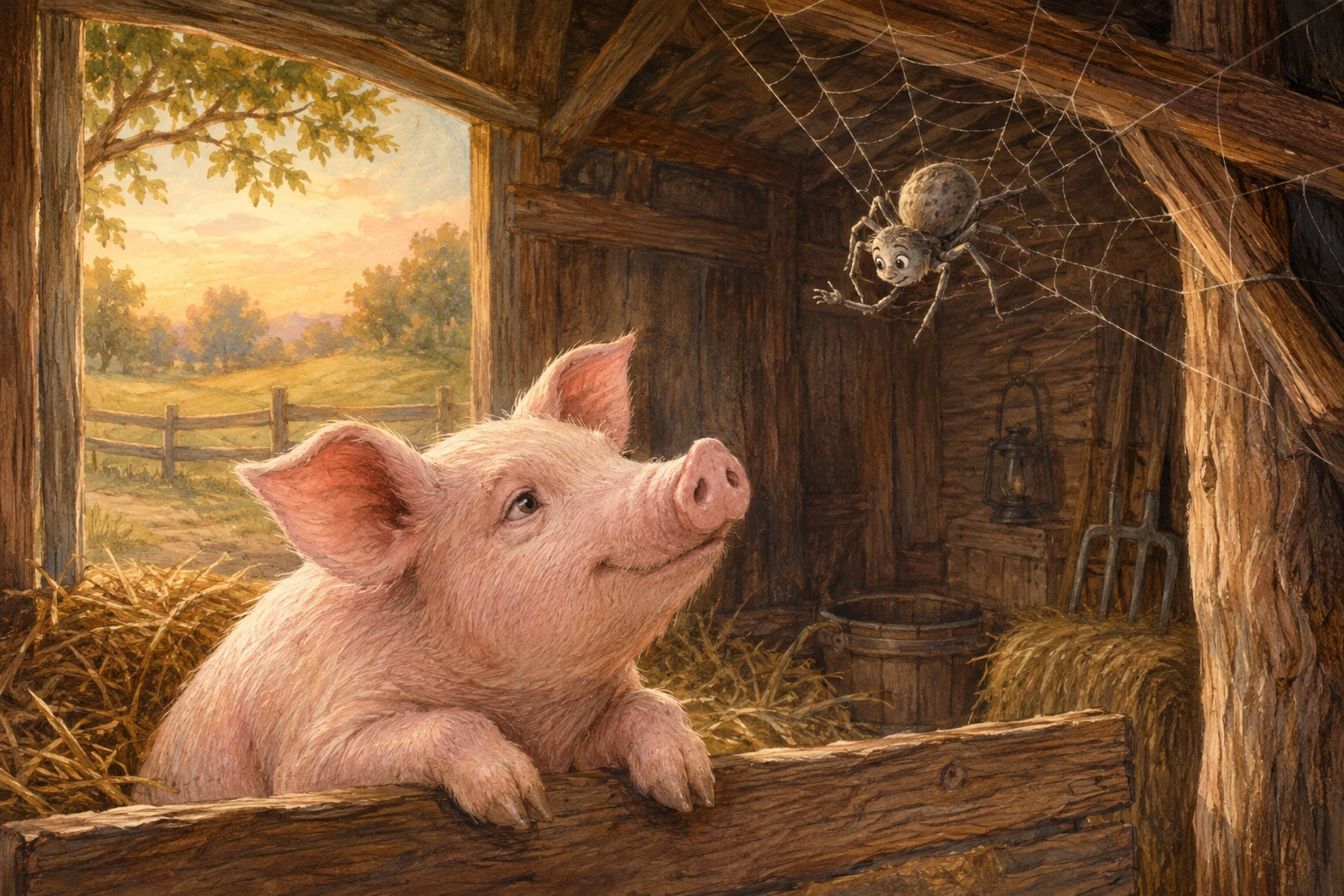
“You have been my friend,” replied Charlotte. “That in itself is a tremendous thing. I wove my webs for you because I liked you. After all, what’s a life, anyway? We’re born, we live a little while, we die. A spider’s life can’t help being something of a mess, with all this trapping and eating flies. By helping you, perhaps I was trying to lift up my life a trifle. Heaven knows anyone’s life can stand a little of that.”
— E. B. White, Charlotte’s Web
Charlotte’s answer is devastating because she doesn’t make herself into a hero.
She doesn’t say: I recognized the sacred nature of all living beings and therefore devised an ethically rigorous pig rescue initiative.
She says, essentially: You were my friend. I liked you. So I helped.
That’s it. That’s the whole moral universe, right there.
Because most of life is not especially dignified. We get hungry. We become jealous. We say something stupid at dinner and then replay it for six years. We spend whole afternoons trying to remember a password. A spider catches flies. A person answers emails. Everyone is trying to survive, and survival, viewed up close, is often repetitive, undignified, and slightly gross.
Then, occasionally, another creature needs us.
And we have a choice. We can remain trapped inside the small, frightened story of ourselves, or we can reach outward. We can use whatever ridiculous little gift we happen to possess, a web, a word, a meal, or a phone call, to make life less terrible for someone else.
This does not defeat death. Charlotte still dies. The world does not stop and award her a medal. Most of what she did will eventually be forgotten.
But she made Wilbur’s life possible. And in doing so, she made her own life larger than the brief biological accident it might otherwise have been.
Perhaps that is what goodness is: not purity, not greatness, but the decision to interrupt our own struggle long enough to help someone with theirs.