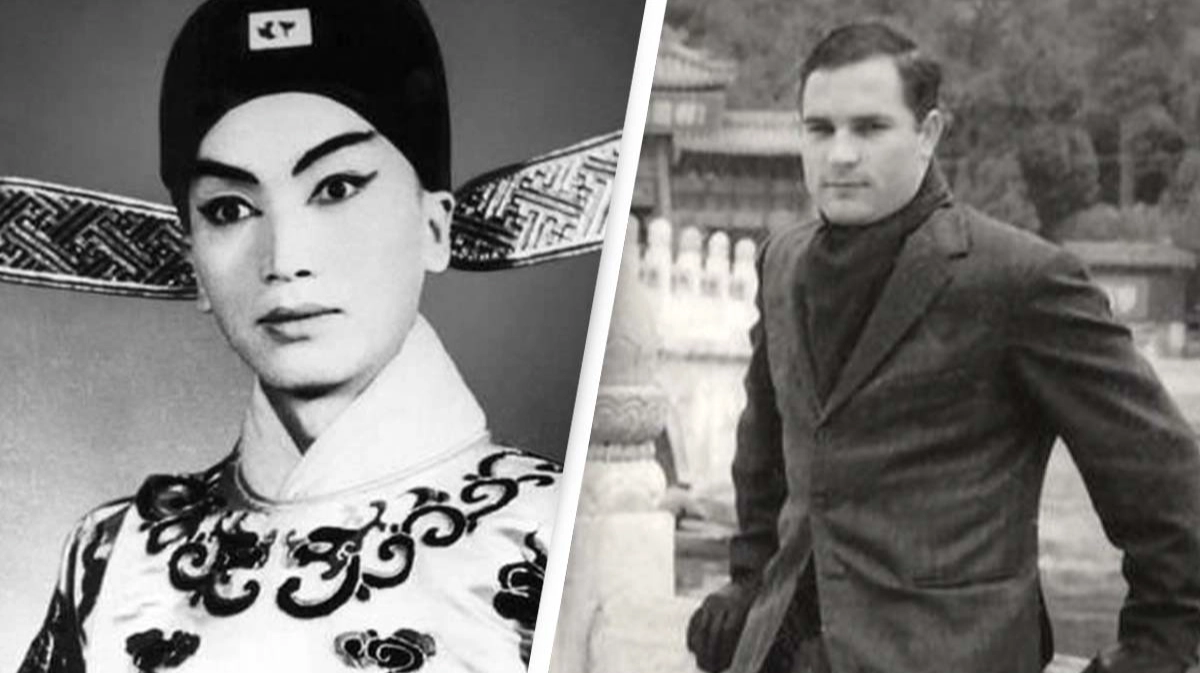
The extraordinary true story of Shi Pei Pu, a French diplomat, a child who wasn’t theirs, and one of the strangest espionage scandals of the Cold War.
In 1964, a 20-year-old French embassy employee named Bernard Boursicot arrived in Beijing and met someone who would change his life.
That someone was Shi Pei Pu, a Chinese opera singer with a gentle manner, an elegant appearance, and a rather remarkable secret.
Shi was a man. But he told Boursicot he was actually a woman who had been raised as a boy because his family desperately wanted a son.
Boursicot believed him.
And for nearly two decades, he continued to believe him, through a romantic relationship, the apparent birth of their child, and an espionage operation that would eventually land them both in a French prison.
There are quite a few questions one might reasonably have at this point.
The most obvious is probably: How on earth did this work?
A Love Story Built on a Secret
To understand that, it helps to know a little about Boursicot.
He was young, inexperienced, and living in a country whose language and customs he barely understood. He had joined the French diplomatic service hoping for an exciting life abroad, and Beijing in the 1960s was certainly an interesting place to find himself.
Then he met Shi.
Shi was charming, cultured, and an accomplished performer. In Chinese opera, male performers had a long tradition of playing female roles, and Shi understood the art of transforming himself into someone else.
According to Boursicot’s later account, Shi explained that his family had concealed his supposed female identity from birth. It was a romantic, tragic story, complete with family expectations and a secret that could only be entrusted to someone special.
And Boursicot, who had apparently been waiting for something extraordinary to happen to him, had just been handed something extraordinary.
Their relationship became intimate.
Boursicot later explained that their sexual encounters were brief, usually took place in darkness, and involved an extraordinary degree of modesty. He attributed all of this to Chinese cultural traditions.
This is the part of the story where most people become convinced that Boursicot must have been either spectacularly gullible or knowingly participating in the deception.
But the uncomfortable possibility is that he simply believed what he wanted to believe.
Once he had accepted Shi’s story, every unusual detail could be explained away. The secrecy wasn’t suspicious; it was romantic. The unusual circumstances weren’t evidence of deception; they were evidence of how complicated their love had become.
Then Came the Baby. And the Spies.

Then things got considerably stranger.
Shi announced that he was pregnant.
Later, he presented Boursicot with a boy he said was their son. The child had actually been obtained from another family, but Boursicot believed he was the father.
He now had a lover and a child, although neither relationship was quite what he thought it was.
And somewhere along the way, Chinese intelligence became involved.
Boursicot began passing diplomatic documents to Chinese officials. He would later claim that he did so out of love and a desire to protect his relationship with Shi.
This was not exactly the glamorous world of James Bond. It was a relatively low-ranking embassy employee handing over paperwork while trying to maintain a deeply complicated personal life.
But it was espionage nonetheless.
The Secret Finally Unravels
For years, the arrangement continued.
The two spent long periods apart, and Boursicot eventually had other relationships. Yet Shi remained an important figure in his life. In the early 1980s, Shi and the boy came to live with him in France.
Unfortunately for everyone involved, French counterintelligence officers began asking questions.
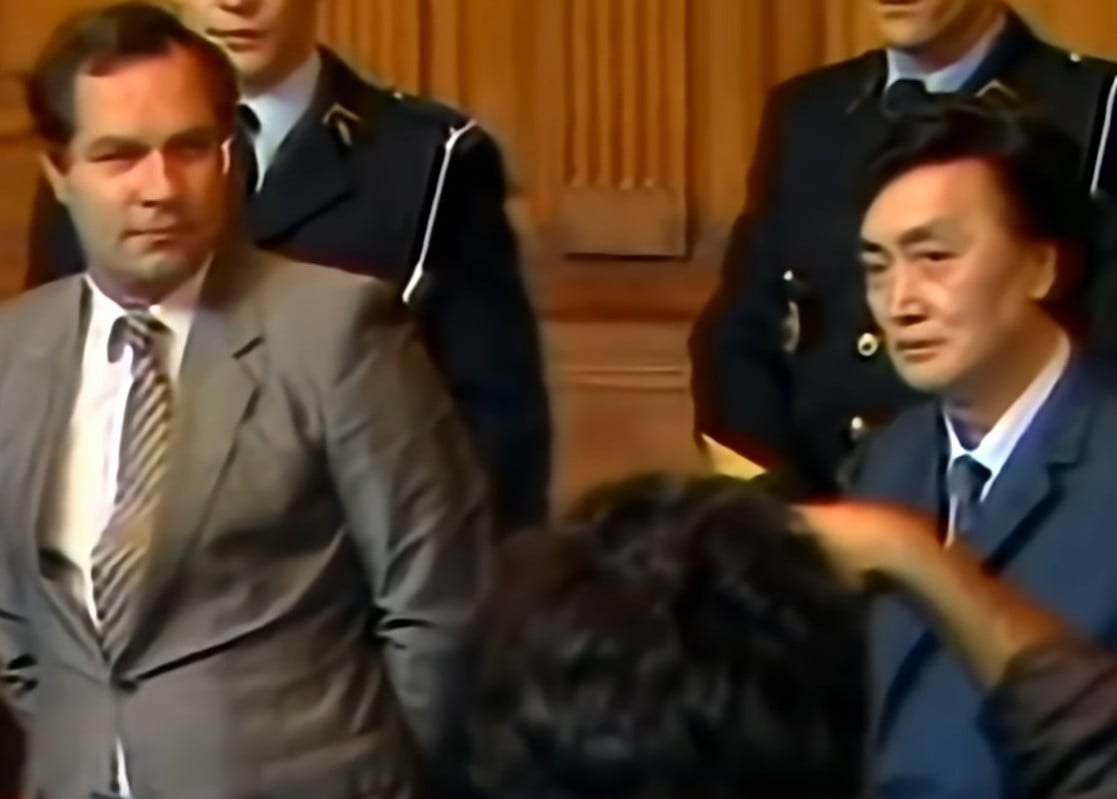
In 1983, both men were arrested.
During the investigation, Boursicot learned something that must have made the previous 19 years of his life suddenly appear rather different.
Shi was biologically male. He had never given birth to their supposed son.
The revelation devastated Boursicot, who maintained that he genuinely hadn’t known.
In 1986, both men were convicted of espionage and sentenced to six years in prison. They were subsequently pardoned in 1987.
The story became an international sensation, eventually inspiring David Henry Hwang’s award-winning play M. Butterfly and a film adaptation directed by David Cronenberg.
How Much Do We Really Want to Know?
But even after the trial, the mystery was never entirely resolved.
Was Shi a master manipulator who understood precisely how to exploit another person’s emotional needs? Was Boursicot unusually susceptible to deception? Or was their relationship something more complicated than either man’s public explanation suggested?
It’s tempting to think the answer is obvious.
But people have a remarkable capacity to construct elaborate explanations for things they don’t want to examine too closely.
Someone ignores evidence that a partner is cheating. Someone continues sending money to a person they’ve never met. Someone remains committed to an investment long after it becomes clear the money is gone.
From the outside, the warning signs seem enormous. From the inside, they’re often just minor inconveniences in a story that still feels true.
And perhaps that’s what makes the Shi Pei Pu affair so fascinating.
The espionage is almost secondary. The extraordinary deception is what grabs your attention, but the more interesting subject is the human mind’s ability to protect a cherished belief.
The Performance That Lasted 20 Years
Shi Pei Pu died in Paris in 2009. He never offered a completely satisfying explanation for what had happened.
David Henry Hwang, whose play was inspired by the affair, later suggested that Shi was, above all else, a performer.
And maybe that’s the most fitting way to remember him.
For nearly 20 years, Shi played a role so convincingly that another person built an entire emotional life around it.
But the strangest thing about the story may not be the performance.
It may be how badly the audience wanted to believe it.
Was this worth your time?
What missed? (optional)