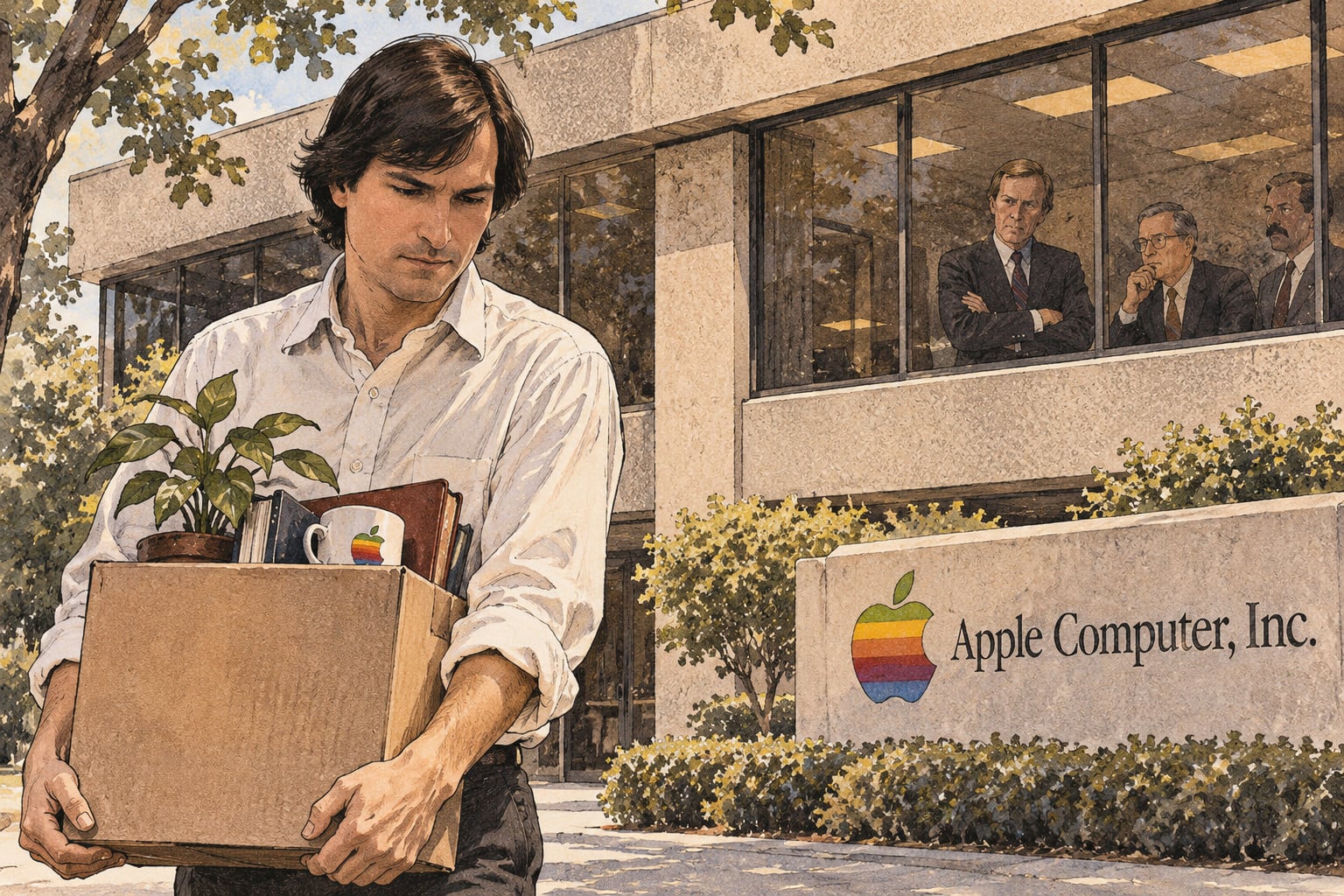
In 1985, Steve Jobs lost his job running the company he had helped start in his parents’ garage.
Apple was less than a decade old. Jobs had helped turn it into one of the most recognizable technology companies in America. And yet, after a power struggle with CEO John Sculley, Apple’s board of directors backed Sculley. Jobs was stripped of his operational responsibilities and eventually resigned.
How does something like that happen? How can someone lose control of a company that wouldn’t even exist without them?
The answer begins with an important distinction: founding a company, owning a company, and running a company are three different things.
When you start a business, you might initially own the entire thing. You make the decisions, control the money, and answer to nobody. But as your business grows, you may need more money than you personally have. You bring in investors, and in exchange for their money, you give them a percentage of ownership in your company.
Every time you do this, you potentially give up a little more control.
Imagine you start a company that makes bicycles. You need money to build a factory, hire employees, and distribute your bikes around the country. Investors agree to give you millions of dollars in exchange for shares. After several rounds of investment, you might find yourself owning just 20 percent of the business you created.
You’re still the founder. You might still be the CEO. But you’re no longer the sole owner.
This is where the board of directors comes in.
In a typical corporation, shareholders elect a group of people to oversee the company on their behalf. That’s the board of directors. Its members generally don’t spend their days managing employees or developing products. Instead, they help set the company’s strategic direction, oversee its financial health, evaluate its leadership, and make sure the people running the business are acting in the company’s interests.
One of the board’s most important powers is the ability to hire and fire the CEO.
Think of it this way: if you’ve invested millions of dollars in a business, you probably don’t want one person to have unlimited authority over what happens to your money, even if that person came up with the original idea.
A founder might be brilliant at inventing a product but terrible at managing thousands of employees. They might be reckless with money, resistant to criticism, or unwilling to adapt to a changing market. The qualities that make someone good at starting a company aren’t necessarily the same qualities that make someone good at running a large corporation.
There are, however, ways founders can protect themselves.
When Facebook went public in 2012, it used a stock structure that gave certain shares significantly more voting power than others. This allowed Mark Zuckerberg to retain voting control without owning a majority of the company’s economic value. Other founders have adopted similar arrangements to protect their authority from outside investors.
But without such protections, a founder can find themselves in the unusual position of being removed from leadership by the very people they brought in to help grow their business.
They don’t necessarily lose their ownership shares when they’re fired, either. A founder can remain a significant shareholder, benefit financially from the company’s success, and still have no job there.
That’s one of the more fascinating trade-offs in building a successful business. The outside money that allows you to transform a small idea into a global enterprise can also diminish your authority over it.
You may have created the company. But somewhere along the way, it stopped being entirely yours.
Was this worth your time?
What missed? (optional)