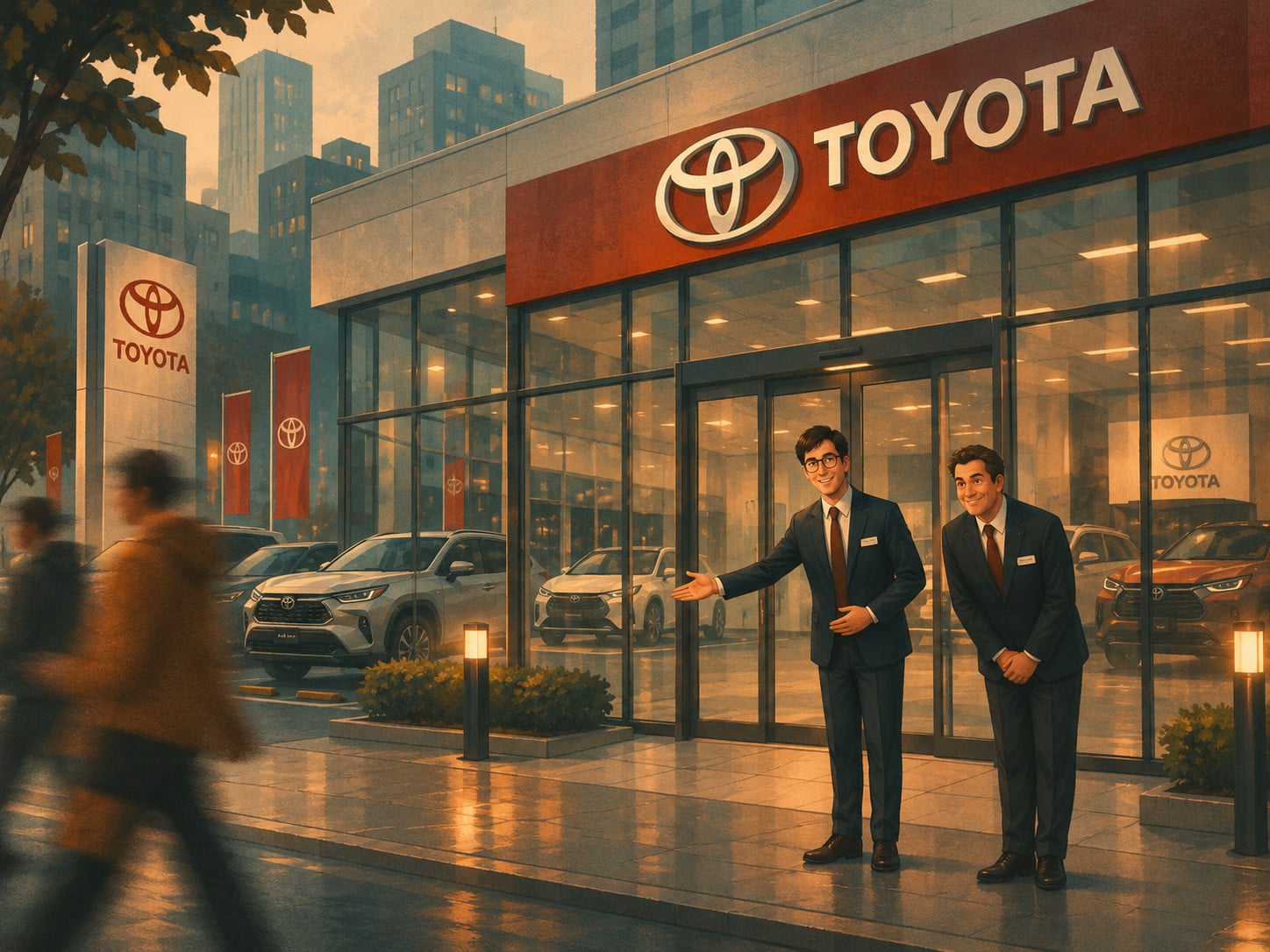
Buying a new car is one of the few major purchases where the company that makes the product generally isn’t the company that sells it to you. If you want a new Toyota, you don’t buy it from Toyota. You buy it from an independently owned business that has an agreement with Toyota to sell its vehicles.
It’s an arrangement most of us have grown up with and rarely question. But in an age when you can buy almost anything directly from the company that makes it, why is buying a car so different?
Why Dealerships Exist in the First Place
In the early days of the automobile, dealerships made a lot of sense. Car manufacturers needed a way to reach customers across an enormous country without building and operating thousands of retail locations themselves. Independent business owners took on that responsibility. They bought inventory, maintained showrooms, advertised locally and hired mechanics to service the vehicles.
It was a mutually beneficial arrangement. Manufacturers could focus on making cars, while dealerships handled the expensive and complicated business of selling them.
But that arrangement was established long before the internet.
Today, you can research virtually every vehicle on the market, compare prices, configure a car to your exact specifications and secure financing without leaving your couch. Companies like Tesla have demonstrated that manufacturers can sell vehicles directly to consumers.
So why don’t more companies do it?
Part of the answer is that, in many states, franchise laws restrict manufacturers from selling directly to customers. These laws were originally intended, in part, to protect independent dealers from being unfairly squeezed out by the much larger manufacturers they depended on. Over time, those protections also became significant barriers to alternative ways of selling cars.
Why So Many People Dread Buying a Car
What’s particularly frustrating is that many people actively dread the experience of buying a car. There’s the salesperson who insists on talking about monthly payments instead of the total price, the endless trips to consult a manager, the unexpected dealer add-ons and the pressure to purchase extended warranties and protection packages.
Not every dealership operates this way, of course. But the traditional sales model often creates an adversarial relationship between the buyer and the seller. One is trying to pay as little as possible, while the other is trying to maximize the profit on the transaction. And because the salesperson typically knows far more about the pricing and financing process than the customer, it’s not exactly a level playing field.
For many people, what should be an exciting purchase becomes an exhausting exercise in trying not to get taken advantage of.
What Are Dealerships Actually Good For?
That doesn’t mean dealerships are useless. They provide places to test-drive vehicles, inspect used cars, trade in your old vehicle and get repairs performed. Competition between dealerships can also give buyers opportunities to negotiate prices below what a manufacturer might otherwise charge.
But none of those services necessarily requires the traditional dealership model. A manufacturer could operate regional service centers, offer test drives through smaller showrooms and sell vehicles online at transparent prices.
And eliminating dealerships wouldn’t automatically make cars cheaper. Manufacturers would have to absorb many of the costs that dealers currently shoulder, and without competing dealerships, consumers might have less room to negotiate.
So, Do We Actually Need Them Anymore?
Not in the way we once did.
The services they provide are still necessary, but the business model itself is no longer indispensable. Manufacturers are perfectly capable of selling cars directly to consumers, operating service centers and providing places to test-drive vehicles.
That’s not an argument for shutting down every dealership in America. It’s an argument for giving consumers a choice. If a dealership can offer better prices, better service or a more convenient buying experience than the manufacturer, people will have a reason to go there.
But if the strongest argument for preserving an entire business model is that the law protects it from competition, it’s worth asking whose interests that system is really serving.
A car dealership should be somewhere you choose to buy a car, not somewhere you’re required to buy one.
Was this worth your time?
What missed? (optional)