Section

Category: Uncategorized

Why Are American Foods Full of Additives? The Shocking Differences with U.K. Products

When it comes to food, you’d think a box of mac and cheese, a packet of instant oatmeal, or even a simple bottle of ketchup would be pretty standard regardless of where you are. However, that couldn’t be further from the truth.

A deep dive into ingredient lists reveals some shocking differences between products sold in the U.S. and their counterparts in the U.K., and it’s not just a minor tweak here and there—it’s a complete overhaul.

Let’s take a look at some of these comparisons and explore why the same brands seem to treat American consumers differently from their European counterparts.

1. Quaker Instant Oatmeal Packets

U-S-vs-Uk-quaker-oats-packets

Read more Why Are American Foods Full of Additives? The Shocking Differences with U.K. Products

A Few Photos To Help You Scratch That Nostalgic Itch

There’s something about the ’90s that feels like it was designed in a lab to haunt our collective memory. You ever notice how people talk about it? There’s this wistful tone, like it was the last great era before the world started to move too fast.

But let’s be real—it’s not because the ’90s were actually better than today. It’s because it was the last time we could look around and still feel like the world made sense.

Read more A Few Photos To Help You Scratch That Nostalgic Itch

A Gut Feeling That Saved Humanity: The Story of Stanislav Petrov

Stanislav Petrov

On the night of September 26, 1983, the Cold War was nearing its peak. Tensions were on the brink, with the arms race between the U.S. and Soviet Union escalating to unimaginable levels. Both superpowers had their fingers ready to hit the proverbial “big red button.” Nuclear annihilation wasn’t some far-off doomsday scenario—it was a real, palpable threat that could be unleashed within minutes. The doctrine of Mutually Assured Destruction (MAD) guaranteed that if either side launched its weapons, both nations, and likely the world, would perish.

Read more A Gut Feeling That Saved Humanity: The Story of Stanislav Petrov

15 Photos That Show You The Way Things Used To Be

Coal miner’s wife and three of their children. Company house in Pursglove, Scotts Run, West Virginia, September 1938

The company house squatted there in Pursglove, a gray testament to the miner’s borrowed existence. Four souls dwelled within its weathered walls – a miner’s wife and three young’uns, their faces etched with the coal dust that seeped into every crease of Scotts Run. September’s wan light did little to soften the hard edges of their lives.

The woman’s eyes, deep-set and weary, held the weight of a thousand descents into darkness, though she herself had never set foot in the mines. Her children played in the shadow of the tipple, their laughter a defiant song against the constant rumble of coal cars and the distant cough of men coming up from the earth.

They were of the land, yet the land was not theirs – their lives mortgaged to the company store, their futures stamped with the indelible mark of coal. In Pursglove, in all of West Virginia, the seams of coal ran deeper than blood, binding families to the earth with chains of debt and duty.

Read more 15 Photos That Show You The Way Things Used To Be

The Early Photography of Stanley Kubrick

Stanley Kubrick. Genius. Auteur. Craftsman. Monster. Enigma. He stands tall among the pantheon of American filmmakers, often hailed as the greatest. With a filmography that includes Spartacus, Dr. Strangelove, 2001: A Space Odyssey, and The Shining, it’s no wonder his work continues to captivate audiences. But what sets his films apart is his extraordinary eye—his unparalleled command of camera angles, lenses, and lighting. Kubrick didn’t just compose shots; he orchestrated visual experiences.

What many might not know is that before he became a legendary filmmaker, Kubrick was a photographer. At just sixteen, while hustling chess in New York’s Washington Square Park—a feat that demands a sharp intellect—he landed a job with Look magazine. It was here that he discovered his passion for visual storytelling, honing his craft and developing an instinct for capturing moments with profound clarity. This early foray into photography laid the foundation for the cinematic masterpieces that would follow, each frame a testament to his relentless pursuit of perfection. In delving into Kubrick’s photographic journey, we uncover the roots of his artistry and the vision that transformed cinema.

Read more The Early Photography of Stanley Kubrick

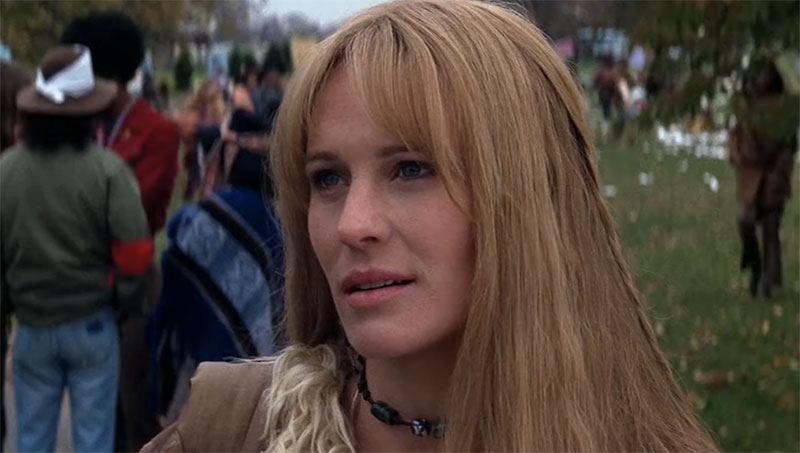
Jenny Curran Is Not Your Villain, No Matter How Hard You Try

Jenny Forrest Gump

I don’t know what it is about the internet, but for some reason, we all love picking apart characters in movies like they’re contestants on Survivor. And nobody gets roasted harder in the post-Forrest Gump universe than Jenny Curran. Somewhere along the way, Jenny became cinema’s biggest villain—right alongside Darth Vader and Hannibal Lecter—except her crime was having complicated feelings in a world where everybody just wants her to be uncomplicated.

Read more Jenny Curran Is Not Your Villain, No Matter How Hard You Try

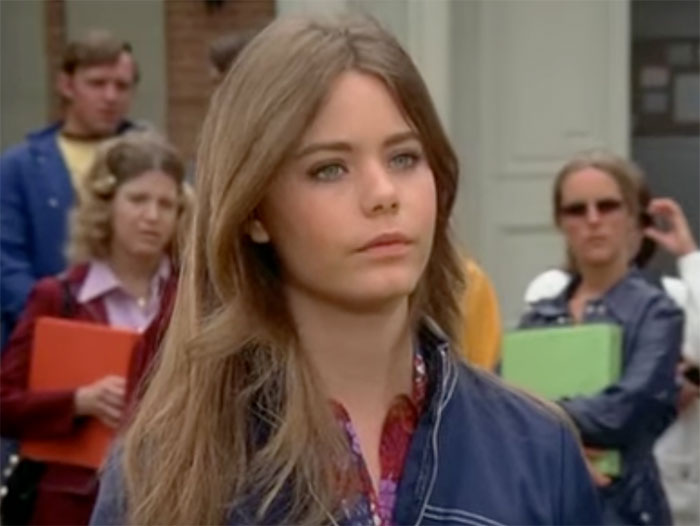
Whatever Happened to Susan Dey from ‘The Partridge Family’

Susan Dey - Partridge Family

Susan Dey, eternally etched in the memories of a generation as Laurie Partridge from the beloved 1970s sitcom “The Partridge Family,” captivated audiences as the insightful, keyboard-playing teen in the musical family ensemble. Adored for her girl-next-door allure, sharp wit, and genuine warmth, she quickly rose to fan-favorite status.

Now, as Dey celebrates her 70th birthday, we take a moment to catch up with the once teen sensation, tracing her fascinating evolution from a widely admired sitcom star to a figure who yearns for a life away from the relentless spotlight.

Read more Whatever Happened to Susan Dey from ‘The Partridge Family’
Skip to content