When my friend responds “If by pyramid scheme you mean legitimately structured multi-level marketing company, then yes, I joined”
Get Smarter Everyday

In the 1960s, many Southern states in the United States employed literacy tests as a means to disenfranchise black voters. These tests were designed to be intentionally difficult and subjective, with the goal of preventing African Americans from exercising their right to vote. The tests were often administered in a discriminatory manner, with white voters being given easier versions or being exempt altogether.


The role of the knocker-upper, a vital figure in British industrial towns, highlights the pre-digital solutions to everyday challenges before the widespread adoption of alarm clocks. These individuals were tasked with ensuring workers woke up in time for their shifts, particularly in northern mill towns and areas like London’s docks, where irregular hours were the norm due to fluctuating tides. Using a variety of tools from long sticks to pea shooters, knocker-uppers would tap on windows, efficiently rousing only those who paid for their services without disturbing others.

“When you are content to be simply yourself and don’t compare or compete, everyone will respect you.”
― Lao Tzu, Tao Te Ching
This quote from Lao Tzu’s “Tao Te Ching” highlights essential Taoist principles of authenticity, contentment, and non-competitiveness, reflecting a deeper philosophical perspective on personal conduct and social harmony.
The quote emphasizes the virtue of being content with oneself, advocating for a state of acceptance and peace with one’s own nature and circumstances. This state of contentment means not seeking external validation through comparison with others or through competition. Lao Tzu suggests that true respect from others comes not from trying to be superior or different but from being genuinely oneself, embracing one’s true nature without the pretense of external achievements or comparisons.
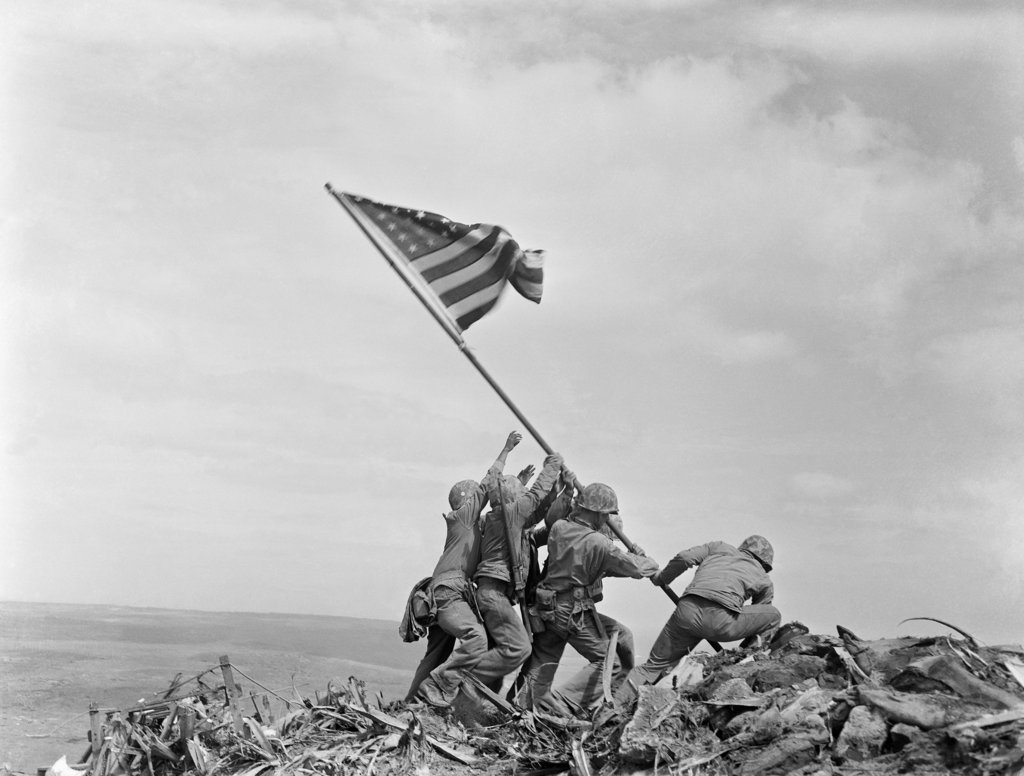
Imagine, if you will, an eight-square-mile inferno, an island so fiercely contested that it seemed as though the very gates of hell had opened. Iwo Jima was not merely a battle; it was a grinding, relentless slog. The Marines knew the importance of this speck in the ocean—vital for airfields to support the bombing of Japan. But so did the Japanese, entrenched in a labyrinth of caves and tunnels, prepared to fight to the last man.


In 1903, President Theodore Roosevelt posed with John Muir for pictures on Overhanging Rock at the top of Glacier Point and camped in a hollow there to awake to five inches of snow, which delighted Roosevelt. Roosevelt had sent Muir a letter asking to meet him in Yosemite: “I want to drop politics absolutely for four days and just be out in the open with you.” At their meeting, Muir spoke of environmental degradation, like development, and asked for another layer of protection as a national park to improve management. Muir convinced both Roosevelt and California Governor George Pardee, on that excursion, to recede the state grant and make the Valley and the Mariposa Grove part of Yosemite National Park. This joining together of the 1864 state grant lands with the 1890 national park lands occurred during Roosevelt’s presidency in 1906.

“But although the cliche says that power always corrupts, what is seldom said … is that power always reveals. When a man is climbing, trying to persuade others to give him power, concealment is necessary. … But as a man obtains more power, camouflage becomes less necessary.”
― Robert A. Caro, The Passage of Power
Robert Caro, in his exploration of power dynamics in “The Passage of Power,” a volume of his extensive biography of Lyndon B. Johnson, offers a nuanced perspective on the nature of power and its effects on individuals. The quote encapsulates one of Caro’s central themes: the transformative and revelatory nature of power.

Calling all Costco enthusiasts! Do you ever feel like your life revolves around giant tubs of mayonnaise and navigating the ever-changing sample aisle? If so, this post is for you. We’ve got 21 hilarious memes that perfectly capture the unique experience of shopping at Costco.

“Owning our story can be hard but not nearly as difficult as spending our lives running from it. Embracing our vulnerabilities is risky but not nearly as dangerous as giving up on love and belonging and joy—the experiences that make us the most vulnerable. Only when we are brave enough to explore the darkness will we discover the infinite power of our light.”
― Brene Brown
This quote by Brené Brown, from her book “Daring Greatly,” explores the concept of vulnerability and its profound impact on our lives.
First, what does it mean to “own our story”? It means accepting and embracing all parts of ourselves – the good, the bad, and the ugly. It’s about being honest with ourselves and others about who we are, where we’ve been, and what we’ve experienced.