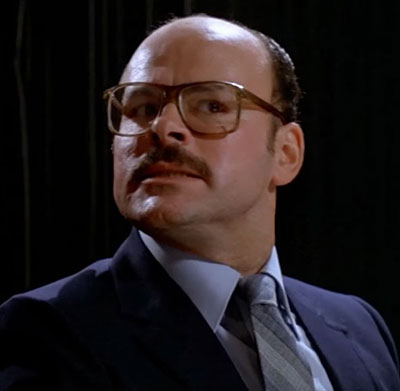
The most successful Nazi interrogator in world war 2 never physically harmed an enemy soldier, but treated them all with respect and kindness. Virtually everybody talked.
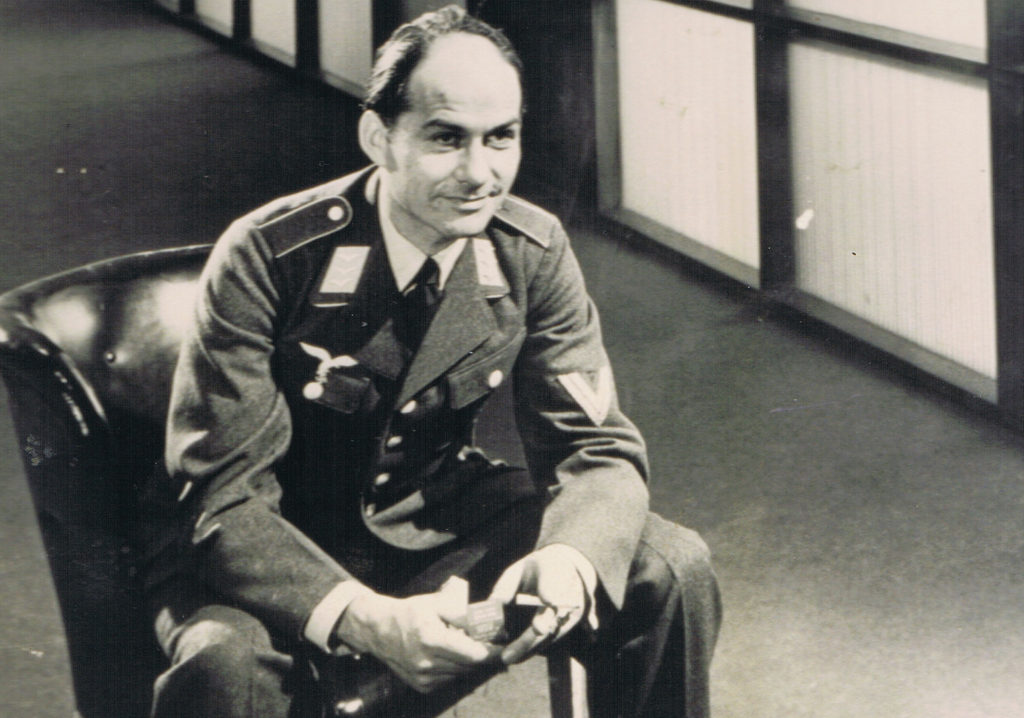
In the grim world of World War II, stories of brutality and cruelty were everywhere, especially when it came to interrogation. But one man stood out for turning that expectation completely on its head. Hans Joachim Scharff, the most successful Nazi interrogator of the war, never laid a finger on his prisoners—at least, not in anger.
Instead, Scharff was famous for his kindness and even warmth. When he questioned captured Allied airmen, he greeted them with respect. He took them on walks through the German countryside, offered them cigarettes, allowed them to visit injured friends in the hospital, and even, in one extraordinary case, let a captured pilot test-fly a plane. There were no bright lights, no shouting, no threats. Scharff would simply listen, make small talk, and build a rapport. Sometimes, he would “let slip” a bit of (usually false) information to make the prisoner feel like he already knew everything, prompting them to correct him and reveal more than they intended.
The results were astonishing: virtually everyone talked. Scharff’s approach was so effective that after the war, the U.S. military brought him to America to lecture on interrogation tactics.
The Bubble Boy was real. He had essentially no immune system, was placed in a bubble only 10 seconds after his birth, his sister would frequently unplug his bubble during fights, and he came out of his bubble only once, shortly before his death at the age of 12.

The story of the “Bubble Boy” is both a medical marvel and a heartbreaking human saga. David Vetter was born in 1971 with Severe Combined Immunodeficiency (SCID), a rare genetic disorder that left him without a functioning immune system. For David, exposure to everyday germs could be fatal. So, just seconds after birth, he was placed in a specially constructed sterile plastic isolator—his famous “bubble.” Every object, drop of water, and even the air he breathed had to be sterilized before entering his tiny world.
David’s bubble was his entire universe. The isolation was total: he couldn’t touch, hug, or experience the physical closeness most children take for granted. Despite his mother and father’s loving presence—and the constant efforts of doctors, nurses, and NASA engineers who developed better and better bubbles—David’s life was marked by loneliness and longing. His older sister, Katherine, could visit but only through layers of plastic. Like siblings everywhere, they sometimes fought, and on more than one occasion, she reportedly unplugged his bubble in anger, setting off alarms and panic, but thankfully never causing him harm.
David left his bubble only once, shortly before his death at age 12, after receiving a bone marrow transplant from his sister in a final effort to give him a working immune system. Tragically, the transplant carried a dormant virus that his body couldn’t fight. He passed away in 1984, just weeks after his first real taste of the outside world.
Ernest Hemingway had often complained the FBI was tracking him, but was dismissed by friends and family as paranoid. Years after his death released FBI files showed he had been on heavy surveillance, with the FBI following him and bugging his phones for nearly the final 20 years of his life

Ernest Hemingway was one of America’s most celebrated writers, famous for his adventurous life and terse, impactful prose. But behind his public persona, he had a fraught and ultimately tragic relationship with the U.S. government—particularly the FBI. Starting in the 1940s, the FBI opened a file on Hemingway. Officially, the reason was his activities and associations in Cuba, a country he loved and where he lived for nearly two decades. Hemingway was famously anti-fascist, had mingled with communists and leftist intellectuals during the Spanish Civil War, and had even operated an amateur counter-espionage ring against Nazi sympathizers in Havana during World War II. All of this caught the attention of J. Edgar Hoover’s agency, especially as Cold War paranoia grew.
For years, Hemingway believed the FBI was surveilling him—his mail was tampered with, his phones possibly tapped, and he reported being followed in both Cuba and the U.S. At the time, many people thought he was being paranoid or delusional, especially as his mental health deteriorated in the late 1950s. In fact, Hemingway spent the last years of his life haunted by the conviction that the government was out to get him. Friends and doctors dismissed these fears as symptoms of depression or alcoholism.
It wasn’t until after his death, when his FBI file was made public, that it became clear Hemingway’s suspicions were at least partially justified. The agency had indeed monitored him, kept detailed records, and likely contributed to his sense of persecution. In an unsettling twist, the government’s secret attention may have accelerated Hemingway’s decline, deepening his paranoia and sense of isolation.
Prince Charles & Princess Diana only met in person 13x before getting engaged and when they were asked if they were in love, Charles said “whatever in love means”.

When you think of fairytale weddings, the union of Prince Charles and Lady Diana Spencer might come to mind—at least, if you just look at the photos. But behind the pomp and circumstance was a relationship that never really got a chance to become real.
Charles first met Diana when she was just 16 years old. He was dating her older sister at the time, and Diana was mostly just “the kid sister” around the estate. Years later, after his relationship with her sister fizzled out, Charles and Diana crossed paths again. By then, Diana was 19—a shy, sheltered kindergarten assistant. Their courtship was short, and, by most standards, oddly formal. Incredibly, Charles and Diana had only met in person thirteen times before they got engaged. Thirteen. Not thirteen months, not even thirteen weekends—just thirteen encounters, most of them awkward, scheduled, or fleeting.
So why the rush? Charles, at 32, was under enormous pressure to settle down. As the heir to the throne, he needed a bride who was young, aristocratic, and—importantly—untainted by any public scandal. Diana, with her noble background and pristine image, checked all the boxes. The royal family, and much of the country, saw her as the perfect future queen. The expectations weren’t just heavy—they were suffocating.
The press couldn’t get enough, of course, and when the pair was asked directly if they were in love, Diana gave the answer everyone wanted: “Of course.” But Charles famously added, almost offhandedly, “Whatever ‘in love’ means.” For a future king, it was a staggeringly unromantic thing to say, and a hint that not everything in their gilded world was as shiny as it looked.
Then, on the night before their storybook wedding, Charles reportedly decided to clear the air. According to multiple sources, he told Diana that he didn’t love her. He wanted to be honest—at least that’s what he told himself. For Diana, on the verge of the most public marriage in the world, it was a crushing revelation, the kind you never want to hear, let alone hours before you step into a cathedral watched by millions.
The world got its spectacle, but for Charles and Diana, the cracks were there from the very beginning—hidden in plain sight for anyone willing to look past the fairytale.
In 1985, a South Korean economist named Oh Kil-Nam defected to North Korea with his wife and two daughters. Less than one year later, he defected again, receiving asylum in Denmark. He left his family behind in North Korea, where (according to latest reports) they remain imprisoned today.

In 1985, Oh Kil-Nam, a South Korean economist living in Germany, made a fateful decision that would haunt him—and his family—for decades. Enticed by North Korean agents and propaganda that promised a utopian life and a chance to support the country’s socialist vision, Oh moved to North Korea, bringing along his wife, Shin Suk-ja, and their two young daughters. For Oh, the move was framed as a way to contribute his expertise to a “better world.” For his family, it was the start of a nightmare.
But reality in North Korea quickly proved grim and oppressive. Instead of the life he’d been promised, Oh found himself monitored, restricted, and under pressure to serve the regime in ways he hadn’t anticipated—including being trained to work as a propaganda broadcaster. Within a year, Oh realized he’d made a terrible mistake. In a rare act of courage and desperation, he seized an opportunity to escape while on a trip to Denmark, where he requested and was granted political asylum.
The cost of his freedom was unimaginable: Oh left his wife and daughters behind in North Korea, believing (or perhaps hoping) they would soon follow. Instead, the regime punished them for his defection. According to human rights reports and advocacy groups, Shin Suk-ja and her daughters were imprisoned in North Korea’s notorious labor camps, where they are believed to remain to this day.