Serbian basketball player Boban Jankovic screams after he rammed his head against a concrete post, over a bad call by the referee during a game. He became paralysed from the neck down and never walked again. 1993

In 1993, during a high-stakes Greek League playoff game between Panionios and Panathinaikos, Boban Janković’s life changed forever. After being controversially called for an offensive foul, he erupted in frustration—slamming his head against the padded metal pole supporting the backboard. The impact was catastrophic. The blow crushed his spinal cord, and Janković instantly collapsed to the ground, paralyzed from the neck down. The gym fell into stunned silence. At just 28 years old, one of Yugoslavia’s brightest basketball talents saw his playing career—and the life he had known—come to an abrupt and brutal end.
What followed was a decade of immense physical and emotional struggle. Janković remained paralyzed for the rest of his life, confined to a wheelchair, though he never completely withdrew from the game he loved. He was a constant presence at Panionios games, often watching from the sidelines, his spirit undimmed even as his body failed him. He became a beloved figure in Greek basketball, not just for his past glory but for his resilience in the face of tragedy. His son, Vlado Janković, would later follow in his footsteps, playing professional basketball in Greece—a living legacy to the father who gave everything to the sport. Boban Janković died in 2006 from heart failure at the age of 42, a symbol of both the passion and the peril of a game that had once defined him.
Preparing for 1976 film Taxi driver, Robert De Niro obtained a real cab driver license and worked 12 hour a day as a taxi driver for a month.

In preparation for his role as Travis Bickle in Martin Scorsese’s Taxi Driver (1976), Robert De Niro didn’t just study cabbies—he became one. Fresh off an Oscar win for The Godfather Part II, De Niro secured a real New York City taxi driver’s license and spent weeks driving a yellow cab through the city’s gritty, chaotic streets. For up to 12 hours a day, he immersed himself in the world of late-night fare pickups, drunk passengers, and the lonely pulse of a city that never sleeps. He reportedly even picked up rides between breaks in filming other projects, vanishing into the role long before the cameras rolled.
The experience gave De Niro more than just authenticity—it gave him the edge that would make Taxi Driver a landmark of American cinema. Travis Bickle wasn’t just imagined; he was built from the pavement up, from the isolation and observation that only a real cabbie could feel. The slumped posture, the thousand-yard stare, the simmering menace behind polite indifference—it was all soaked in the real grime and rhythm of 1970s New York. This method preparation helped shape one of the most chilling and iconic performances in film history.
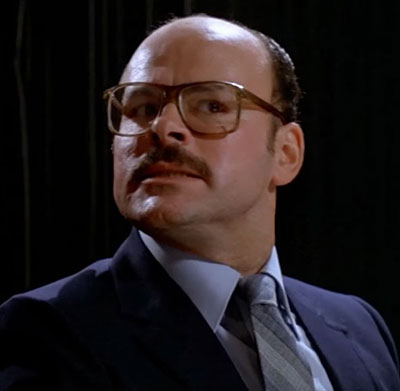
In 1980, the FBI ran a sting operation using a fake company to offer bribes to members of Congress. Nearly 25% of the targets accepted and were convicted.

In 1980, the FBI launched one of the most audacious and controversial sting operations in U.S. political history—Abscam. Short for “Arab scam,” the operation involved agents posing as wealthy Arab businessmen working for a fake company called Abdul Enterprises. Undercover operatives, often accompanied by a convicted con artist turned informant, offered large bribes in exchange for political favors, such as obtaining asylum for a fictitious sheikh or gaining influence in U.S. immigration policy. Cameras rolled behind the scenes as politicians casually accepted envelopes stuffed with cash, believing they were cutting quiet deals with foreign millionaires.
The results were damning. Of the roughly 31 public officials approached, six U.S. congressmen and one senator were ultimately convicted of bribery and corruption charges—nearly 25% of the targets. The footage from the operation showed elected representatives brazenly accepting money, sometimes with smiles, handshakes, and promises of access and influence. The sting raised serious ethical and legal questions about entrapment and government overreach, but the convictions held. Abscam didn’t just expose individual corruption—it tore a hole in the public’s trust in government and marked a turning point in how law enforcement investigated white-collar crime on Capitol Hill.
During the filming of Gladiator, Oliver Reed (Proximo) died in a bar after challenging a group of sailors to a drinking contest. Reed consumed 8 pints of beer, 12 shots of rum, half a bottle of whisky, and shots of cognac This photo of him was taken shortly before he died.

During the filming of Gladiator in 1999, legendary British actor Oliver Reed—who played the hardened former gladiator Proximo—died in a way that felt ripped from the myths he often portrayed. While on a break from shooting in Valletta, Malta, Reed walked into a local bar and ended up challenging a group of young Royal Navy sailors to a drinking contest. True to his notorious reputation, he downed back-to-back rums, beers, and whiskies, reportedly matching or besting every man at the table. But the night took a tragic turn. After a final round, Reed collapsed and suffered a fatal heart attack on the spot. He was 61 years old.
Reed’s sudden death posed a major challenge for Gladiator’s production team. With key scenes left unfilmed, director Ridley Scott used early CGI technology—then still in its infancy—to digitally recreate Reed’s likeness for his remaining moments in the film.
The most reliable record-high IQ score ever recorded belongs to mathematician Terence Tao, with a confirmed IQ of 230.

Terence Tao is often described as one of the most brilliant mathematicians of our time—a prodigy whose mind seems to operate on a different plane. Born in 1975 in Adelaide, Australia, to immigrant parents from Hong Kong, Tao began displaying extraordinary cognitive abilities in early childhood. By the age of 2, he was already doing basic arithmetic. By 9, he was taking university-level math courses. And by 20, he had earned his PhD from Princeton University. But what truly sets Tao apart isn’t just his famously sky-high IQ (estimated at 230), but the breadth and depth of his mathematical contributions.
Tao has made groundbreaking advances across multiple areas of mathematics, including number theory, harmonic analysis, partial differential equations, algebraic geometry, and additive combinatorics—fields that often don’t overlap, yet Tao moves between them with ease. He has authored over 300 research papers and more than a dozen books, and is known for solving problems that have stumped mathematicians for decades. His work on the Green–Tao theorem, which showed that prime numbers contain arbitrarily long arithmetic progressions, was hailed as a landmark discovery in number theory.
In 2006, Tao was awarded the Fields Medal, the most prestigious honor in mathematics (often called the “Nobel Prize of Math”), for his contributions to the field. Beyond his accolades, Tao is admired for his humility, generosity in collaboration, and his deep commitment to advancing human knowledge. At UCLA, where he holds a professorship, he continues to inspire students and peers alike—not just with his intellect, but with his dedication to the beauty and logic of mathematics itself.