World’s Smallest Tactical Nuke: The W54
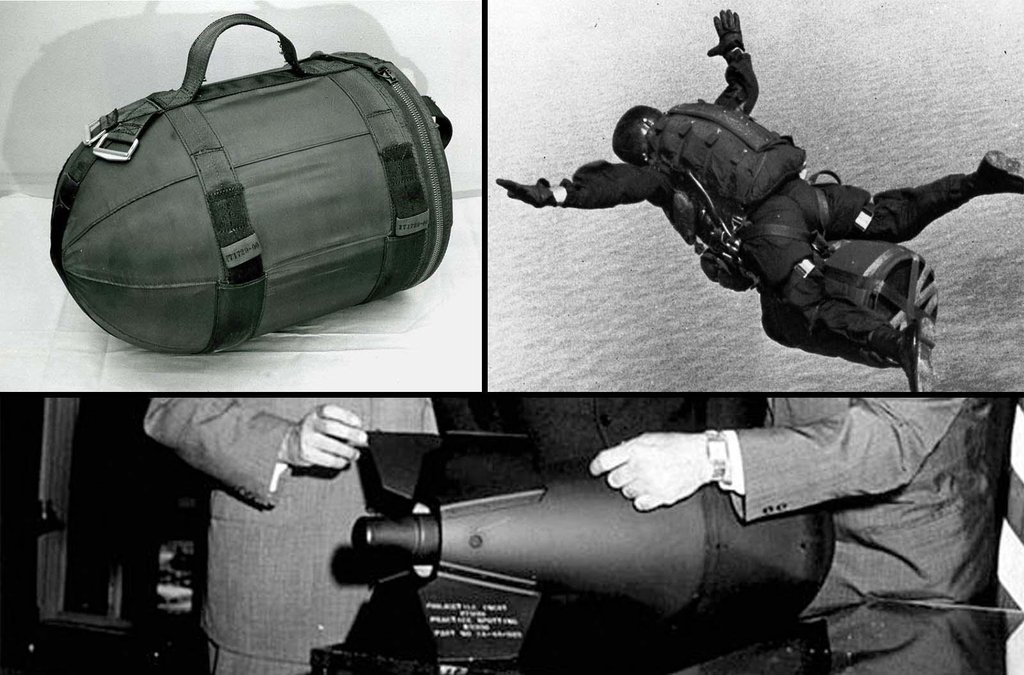
The W54 nuclear warhead is one of the most unusual and intriguing weapons ever produced during the Cold War. Unlike the massive, city-destroying bombs that usually come to mind when people think of nuclear weapons, the W54 was engineered to be incredibly small and portable—so compact, in fact, that a single person could carry it.
Weighing about 51 pounds (23 kilograms) and similar in size to a large gym bag, the W54’s explosive yield was modest by nuclear standards, estimated at between 10 and 20 tons of TNT equivalent. For comparison, the bomb dropped on Hiroshima produced a blast of roughly 15,000 tons. The W54’s intentionally low yield made it suitable for use as a tactical weapon, designed to target specific military objectives like troop formations, tanks, or critical infrastructure, rather than cause widespread destruction.
The W54 was adapted for several uses, including as a warhead for certain short-range missiles and portable nuclear demolition munitions. Its portability and flexibility made it a unique asset for military planners, allowing nuclear firepower to be delivered to places and situations that larger bombs simply couldn’t reach.
Although several hundred W54 warheads were produced, none were ever used in combat. The concept of such a small, tactical nuclear device ultimately fell out of favor as global nuclear strategy shifted toward more controlled, long-range delivery systems and greater concern about the risks of battlefield nuclear use.
This man printed 250 million in counterfeit money and sold 50 million of it before getting caught. He then made a deal with the court in exchange for revealing the location of the remaining 200 million he would avoid any jail time. In the end he got away with it only serving 6 weeks in jail.

Frank Bourassa, a seemingly ordinary entrepreneur from Quebec, pulled off one of the most impressive counterfeiting operations in modern history. Before turning to crime, Bourassa ran a legitimate auto brake pad business and lived a fairly quiet life. But after growing frustrated with bureaucracy and convinced that the system was rigged, he decided he could beat it—by making his own money.
His approach was meticulous. Bourassa didn’t settle for cheap tricks or shortcuts. Instead, he spent months obsessively researching how U.S. currency was made, eventually tracking down a European paper manufacturer who could replicate the precise cotton-linen blend used in real American bills. He sourced security threads and watermarks to match, ensuring that his fake $20 bills looked and felt just like the real thing. Setting up shop in a secluded location, he ran his custom-built presses nearly nonstop, eventually producing $250 million in counterfeit twenties. He even recruited a small, trusted team, demanding secrecy at every step.
The notes were so convincing that, for a while, no one suspected a thing. Bourassa sold about $50 million worth of his counterfeit bills, mostly to organized crime groups overseas at a steep discount. He was so confident in his product that he sometimes used the bills himself at local stores, even joking that his biggest worry was accidentally mixing a fake bill with real cash when buying groceries.
It wasn’t sloppiness that brought him down, but a break in his network: one of his associates tried to sell a large quantity of the counterfeit bills to undercover agents. Once authorities closed in, Bourassa didn’t panic—he negotiated. Facing the possibility of life in prison, he struck a deal: in exchange for revealing the location of $200 million in hidden counterfeit bills, prosecutors offered him a dramatically reduced sentence.
The result? Bourassa served just six weeks in jail and paid a modest fine, escaping both severe punishment and extradition. After his release, he pivoted to a different life, consulting on fraud prevention and currency security. He’s spoken openly about the stress and constant pressure of his criminal years, insisting it was far from the glamorous lifestyle people might imagine. And in a final twist, authorities were never able to recover every last fake bill—meaning millions of dollars in near-perfect counterfeit twenties might still be out there, lost or waiting to resurface.
In 1518, in the small French town of Strasbourg, a young woman named Frau Troffea started dancing uncontrollably in the street. Her dancing continued for days & on the 3rd day, her shoes were soaked with blood. She attracted 30+ people to join her, which catalyzed the Dancing Plague of 1518

In the sweltering summer of 1518, the city of Strasbourg (then part of the Holy Roman Empire, now France) became the stage for one of the strangest and most inexplicable events ever recorded: the Dancing Plague. It began when a woman known as Frau Troffea stepped into the street and started to dance—alone, feverishly, and without apparent reason. She kept dancing for days, seemingly unable to stop, and within a week, dozens more had joined her. As the days went by, the crowd of compulsive dancers grew into the hundreds, turning a narrow street into an open-air madhouse.
What made this phenomenon even stranger was its sheer physical toll. Eyewitness accounts and city records report that people danced until their feet bled, collapsing from exhaustion, and some even reportedly died of heart attack or stroke brought on by nonstop movement. The authorities were at a loss. Doctors ruled out supernatural causes, diagnosing it as “hot blood”—essentially a form of fever. Instead of restricting the dancers, city leaders tried to help by hiring musicians and clearing space for dancing, hoping to somehow let the compulsion run its course.
The “plague” continued for about a month before it finally tapered off, leaving many dead and countless others weakened and bewildered. To this day, historians and scientists still debate what caused it. Some think it was mass psychogenic illness—a kind of collective psychological stress response, possibly triggered by the extreme hardships of famine, disease, and religious anxiety in early 16th-century Strasbourg. Others suggest ergot poisoning from contaminated rye, which can cause hallucinations and convulsions, though this theory is less widely accepted now.
‘The Crawlers’ were the lowest of the British poor. This elderly widow is sitting outside a tailors shop, holding a baby while its mother works. She was given a cup of tea and a slice of bread daily in return.

In the shadowy corners of Victorian London, amid the soot, stench, and chaos of the city’s poorest neighborhoods, lived a group so destitute they barely registered in official statistics or charitable reform reports. They were called “The Crawlers.” The name alone conjures an unsettling image, and the reality was even more tragic.
The Crawlers were among the very lowest of the British poor. They were mostly women—elderly, infirm, or abandoned—along with some disabled men and children. Their existence was so precarious that many could not even walk upright due to hunger, disease, or disability. Instead, they dragged themselves along the filthy pavements, moving on hands and knees in search of scraps of food, rags to sell, or a few pennies from passersby. Some literally “crawled” from doorstep to doorstep, begging for crusts or coal, as they had no homes or family to care for them.
Charles Dickens and other Victorian writers documented their existence, but it was the pioneering social reformers and photographers—like John Thomson and Adolphe Smith—who exposed the Crawlers’ plight to a wider audience. In their 1877 book Street Life in London, Thomson and Smith described the Crawlers as the most miserable of the city’s poor, often living on a single meal a day, huddling together at night under railway arches or in doorways for warmth and safety.
The Crawlers’ existence was a direct result of the brutal economic conditions of the time: the lack of social safety nets, rampant unemployment, chronic illness, and the indifference of the city’s wealthier classes. With no work, no support, and often no ability to stand, the Crawlers survived at the absolute margins of society—sometimes only for a few years before succumbing to starvation or disease.
Frank Lucas was an drug lord who ruled Harlem in the 1970s. This photo was taken in 1971 when he wore a $100,000 beaver coat to watch Muhammad Ali’s boxing match.

Frank Lucas was an African-American drug lord whose name became synonymous with Harlem’s criminal underworld in the late 1960s and 1970s. Born in rural North Carolina in 1930, Lucas moved to New York City as a young man, drawn by the promise of opportunity—and quickly pulled into the city’s rougher currents. He started out as a small-time hustler, but his ambitions stretched far beyond the street corners and pool halls of Harlem.
Lucas’s ascent to power came through his boldness and ingenuity. Frustrated by the corruption and greed of established Mafia middlemen, he decided to cut them out entirely. He traveled to Southeast Asia during the Vietnam War and forged a direct connection with heroin suppliers, smuggling massive quantities of the drug into the U.S. using American military planes and coffins. By cutting out the “Italian connection,” Lucas was able to offer a product that was both purer and cheaper than anything on the street, and he quickly built a multimillion-dollar empire. His “Blue Magic” heroin became legendary, and he amassed enormous wealth, luxury cars, and an army of loyal enforcers.
At the height of his power, Lucas was making hundreds of thousands of dollars a day. He was both feared and respected, moving in celebrity circles and flaunting his wealth with tailored suits and extravagant parties. But his success also made him a prime target for law enforcement. In 1975, after a massive investigation led by detective Richie Roberts, Lucas was arrested and ultimately convicted on federal and state drug charges. Facing a long sentence, he cooperated with authorities, providing information that led to the convictions of corrupt cops and rival dealers, which further complicated his legacy in the Harlem community.
His life inspired the 2007 film American Gangster, starring Denzel Washington, which dramatized both his rise and his eventual fall.