Laika, the first dog in space, sacrificed for a spacefaring future.

Before the first human ever slipped the bonds of Earth, a stray dog from the streets of Moscow was launched into the unknown. Her name was Laika. She didn’t volunteer. She didn’t understand the mission. But on November 3, 1957, the Soviet Union placed her aboard Sputnik 2 and sent her hurtling into orbit—not as a passenger, but as a test subject. As proof that life could survive in space. That the final frontier could be breached, not just by machines, but by living, breathing organisms. That the race for the cosmos was real, and winnable.
What the world didn’t know at the time—what Soviet officials didn’t admit until decades later—was that Laika never stood a chance. There was no plan to bring her home. There was no reentry capsule. No parachute. She died within hours, likely from overheating and stress, her heart racing beyond safe limits before the cabin grew fatally hot. But the Soviet headlines told a different story. They spoke of scientific triumph. Of a brave little dog circling the Earth. Of progress.
And in a way, it was progress. Brutal, cold, and inarguably real. Laika’s death paved the way for human spaceflight. Her sacrifice provided critical data about the effects of space on a living body—data the Soviets used just a few years later to send Yuri Gagarin into orbit and rewrite the boundaries of what humans could do. But progress comes with receipts. And Laika’s life—short, anonymous, and cut off from the world she was born into—was one of them.
She’s remembered now with statues and plaques and soft children’s books. The street dog who became a pioneer. The martyr of the space age. But behind the sentiment lies a harder truth: the first living creature to orbit the Earth didn’t leap for glory. She was sent. Alone, frightened, and expendable. And the world watched in awe, never asking if wonder was worth the cost.
15-year-old African American student Dorothy Counts starts the school year at Harry Harding High School in Charlotte, North Carolina, amid protests, screams, and insults from White people who were against school integration, on September 4, 1957

On September 4, 1957, the battle lines of American history were redrawn—not in a foreign land or on a government floor, but on a high school sidewalk in Charlotte, North Carolina. A 15-year-old girl named Dorothy Counts walked into Harry Harding High School surrounded not by classmates, but by a hostile mob of white students and parents, spitting, jeering, and hurling slurs with the vitriol of a lynch mob dressed in school clothes. What she did was not symbolic. It wasn’t quiet. It wasn’t sanitized. It was brutal, present-tense courage staring down an avalanche of centuries-old hatred.
What’s often lost in the retrospective glow of civil rights milestones is the sheer physical danger of the moment. Dorothy wasn’t escorted by U.S. Marshals. She had no federal phalanx shielding her from the brickbats of racial animosity. Her father dropped her off. And as she stepped through the front gate, the crowd tightened around her. Not metaphorically. They literally closed in. Boys blew cigarette smoke in her face. Girls threw sharpened insults like switchblades. One photograph shows her gripping her books like they were armor, eyes forward, her body visibly trying not to flinch.
And this wasn’t Alabama. It wasn’t Mississippi. This was Charlotte. A city often painted as “moderate” in its resistance to integration. But the hate that rose up to meet Dorothy wasn’t moderate. It was rabid, generational, and practiced. Her very presence was a challenge to the fiction that white supremacy could be politely maintained. And the system responded like a wounded animal. Four days. That’s how long she lasted before the threats and abuse became too dangerous to ignore. Four days of white America telling a child: You do not belong here. Not in our schools. Not in our world. Not even in history, if they could help it.
But here’s the part history couldn’t bury: they failed. Because even though they forced her out, the image of Dorothy Counts walking through that gauntlet endures—etched into the national consciousness with the same gravity as any battlefield photo. And in that moment, she became a different kind of soldier. One that didn’t carry a rifle. One that stood still while history swung at her full force—and didn’t look away.
Polish school teacher, Wladyslaw Bielinski moments before his execution (1939). In the first months of WWII, the Third Reich attempted to wipe out Poland’s intellectual class, executing 60,000 people. They knew the “intellectual elite” would stop the regime from seizing complete control

Władysław Bieliński was a schoolteacher. That word—teacher—might not stir the same fear in a dictator’s heart as soldier or spy, but it should. Because in the eyes of the Third Reich, men like Bieliński were the real threat. Not because they carried weapons, but because they carried ideas. Because they knew how to ask questions. How to teach others to do the same. And that made them dangerous.
It’s 1939. The Nazi war machine has just torn into Poland with the blunt force of tanks and bombers, but behind the frontline carnage, something quieter and colder begins: Intelligenzaktion. A systematic effort to exterminate the Polish intellectual class. Teachers, priests, doctors, professors—anyone who might inspire resistance, who might tell the truth, who might stand up in front of a room full of young minds and plant a seed the Reich couldn’t control. Sixty thousand people were targeted. Not in battle. Not by accident. By design.
The photo of Władysław Bieliński—captured just moments before his execution—isn’t blurry or obscured. It’s clear. He’s standing upright, coat still buttoned, face composed. And if you didn’t know the context, you might think he was waiting for a bus, not a bullet. But the Nazis didn’t need to torture him. They didn’t need a confession. They needed silence. And Bieliński, simply by existing, was a noise they couldn’t tolerate.
What the regime feared wasn’t a gun in his hand. It was a chalkboard. A lesson plan. A classroom full of students who might grow up to value liberty, question authority, and refuse to accept fascism as fate. So they pulled the trigger. Not just on one man, but on a generation of Polish thinkers. Because they knew: if you want to control a nation, you don’t start with the soldiers. You start with the teachers.
Four Korean comfort women after they were liberated by US-China Allied Forces outside Songshan, Yunnan Province, China on September 7, 1944.

On September 7, 1944, in the shadows of the war-torn hills of Yunnan Province, four Korean women stood blinking into the sun, newly freed by U.S.-China Allied forces near the Japanese airfield at Songshan. They weren’t soldiers. They weren’t spies. They were survivors of one of the most brutal and systematized atrocities of the Second World War—victims of the Japanese Imperial Army’s military brothel system, known today under the sterilized euphemism: “comfort women.”
But there was no comfort. These women—girls, really, many taken from their villages as teenagers—had been trafficked across borders, forced into sexual slavery, and subjected to daily assaults under military regulation. They were treated not as civilians or even prisoners, but as consumables. Used. Rotated. Discarded. The Japanese government at the time didn’t just allow it—they engineered it, constructing a supply chain of bodies to serve an army they feared would turn violent without an outlet.
The photograph taken that day doesn’t offer tidy resolution. The women aren’t crying or smiling. Their expressions are somewhere between dazed and wary, caught in the liminal space between captivity and freedom. Liberation, after all, isn’t a light switch. It doesn’t undo years of degradation, or stitch the soul back together in an afternoon. These women weren’t given parades or medals. Their stories were buried, ignored, or twisted for decades—because the truth was too shameful for the victors, and too damning for the vanquished.
Yet they stood. In that moment, they were no longer property of the Japanese Empire. They were no longer ghosts inside a system designed to erase them. They were Korean women, alive, unbroken, and seen. And history, finally, had to look back.
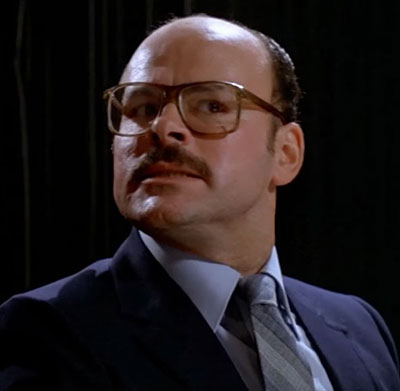
Wernher von Braun, director of NASA’s Marchall Space Flight Center, at his office in Huntsville, Alabama 1965

In 1965, Wernher von Braun sat at his desk in Huntsville, Alabama, surrounded by blueprints, models, and the quiet hum of a machine that had only recently learned to dream beyond Earth. As the director of NASA’s Marshall Space Flight Center, von Braun was now an American hero, the architect behind the Saturn V rocket that would, in just a few years, carry men to the Moon. But the room was haunted—not by ghosts, but by history.
Because before he was building rockets for NASA, Wernher von Braun had built them for Hitler.
In Nazi Germany, von Braun had been the chief engineer behind the V-2 rocket, a technological marvel that delivered death to London and Antwerp. It was the world’s first long-range guided ballistic missile—a triumph of engineering and a horror of war. Thousands died not just from the blasts but in the brutal labor camps where these rockets were assembled. Mittelbau-Dora wasn’t a factory; it was a graveyard where enslaved workers died by the thousands under SS watch, producing weapons that bore von Braun’s signature vision.
After the war, Operation Paperclip brought von Braun and over 1,500 other German scientists to the United States—not as prisoners, but as prized assets. The Cold War needed minds more than morals, and so the man who once pledged allegiance to the Third Reich now wore a NASA badge and spoke of mankind’s destiny among the stars. It was one of the great American contradictions: the path to the Moon was paved with the talents of a man who had once helped rain terror from the sky.
In his Huntsville office, von Braun could now speak of exploration, of peace, of progress. And maybe he believed it. Maybe he had always believed it, even while the SS loomed over his projects. But the desk he sat at in 1965 was built atop a fault line—between past and future, between science and complicity, between what we dream and what we’re willing to ignore to make those dreams real.