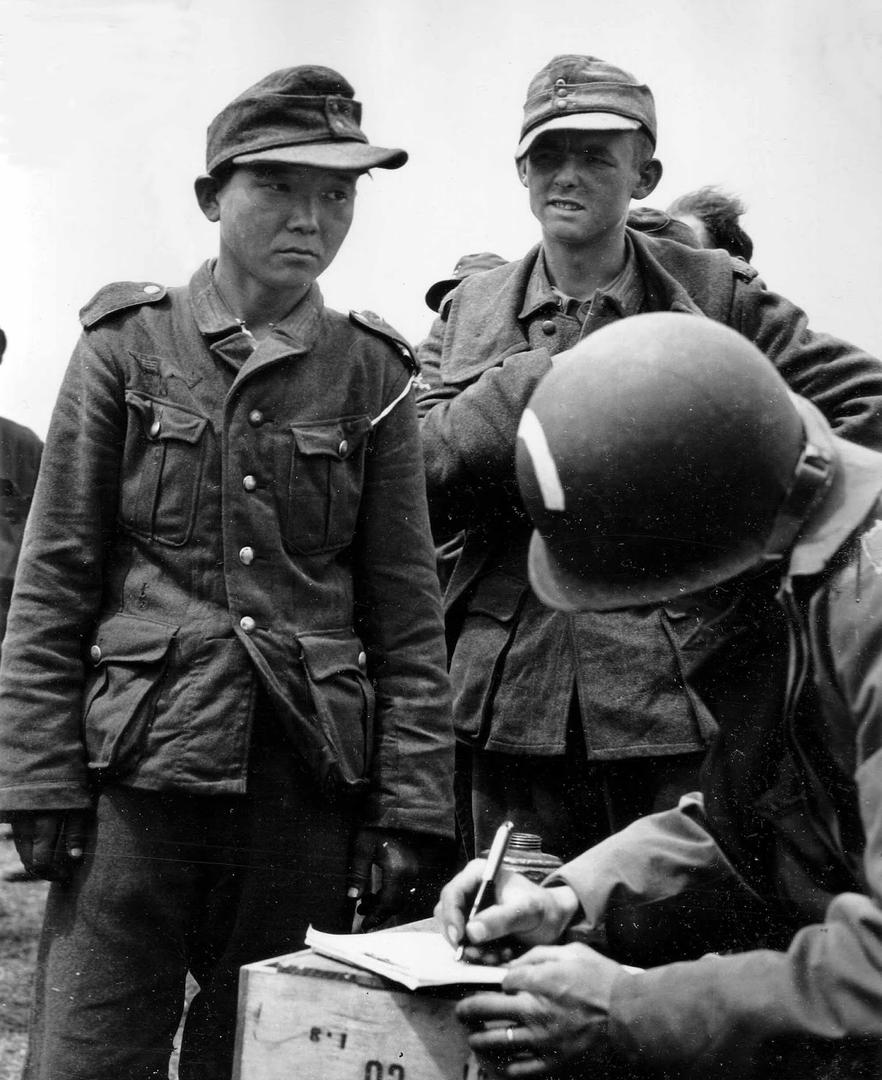
Yang Kyoungjong, the only known soldier to have fought on three sides of a war, 1944
You ever hear a story so strange, so improbable, that your first instinct is to think this has to be a myth? And yet, every so often, history delivers something so bizarre, so painfully human, that it snaps into place with a weird sort of logic.
That’s the story of Yang Kyoungjong, a Korean man who, by 1944, had served in the Imperial Japanese Army, been conscripted into the Soviet Red Army, and then forcibly drafted into the German Wehrmacht—all in the same war.
This isn’t a “rags to riches” tale. It’s not a war movie screenplay with a satisfying third act. This is history as a meat grinder. It’s what happens when a human being becomes a piece of flotsam in the tidal wave of 20th-century geopolitics.
So let’s rewind.
In 1938, Yang was just 18 years old, living in Japanese-occupied Korea. Japan drafts him—because they can—and sends him to fight against the Soviet Union at the Battle of Khalkhin Gol. If you’ve never heard of it, that’s because it wasn’t a glamorous front. It was a brutal, dusty, forgotten war between two empires feeling each other out in Mongolia. The Japanese lose. Yang is captured.
Now he’s a prisoner of the Soviets. And Stalin doesn’t really do Geneva Conventions. So instead of sending him home, they throw him into a gulag. Then, when things start going south in Europe, they empty the camps and draft the prisoners—including Yang—into the Red Army. Next thing he knows, he’s on a train heading west, wearing Soviet boots, fighting the Nazis in Ukraine.
And then, in 1944, during D-Day, he’s captured by American forces.
Three different uniforms.
Three different armies.
Three entirely different sides of the same global conflict.
19th-century Yakuza boss Shimizu Jirocho, 1880’s. One of the biggest crime bosses in Japan & one of the richest, most powerful men in the entire country. He had powerful ties to the Japanese government during both the Shogunate & the Meiji restoration

History isn’t just shaped by emperors and generals. Sometimes it’s built quietly, almost invisibly, by people operating in the margins. People who aren’t supposed to matter as much as they do.
Shimizu Jirocho is one of those figures.
He was born in 1820, during the long peace of the Tokugawa Shogunate, when Japan was tightly ordered and socially rigid. Everything had its place. Samurai ruled. Merchants followed. And people like Jirocho, gamblers, fixers, organizers, lived somewhere outside that formal structure, filling in the gaps the system couldn’t quite manage.
But systems, no matter how stable they seem, don’t last forever.
By the mid 19th century, that entire world began to unravel. The arrival of foreign powers, internal unrest, and political fractures led to the Meiji Restoration, a sweeping transformation that dismantled the old order and replaced it with something faster, more modern, and far less predictable.
This is where Jirocho’s story becomes especially revealing.
He wasn’t a rebel trying to overthrow the system. Nor was he a loyal servant clinging to the old ways. Instead, he did something far more pragmatic: he adapted. He built influence through trade, controlled gambling networks, and gathered people around him who were loyal not because of law, but because of trust, money, and protection.
And as Japan shifted, those kinds of networks became incredibly valuable.
Authorities, whether from the fading shogunate or the emerging imperial government, sometimes relied on men like Jirocho to keep order in places where official power didn’t fully reach. It wasn’t a formal partnership, and it certainly wasn’t clean. But it worked.
That’s the part of history that can feel uncomfortable: the realization that stability is often maintained not just by institutions, but by informal systems running alongside them.
Jirocho lived in that overlap.
By the 1880s, he had become one of the most powerful and wealthy figures in Japan, not in spite of the country’s transformation, but because he understood how to move within it. Over time, his reputation softened. Stories about him cast him less as a criminal and more as a local guardian, someone who provided a kind of order when official structures were still finding their footing.
Whether that image was fully deserved is almost beside the point.
What matters is what his life reveals.
Periods of change don’t just elevate the obvious leaders. They also create space for individuals who can read uncertainty, build relationships, and operate where rules are unclear. Jirocho wasn’t the architect of Japan’s transformation, but he was one of the people who learned how to live inside it, and in doing so, helped shape how it unfolded at the ground level.
History, in other words, isn’t only decided at the top.
Sometimes it’s negotiated in the spaces in between.
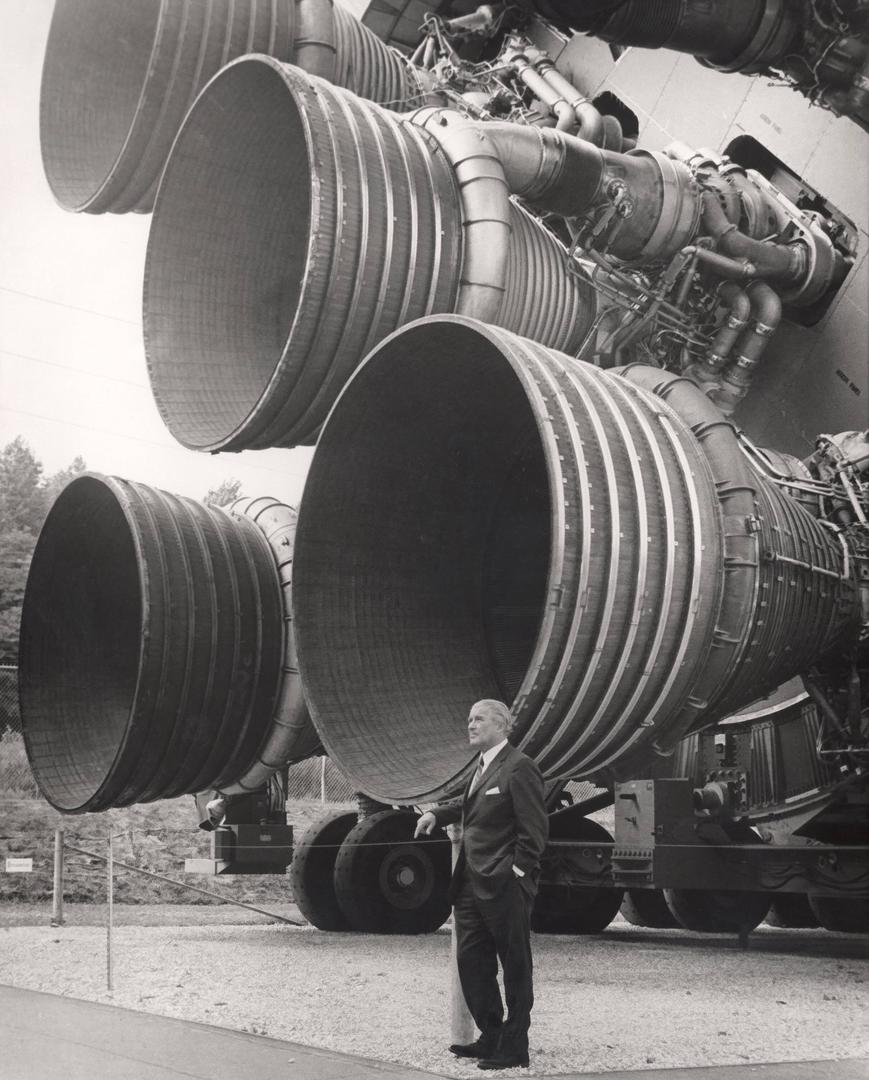
Former Nazi, Wernher von Braun standing next to the F-1 engines on the Apollo Saturn V rocket
Von Braun began his career in Nazi Germany, working on the V-2 rocket, the world’s first long range guided ballistic missile. It was a technological breakthrough, no question. But it was also built with forced labor, fired at civilian targets, and tied directly to the machinery of a regime responsible for unimaginable destruction.
And then, within a few years, he was in the United States.
That happened through Operation Paperclip, a secret American program after World War II that brought German scientists, engineers, and technicians to the United States. The thinking was brutally practical: these men had knowledge the United States wanted, and American officials did not want that knowledge ending up in Soviet hands.
So men who had worked for Nazi Germany were quietly turned into Cold War assets.
In many cases, their pasts were softened, minimized, or pushed into the background. The question was not only what they had done during the war, but what they could do now. Could they build rockets? Could they help develop missiles? Could they give America an advantage in the new struggle against the Soviet Union?
That was the moral bargain at the center of Operation Paperclip.
The United States took people with deeply compromised histories and gave them new lives, new laboratories, and new titles. It was not done because anyone thought the past was clean. It was done because the Cold War made technological expertise feel too valuable to waste.
Von Braun was given a second act.
At NASA, he became the central architect behind the Saturn V, the rocket that would carry astronauts to the Moon during the Apollo program. And those F-1 engines beside him in that photograph? They were the most powerful single chamber liquid fueled rocket engines ever built. Controlled fire on a scale that bordered on the incomprehensible.
The same mind that once helped build weapons of war was now building a machine meant to leave Earth entirely.
That’s the tension that lives inside the image.
Because it’s tempting to turn this into a clean story. Redemption. Progress. The idea that history moves in a straight line from darkness to light. But real history rarely offers that kind of simplicity.
Von Braun didn’t become a different person overnight. The past didn’t disappear. It followed him, even as he stood there in front of a rocket that represented one of humanity’s greatest achievements.
And yet, without him, it’s hard to imagine the United States reaching the Moon when it did.
That’s the uncomfortable truth.
The Saturn V rocket, powered by those F-1 engines, wasn’t just a triumph of engineering. It was also a product of a world where nations were willing to make difficult, sometimes morally ambiguous choices in pursuit of technological dominance.
So when you look at that image, it’s worth sitting with the contradiction.
A man shaped by one of the darkest chapters in modern history, standing beside a machine that would carry human beings into space.
Not a simple story. Not a clean one.
But a very human one.
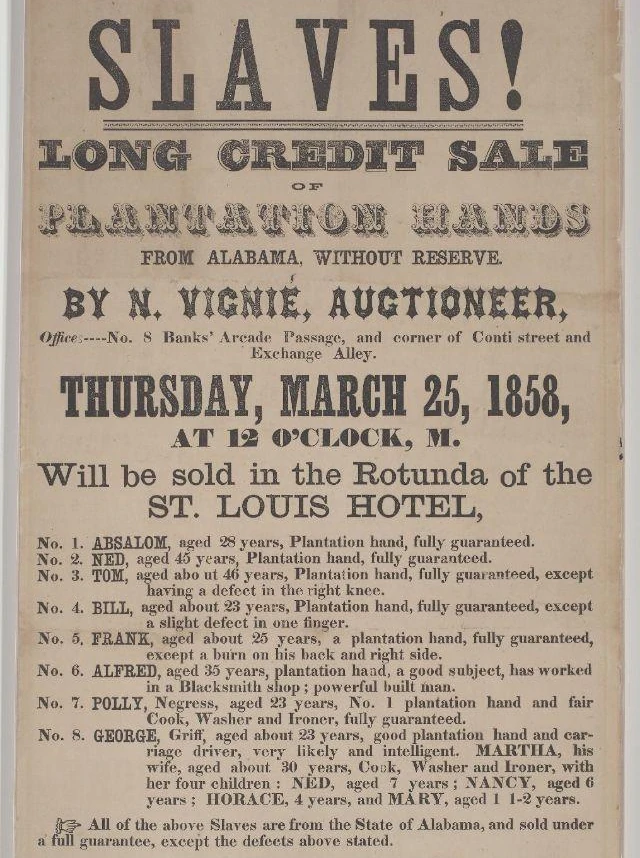
Ad from a slave sale auctions, Alabama 1858
There’s a particular kind of historical document that doesn’t need interpretation. It doesn’t require context or debate or a historian to explain what it means.
An 1858 slave auction advertisement from Alabama is one of those documents.
Because it tells you everything right up front.
It reads like a sale. Dates. Location. Terms. Sometimes a list of names. Ages. Skills. Occasionally a note about “prime condition,” as if the people being described were livestock or tools. The language is clean. Transactional. Almost mundane.
And that’s exactly what makes it so disturbing.
By 1858, slavery in the American South wasn’t a chaotic or hidden system. It was organized. Legal. Integrated into the economy at every level. These ads appeared in newspapers and broadsides, sitting alongside announcements for land sales, goods, and services.
The buying and selling of human beings wasn’t treated as an exception.
It was treated as normal.
That’s the part that can be difficult to fully grasp. Not the existence of slavery itself, but the way it was woven into everyday life so completely that it could be advertised like anything else. No dramatic language. No acknowledgment of the human cost. Just logistics.
Show up at this place. On this date. Bring money.
And people will be sold.
These ads often emphasized productivity. A man might be described as a strong field hand. A woman as a skilled cook or seamstress. Children listed alongside adults. Families separated in a few lines of print, reduced to individual entries because that’s how the market worked.
Value was assigned.
Not to a life. But to labor.
And once you start to see it that way, the ad becomes more than a piece of paper. It becomes a window into how an entire system justified itself. Not through constant argument or overt cruelty in its presentation, but through repetition. Routine. The quiet insistence that this is simply how things are done.
That’s what normalizes anything.
Not loud declarations, but everyday acceptance.
When you look at an advertisement like this, you’re not just looking at a sale. You’re looking at a society that built rules, laws, and habits around the idea that some people could be owned. Bought. Sold. Listed.
All without breaking the rhythm of daily life.
And that’s what lingers.
Not just the brutality of the system, but how ordinary it was made to seem.
Stalin with Vladimir Lenin and Mikhail Kalinin. 1919.
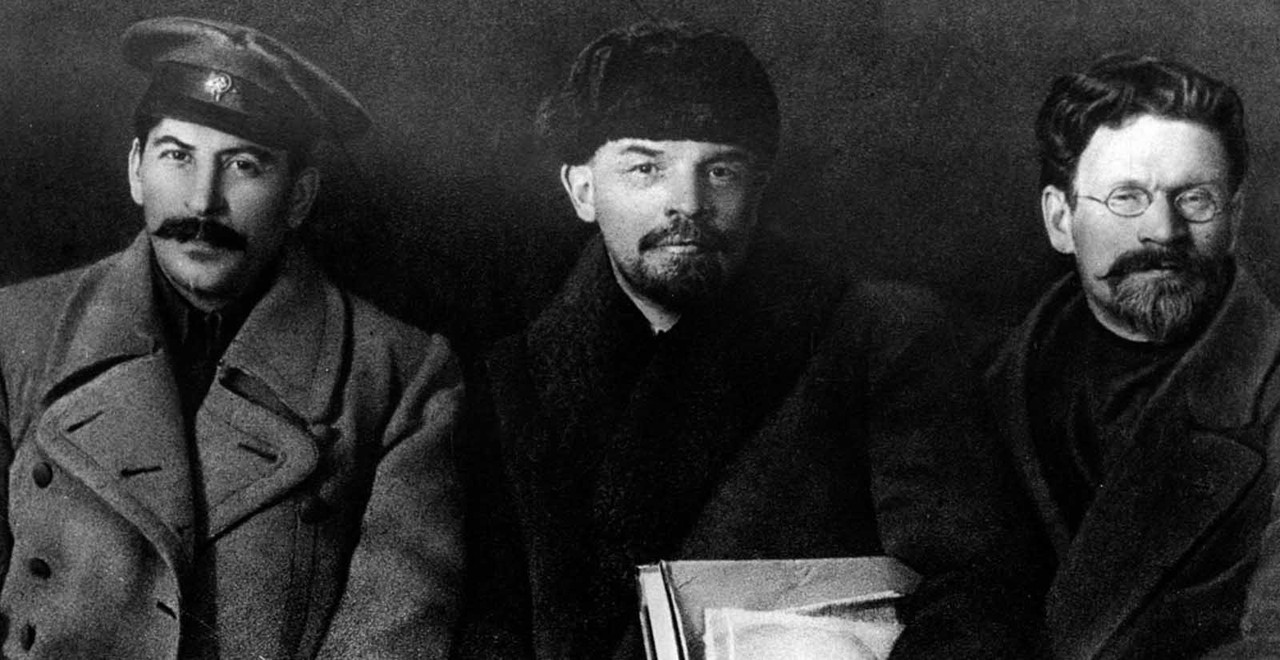
There are photographs that capture power at its peak. And then there are photographs that capture it before it hardens, when it’s still fluid, still uncertain, still being negotiated in real time.
A 1919 image of Stalin, Vladimir Lenin, and Mikhail Kalinin belongs to the second category.
Because in 1919, nothing about their future dominance was guaranteed.
Russia was in the middle of the Russian Civil War, a brutal, chaotic struggle that followed the Bolshevik Revolution. The old imperial system had collapsed, but what would replace it was still being fought over. Armies were moving. Alliances were fragile. The outcome was not yet settled.
And in the middle of all that uncertainty, you have these three men.
Lenin is the center of gravity. The intellectual architect. The one with the vision that turned revolution from theory into reality. By 1919, he is already the face of the Bolshevik state, the figure holding together a movement that could easily fracture under pressure.
Stalin, at this point, is something different.
Not yet the towering, terrifying figure history would come to know. Not yet the man who would consolidate power with ruthless efficiency. In 1919, he is a loyal operator. A behind the scenes figure. Someone trusted to handle difficult, often brutal tasks in a time when survival required exactly that kind of person.
He’s close enough to power to matter.
But not yet powerful enough to define it.
And then there’s Kalinin.
Often overlooked in retrospect, Kalinin served as a kind of public face for the emerging Soviet government, eventually holding a role that functioned, at least on paper, as head of state. He was a bridge figure. Someone meant to represent continuity and stability in a system that had very little of either.
Three men. Three different roles.
All standing inside a moment that hasn’t settled yet.
That’s what makes the photograph compelling. Because we know what comes next.
Lenin’s health will decline, and he’ll die in 1924. Stalin will outmaneuver his rivals, consolidate control, and reshape the Soviet Union through force, fear, and relentless centralization. Kalinin will remain in the system, a steady presence, but never the dominant force.
But none of that is visible in 1919.
What you see instead is proximity. Association. The early formation of a leadership group that is still figuring out what it is, and what it will become.
History has a way of flattening moments like this. It makes outcomes feel inevitable. As if Stalin was always destined to rise. As if Lenin’s dominance was permanent. As if the structure of Soviet power was already set in stone.
It wasn’t.
In 1919, it was still being built. Still fragile. Still uncertain.
And that photograph captures that brief window, before the system locks into place, before power becomes rigid, before the future becomes the past we now recognize.
A moment where everything could still go differently.
Even if, in the end, it didn’t.