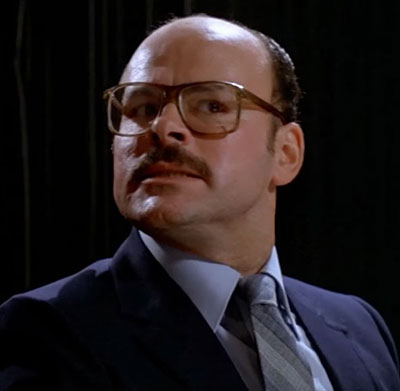

“Bob Moses had learned what was needed to make dreams become realities. He had learned the lesson of power.
And now he grabbed for power with both hands.
To free his hands for the grab, he shook impatiently from them the last crumbs of the principles with which he had entered public service and for which, during his years of idealism, he had fought só hard.”
— Robert Caro, The Power Broker
The easiest lesson to draw from Robert Moses is that power corrupts. It is also the least interesting one.
Moses did not enter public life as a cartoon villain. He was an idealist who wanted to replace patronage with expertise and use government to improve people’s lives. But he quickly encountered a problem familiar to almost every reformer: having good ideas is not the same as having the power to implement them.
Principles can tell you what ought to be done. They cannot force a legislature to approve it, persuade an interest group to surrender an advantage, or compel a bureaucracy to cooperate. To change the world, Moses concluded, he would first have to master the institutions that controlled it.
This conclusion was not wrong. Power is necessary. Every park, bridge, housing program, or transit system begins with a vision, but it becomes real only when someone obtains the authority, money, and political support needed to build it. Reformers who refuse to acquire power often preserve their purity by accomplishing very little.
The danger begins when power stops being understood as a tool and becomes the measure of whether the mission can survive. Once Moses believed that only he could deliver progress, anything that weakened his authority could be interpreted as a threat to progress itself. Oversight became obstruction. Compromise became weakness. Public participation became interference by people who did not understand the larger plan.
This is how principles are usually abandoned. It does not happen in a dramatic moment of betrayal, but through a series of arguments that sound practical at the time. One exception is made because the project is urgent. One opponent is crushed because the stakes are unusually high. One democratic safeguard is bypassed because the people enforcing it are shortsighted. Each decision can be defended individually. Together, they form a new moral system in which whatever increases your ability to act becomes good.
Power also changes the information surrounding the person who possesses it. People become reluctant to deliver bad news. Allies learn which opinions will be rewarded. Successes are attributed to the leader’s genius, while failures are blamed on disloyalty or incompetence elsewhere. Eventually, the powerful person encounters less resistance and mistakes that absence of resistance for proof that he is right.
The tragedy of Moses is not simply that he sacrificed his ideals to obtain power. It is that he could continue believing he was serving those ideals after power had become his primary concern. He did not need to think of himself as corrupt. He could tell himself that every attack on his authority endangered the parks, roads, and public works only he was capable of creating.
That is the deeper warning in Caro’s passage. The people most vulnerable to power may not be those who begin with no principles. They may be those who possess such confidence in their principles that they come to believe ordinary restraints should not apply to them.
This leaves us with an uncomfortable political dilemma. We need public officials ambitious enough to overcome inertia and competent enough to make large projects real. But the qualities that allow someone to break through institutional paralysis can also make that person impatient with accountability, negotiation, and dissent.
The answer cannot be to seek leaders who do not want power. Those people are unlikely to acquire it, and they may be unable to use it effectively if they do. The answer is to build institutions that assume even talented, visionary, and well intentioned leaders will eventually require limits.
Democratic procedures can be slow and infuriating. They can prevent good things from happening as quickly as they should. But their purpose is not merely to obstruct bad people. They exist because good intentions are not permanent, and because the person who believes he alone can deliver the future may eventually decide that the rest of us have no right to stand in his way.