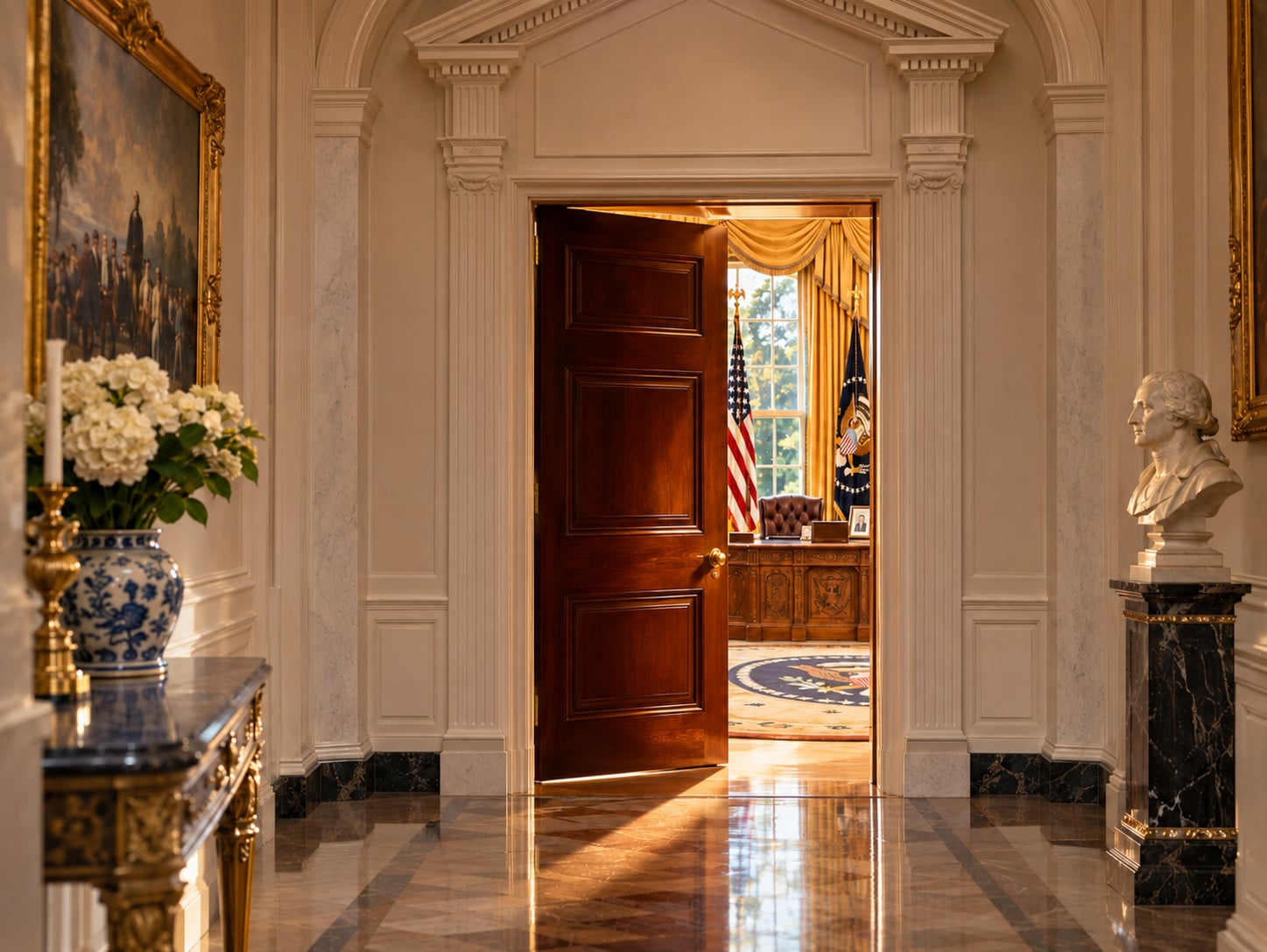
Imagine having a job where you don’t command the military, can’t sign a bill into law, and weren’t elected by a single voter—but you can decide who gets five minutes with the most powerful person in the world.
That’s the president’s chief of staff.
It’s one of the most influential jobs in Washington, and also one of the least understood. Most Americans can name the president, vice president, and maybe a handful of cabinet secretaries. But the person who spends much of the day managing the machinery around the president? That name often escapes them.
Which is remarkable, because the chief of staff can have an enormous influence on how a presidency operates.
Think of the chief of staff as the president’s gatekeeper, general manager, and occasional babysitter—all rolled into one.
Every day, hundreds of people want something from the president. Senators want favors. Cabinet secretaries want decisions. Advisers want their ideas heard. Foreign leaders want phone calls. Political allies want attention. And everybody thinks their particular emergency deserves to be at the top of the list.
The chief of staff helps decide what actually reaches the president’s desk.
That might sound like glorified scheduling, but consider the implications. If you’re deciding which problems get the president’s attention, which advisers get invited into the room, and which information gets presented first, you’re helping shape the decisions that follow.
There’s a reason people in Washington obsess over who has the president’s ear.
But controlling access is only part of the job.
The chief of staff also runs the White House operation, making sure the policy advisers, communications team, legislative staff, and other senior officials aren’t working at cross-purposes. When two powerful advisers disagree, someone has to settle the dispute or make sure the president hears both sides. When a crisis erupts, someone has to coordinate the response. When the president announces an ambitious new policy, someone has to figure out how to turn that announcement into actual government action.
And then there’s perhaps the most delicate responsibility of all: telling the president something he doesn’t want to hear.
Presidents are surrounded by people who depend on their approval. That creates an obvious problem. The more powerful someone becomes, the easier it is for uncomfortable truths to get filtered out before they reach him.
A chief of staff who simply tells the president what he wants to hear isn’t providing much value. The job requires someone willing to say that an idea won’t work, that a political ally is causing trouble, or that a decision needs reconsideration.
Of course, that takes a particular kind of relationship. The president has to trust the chief of staff enough to tolerate being challenged.
History offers plenty of examples of how differently the position can function. James Baker brought organizational discipline and political experience to Ronald Reagan’s White House. Leon Panetta helped impose a more structured decision-making process during Bill Clinton’s presidency. Others have operated in looser systems where advisers enjoyed more direct access to the president.
And that brings us to something fascinating about the job.
The Constitution doesn’t mention the chief of staff. The position doesn’t require Senate confirmation. Its authority comes largely from one person: the president.
A chief of staff can be extraordinarily powerful on Monday and nearly powerless on Tuesday if the president decides to ignore the system.
That’s what makes the position so unusual. The chief of staff has no independent constitutional authority over the president, yet the president’s ability to govern effectively can depend heavily on how well that person organizes the White House.
The job is ultimately about managing two things that are always in short supply: the president’s time and attention.
There are only so many hours in a day, only so many decisions one person can make, and only so much information anyone can absorb. The chief of staff’s responsibility is to make sure those limited resources are spent on the things that matter.
So while the president gets the motorcades, the speeches, and the history books, the chief of staff spends much of the day behind the scenes, deciding who gets into the room, what gets discussed, and whether the machinery of government actually moves.
It’s a strange arrangement when you think about it.
The most powerful person in the country needs someone whose job, at least occasionally, is to tell him no.
Was this worth your time?
What missed? (optional)