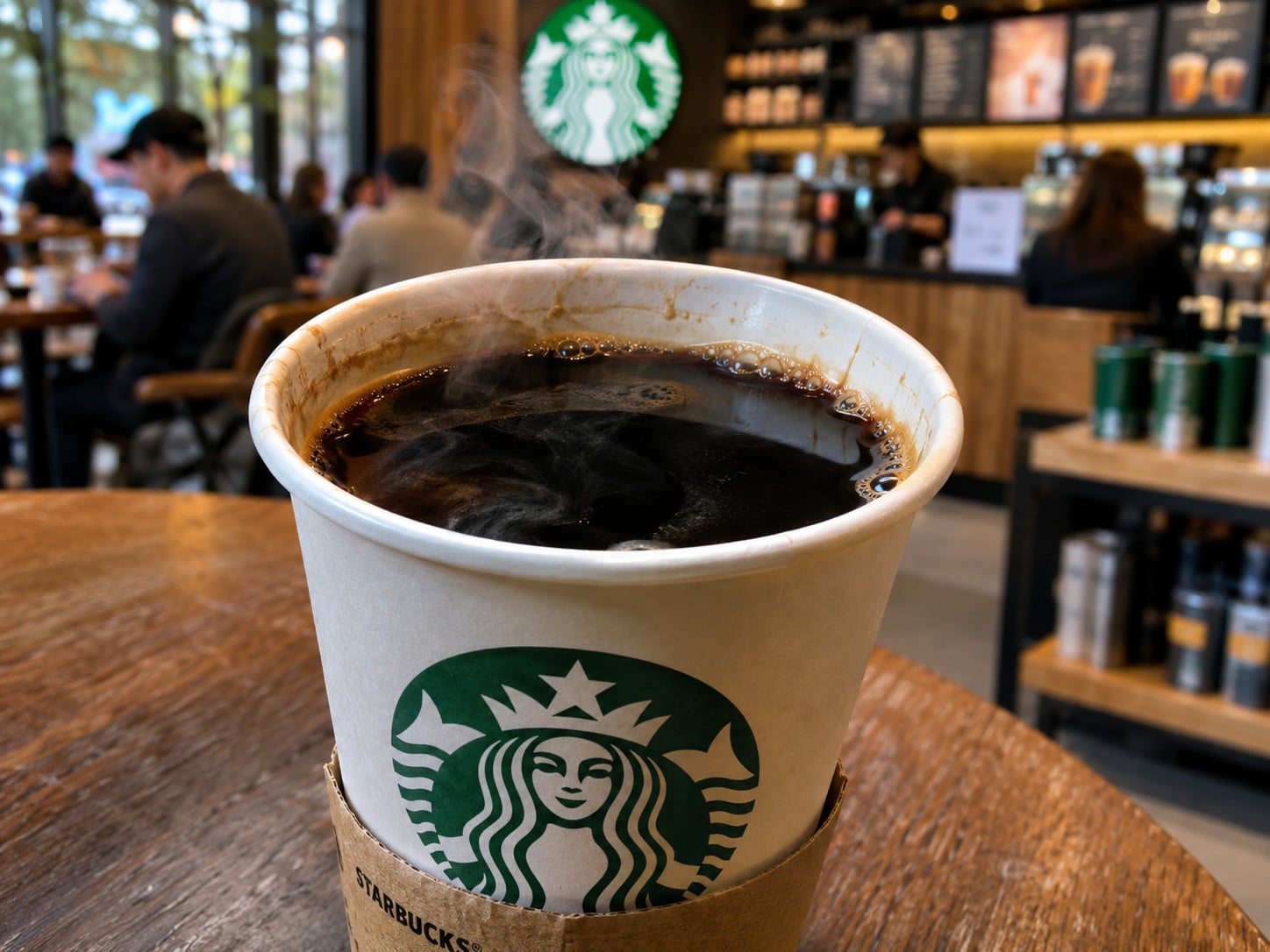
Walk into almost any Starbucks, order a regular cup of black coffee, and take a sip. Depending on your taste, you might notice something surprising: a bitter, smoky flavor that seems to overwhelm everything else. The subtle sweetness, fruitiness, and complexity that coffee enthusiasts spend so much time discussing can be difficult to find.
For a company that helped introduce millions of Americans to specialty coffee, Starbucks makes a surprisingly polarizing cup.
And yet, people keep coming back. They line up at drive-thrus, pay six or seven dollars for elaborate drinks, and carry those familiar white cups through airports, office buildings, and shopping malls around the world.
So what’s going on? Why does Starbucks coffee taste the way it does? And if so many coffee lovers dislike it, why is the company so successful?
The answer has as much to do with psychology, consistency, and the economics of coffee as it does with what’s actually in the cup.
It Starts With the Roast
Coffee beans are seeds from the fruit of a coffee plant. Before roasting, they contain a remarkable range of compounds that can produce flavors resembling chocolate, berries, citrus, nuts, and even flowers.
Roasting transforms those compounds into the flavors we recognize as coffee. But how long the beans spend in the roaster makes an enormous difference.
Lighter roasts tend to preserve more of the bean’s distinctive characteristics. A coffee grown in Ethiopia might taste bright and floral, while one from Colombia might have notes of caramel and citrus.
Darker roasts produce something quite different.
As roasting continues, sugars break down, acidity changes, and the flavors created by the roasting process begin to dominate. Eventually, the individual characteristics of the beans can become harder to distinguish.
Starbucks built much of its identity around this darker style.
The company popularized a bold, heavily roasted flavor at a time when many Americans were drinking relatively mild supermarket coffee. To customers accustomed to Folgers or Maxwell House, Starbucks offered something dramatically different.
It tasted stronger, richer, and more sophisticated.
But there’s a trade-off. Push roasting far enough, and the flavors can become bitter, smoky, or even charred.
That doesn’t necessarily mean the coffee is defective. Dark roasting is a legitimate preference, and plenty of people enjoy it. But it helps explain why someone accustomed to lighter specialty coffee might find Starbucks unpleasantly harsh.
Of course, not every Starbucks coffee is dark-roasted. Its popular Pike Place Roast, for example, is classified as a medium roast. But the company’s traditional darker blends and espresso have helped establish its reputation for bold, roasted flavors.
People who dislike those coffees aren’t necessarily tasting bad beans. They’re tasting a roasting philosophy they don’t particularly like.
Consistency Matters More Than Complexity
Imagine running a coffee shop with a single location. You can buy beans from a small producer, adjust your roasting depending on the harvest, and spend time explaining why this month’s coffee tastes different from last month’s.
Now imagine operating tens of thousands of stores.
Suddenly, your priorities change.
Customers in Seattle, Tokyo, and London expect their Starbucks coffee to taste broadly familiar. They don’t necessarily want a discussion about growing altitude or processing methods. They want the drink they ordered yesterday.
Darker roasting can help create that consistency.
By emphasizing the flavors produced during roasting rather than the delicate characteristics of individual beans, a company can deliver a more recognizable flavor profile across different harvests and suppliers.
Of course, Starbucks also relies on careful sourcing, blending, and quality control. Roasting alone doesn’t guarantee consistency.
But its signature roast style serves a clear business purpose: the coffee needs to taste like Starbucks.
For a specialty coffee enthusiast, that predictability might seem boring. For someone grabbing a cup before work, it can be exactly what they’re paying for.
Most Starbucks Customers Aren’t Drinking Black Coffee
There’s another important detail that often gets lost in debates about Starbucks coffee.
Many customers aren’t ordering a plain cup of coffee.
They’re ordering caramel macchiatos, vanilla lattes, Frappuccinos, cold foam drinks, and iced beverages with milk, syrups, or sweetened toppings.
And those ingredients change the equation.
Milk softens bitterness. Sugar makes bitter flavors more appealing. A bold espresso can provide a recognizable coffee flavor even when surrounded by milk, ice, and flavored syrup.
A delicate, lightly roasted espresso might taste wonderful on its own but become less noticeable in a large sweetened latte.
Starbucks’ bolder flavor profile can work particularly well in the kinds of drinks that made the company famous.
Consider chocolate. Most people wouldn’t enjoy eating a spoonful of unsweetened cocoa powder. It’s intensely bitter. But combine it with milk and sugar, and you have something delicious.
Coffee can work similarly.
The bitterness that makes Starbucks espresso challenging for some people to drink straight can become part of an appealing balance in a sweet, creamy beverage.
That doesn’t mean Starbucks customers don’t appreciate coffee. It means they’re often looking for a different experience than someone evaluating a carefully brewed single-origin pour-over.
Starbucks Is Selling Something Beyond Coffee
For all the attention paid to its beans, much of Starbucks’ appeal has little to do with roasting.
Consider what happens when you walk into one of its stores.
You recognize the logo. You know how ordering works. You have a reasonable idea of what your drink will taste like. You can customize it, collect rewards, and pick it up on your way to somewhere else.
There’s very little uncertainty.
And that matters more than we might realize.
Human beings are creatures of habit. We gravitate toward experiences that are familiar, especially when we’re tired, distracted, or pressed for time.
A Starbucks latte might not be the best coffee available within a five-mile radius. But it’s a known quantity.
Behavioral researchers have long studied how familiarity influences preference. Repeated exposure to something can make us like it more, even when we weren’t particularly enthusiastic about it initially.
And habits become especially powerful when they’re tied to daily routines.
For millions of customers, Starbucks isn’t simply a beverage. It’s the transition between home and work. It’s a small reward after dropping off the kids. It’s an afternoon break or a familiar comfort in an unfamiliar airport.
The coffee becomes associated with those moments.
And eventually, the ritual can matter as much as the flavor.
There’s Also the Question of What Good Coffee Actually Means
Ask ten coffee enthusiasts to describe the perfect cup, and you may get ten different answers.
Some love the bright acidity of lightly roasted African coffees. Others prefer the deep, chocolatey character of darker Latin American blends. Some want their coffee intensely bitter. Others consider bitterness a flaw.
Taste is personal, but it’s also learned.
If you grew up drinking dark-roasted coffee, a light roast might taste unpleasantly sour or weak. If you’ve spent years exploring specialty coffee, Starbucks might taste excessively roasted.
Neither reaction is mysterious.
Our expectations shape what we perceive, and repeated experiences help establish what tastes normal.
There’s an interesting irony here.
Starbucks helped convince Americans that coffee could be something worth paying attention to. Before its rise, many consumers treated coffee as a relatively interchangeable commodity.
Starbucks turned it into an experience.
But the specialty coffee movement that followed began emphasizing qualities that Starbucks’ signature style often obscures: origin, processing, lighter roasting, and the subtle differences between beans.
In some ways, Starbucks helped create the very audience that now criticizes its coffee.
The Real Genius of Starbucks
Perhaps the biggest misunderstanding about Starbucks is the assumption that its primary goal is to produce the best-tasting black coffee in the world.
It isn’t.
Starbucks has built a business around making coffee accessible, customizable, recognizable, and convenient on an enormous scale.
That requires compromises.
A small specialty café can optimize a cup for someone who cares deeply about flavor. Starbucks has to serve customers who want everything from a plain Pike Place Roast to an iced caramel drink with extra foam, while maintaining a familiar experience across thousands of locations.
Those are fundamentally different challenges.
And judging Starbucks solely by the standards of specialty coffee misses something important about why people go there.
Customers aren’t always trying to maximize flavor. Sometimes they’re buying convenience. Sometimes they’re buying consistency. Sometimes they’re buying a small moment of pleasure during a stressful day.
And sometimes, of course, they genuinely love the coffee.
The darker roasting style that one person describes as burnt may be exactly what another person finds comforting.
So why does Starbucks coffee taste so bad?
For people who dislike it, the answer often comes down to its heavier roasting styles, pronounced bitterness, and the relative absence of the delicate flavors found in lighter specialty coffees.
And why do millions of people love it?
Because Starbucks understands something that extends well beyond coffee: the thing people enjoy most isn’t always the thing that wins a blind taste test.
Sometimes it’s the thing that fits most comfortably into their lives.
And for millions of people, that familiar green-and-white cup does exactly that.
Was this worth your time?
What missed? (optional)