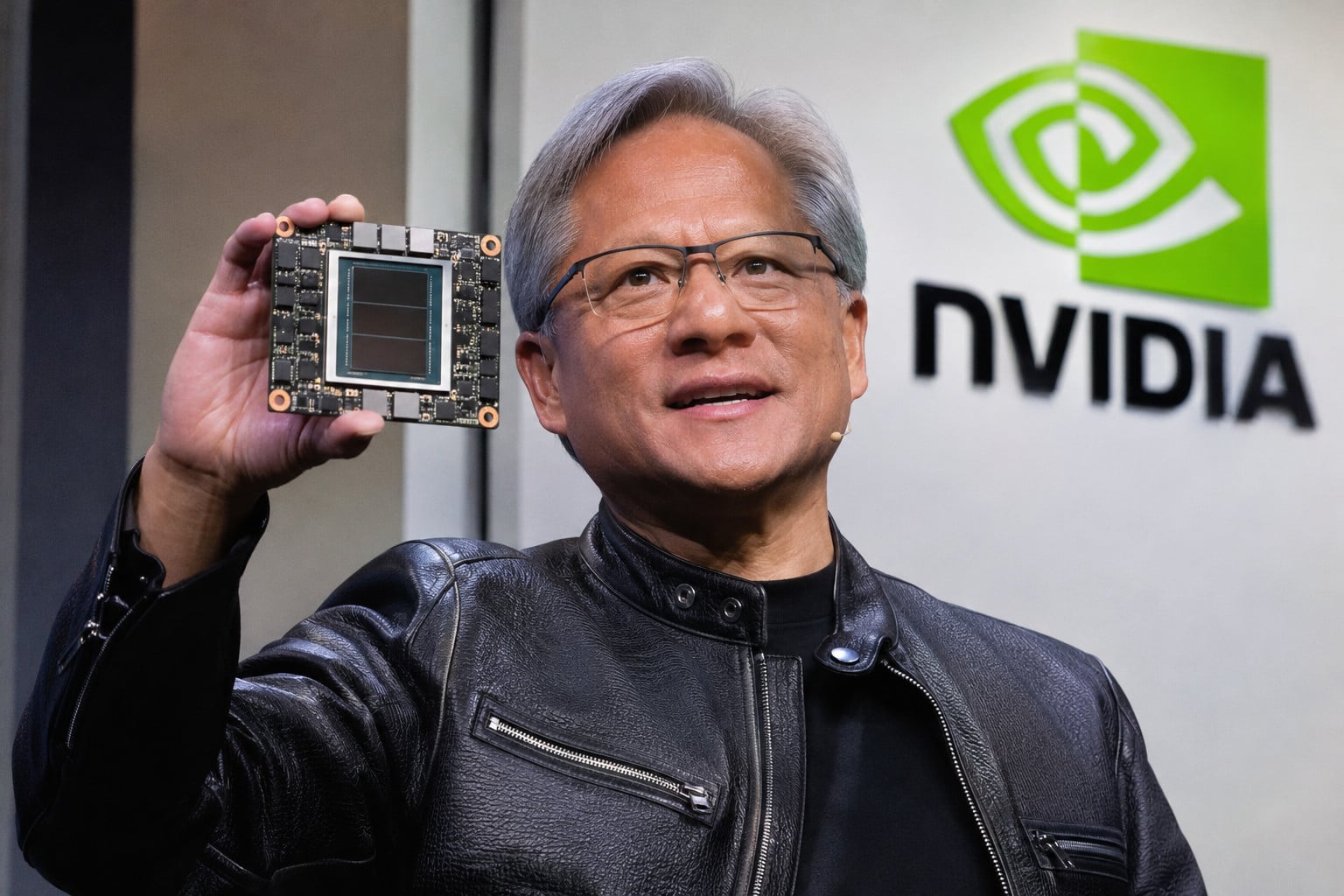
If you’ve followed the artificial intelligence boom, you’ve probably heard a lot about NVIDIA.
The company makes the powerful computer chips used to train and run many of today’s most advanced AI systems, including ChatGPT. As technology companies pour billions of dollars into artificial intelligence, NVIDIA has emerged as one of the industry’s biggest winners.
But understanding why NVIDIA has become so important requires looking beyond the chips themselves.
Much of its advantage comes from something most people have never heard of: a software platform called CUDA.
A Head Start Nearly 20 Years in the Making
In 2006, long before ChatGPT or the current excitement surrounding artificial intelligence, NVIDIA introduced CUDA.
At the time, the company’s chips were primarily associated with video games. Graphics processors, or GPUs, were designed to handle the enormous number of calculations needed to produce realistic images.
Unlike traditional computer processors, GPUs are particularly good at performing many similar calculations at the same time.
It turns out that this is also exactly the kind of work artificial intelligence requires.
There was just one problem. Getting these chips to perform tasks unrelated to graphics wasn’t particularly easy.
CUDA helped change that.
The software platform gave programmers a more practical way to use NVIDIA’s chips for scientific research, complex mathematics, and eventually machine learning.
NVIDIA made CUDA free to use, although the technology remained proprietary to the company.
Over time, universities, researchers, and software developers began building tools around it. As artificial intelligence advanced, many of the programs used to develop AI systems were designed to take advantage of NVIDIA’s technology.
By the time the AI boom arrived, NVIDIA had already spent years building the infrastructure developers needed.
Why Building a Better Chip Isn’t Enough
Other companies, including AMD, also make powerful processors capable of handling artificial intelligence.
So why can’t they simply offer a faster or cheaper chip and take NVIDIA’s customers?
The answer has a lot to do with switching costs.
Consider something familiar: your computer’s operating system.
Imagine you’ve spent 15 years using Windows. You’ve purchased software, learned how everything works, and built your business around programs designed for it.
Then someone offers you a computer running a different operating system. It’s faster, cheaper, and potentially better in several ways.
But some of your programs might not work. Others might need adjustments. Your employees would have to learn new tools, and your IT department would need to make sure everything runs properly.
The savings might no longer seem worth the trouble.
NVIDIA benefits from a similar dynamic.
Developers have spent years building and optimizing AI software for NVIDIA’s hardware. Moving to another company’s chips can involve adapting programs, replacing specialized tools, and testing whether everything performs as expected.
Not every application requires major changes. Popular AI frameworks increasingly support competing hardware. But for large companies running complicated AI systems, even relatively small technical obstacles can become expensive.
The Advantage That Competitors Are Trying to Overcome
This doesn’t mean NVIDIA’s position is guaranteed.
Competitors are developing their own software platforms, and AI developers are working to make programs easier to run across different kinds of hardware.
Google has also developed specialized AI chips, demonstrating that NVIDIA isn’t the only company capable of providing the computing power these systems require.
Still, NVIDIA has something that is difficult to manufacture in a factory: nearly two decades of developer familiarity, software development, and accumulated experience.
A competitor can design a powerful chip. Recreating an entire ecosystem of tools, libraries, and people who know how to use them is a different challenge.
And that’s an important distinction in understanding NVIDIA’s success.
NVIDIA doesn’t just make the chips that power artificial intelligence. It has spent years helping build the software environment that makes those chips useful.
For its competitors, building better hardware may be the easy part.
Was this worth your time?
What missed? (optional)