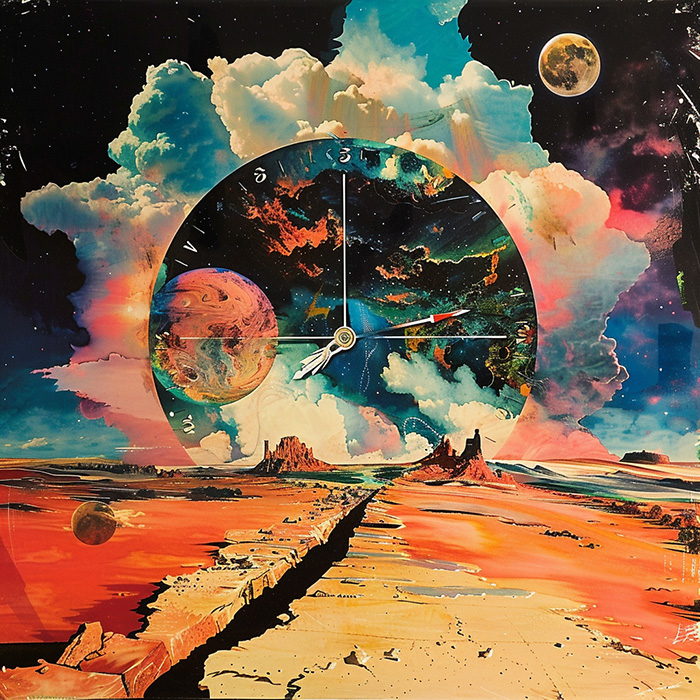
And you run, and you run to catch up with the sun but it’s sinking
Racing around to come up behind you again
The sun is the same in a relative way but you’re older
Shorter of breath and one day closer to death
Every year is getting shorter, never seem to find the time
Plans that either come to naught or half a page of scribbled lines
Hanging on in quiet desperation is the English way
The time is gone, the song is over, thought I’d something more to say
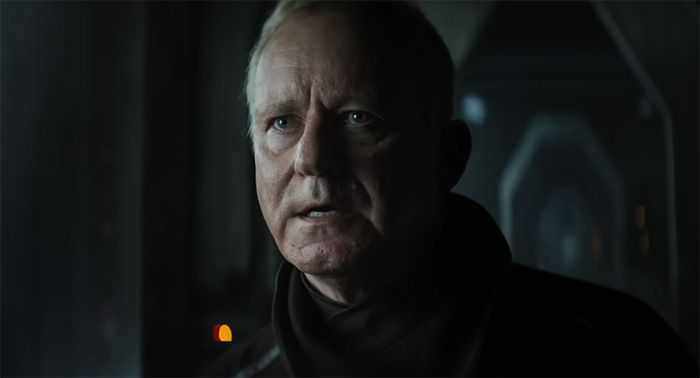
Luthen Rael: Calm. Kindness, kinship. Love. I’ve given up all chance at inner peace, I’ve made my mind a sunless space. I share my dreams with ghosts. I wake up every day to an equation I wrote 15 years ago from which there’s only one conclusion: I’m damned for what I do. My anger, my ego, my unwillingness to yield, my eagerness to fight, they’ve set me on a path from which there is no escape. I yearned to be a savior against injustice without contemplating the cost, and by the time I looked down, there was no longer any ground beneath my feet.
What is… what is my sacrifice? I’m condemned to use the tools of my enemy to defeat them. I burn my decency for someone else’s future. I burn my life, to make a sunrise that I know I’ll never see. No, the ego that started this fight will never have a mirror, or an audience, or the light of gratitude. So what do I sacrifice?
“I took a deep breath and listened to the old brag of my heart: I am, I am, I am.”
— Sylvia Plath, The Bell Jar
This quote is from Sylvia Plath’s novel “The Bell Jar,” which was published in 1963 under the pseudonym Victoria Lucas. The novel is semi-autobiographical, blending elements of Plath’s own life and experiences with the fictional journey of the protagonist, Esther Greenwood. “The Bell Jar” is often hailed for its candid exploration of mental illness, identity, and the societal pressures on women in the 1950s.
“Only much later did the flirefly take to the air. As if some thought had suddenly come to it, the firefly spread its wings, and in a moment it had flown past the handrail to float in the pale darkness. It traced a swift arc by the side of the water tank as if trying to bring back a lost interval in time. And then, after hovering there for a few seconds as if to watch its curved line of light blend into the wind, it finally flew off to the east.
Long after the firefly had disappeared, the trail of its light remained inside me, its pale, faint glow hovering on and on in the thick darkness behind my eyelids like a lost soul.
More than once I tried stretching my hand out in that darkness. My fingers touched nothing. The faint glow remained, just beyond there grasp.”
“A legion of horribles, hundreds in number, half naked or clad in costumes attic or biblical or wardrobed out of a fevered dream with the skins of animals and silk finery and pieces of uniform still tracked with the blood of prior owners, coats of slain dragoons, frogged and braided cavalry jackets, one in a stovepipe hat and one with an umbrella and one in white stockings and a bloodstained wedding veil and some in headgear or cranefeathers or rawhide helmets that bore the horns of bull or buffalo and one in a pigeontailed coat worn backwards and otherwise naked and one in the armor of a Spanish conquistador, the breastplate and pauldrons deeply dented with old blows of mace or sabre done in another country by men whose very bones were dust and many with their braids spliced up with the hair of other beasts until they trailed upon the ground and their horses’ ears and tails worked with bits of brightly colored cloth and one whose horse’s whole head was painted crimson red and all the horsemen’s faces gaudy and grotesque with daubings like a company of mounted clowns, death hilarious, all howling in a barbarous tongue and riding down upon them like a horde from a hell more horrible yet than the brimstone land of Christian reckoning, screeching and yammering and clothed in smoke like those vaporous beings in regions beyond right knowing where the eye wanders and the lip jerks and drools.”
― Cormac McCarthy, Blood Meridian, or, the Evening Redness in the West
“Thou mayest rule over sin,’ Lee. That’s it. I do not believe all men are destroyed. I can name you a dozen who were not, and they are the ones the world lives by. It is true of the spirit as it is true of battles—only the winners are remembered. Surely most men are destroyed, but there are others who like pillars of fire guide frightened men through the darkness. ‘Thou mayest, Thou mayest!’ What glory! It is true that we are weak and sick and quarrelsome, but if that is all we ever were, we would, millenniums ago, have disappeared from the face of the earth. A few remnants of fossilized jawbone, some broken teeth in strata of limestone, would be the only mark man would have left of his existence in the world. But the choice, Lee, the choice of winning! I had never understood it or accepted it before. Do you see now why I told Adam tonight? I exercised the choice. Maybe I was wrong, but by telling him I also forced him to live or get off the pot. What is that word, Lee?”
“Timshel,” said Lee.”
We live together, we act on, and react to, one another; but always and in all circumstances we are by ourselves. The martyrs go hand in hand into the arena; they are crucified alone. Embraced, the lovers desperately try to fuse their insulated ecstasies into a single self-transcendence; in vain. By its very nature every embodied spirit is doomed to suffer and enjoy in solitude. Sensations, feelings, insights, fancies—all these are private and, except through symbols and at second hand, incommunicable. We can pool information about experiences, but never the experiences themselves. From family to nation, every human group is a society of island universes.”
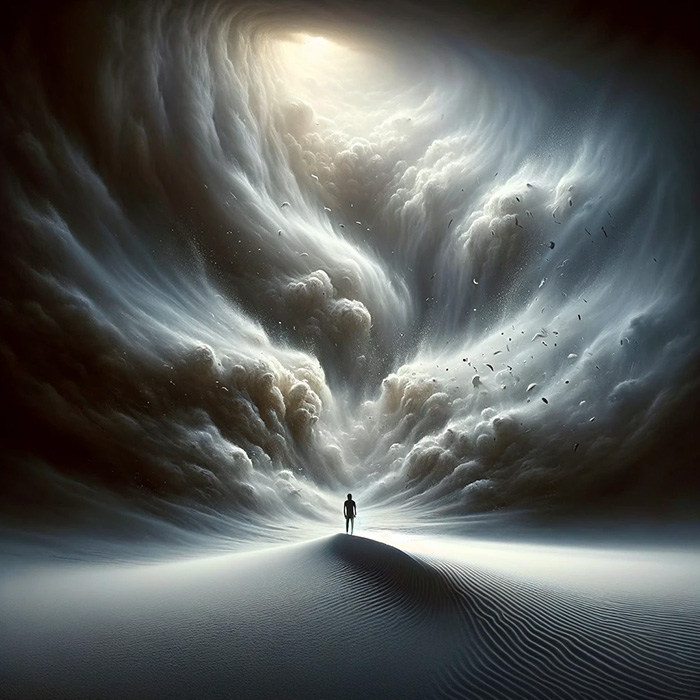
“Sometimes fate is like a small sandstorm that keeps changing directions. You change direction but the sandstorm chases you. You turn again, but the storm adjusts. Over and over you play this out, like some ominous dance with death just before dawn. Why? Because this storm isn’t something that blew in from far away, something that has nothing to do with you. This storm is you. Something inside of you. So all you can do is give in to it, step right inside the storm, closing your eyes and plugging up your ears so the sand doesn’t get in, and walk through it, step by step. There’s no sun there, no moon, no direction, no sense of time. Just fine white sand swirling up into the sky like pulverized bones. That’s the kind of sandstorm you need to imagine.
And you really will have to make it through that violent, metaphysical, symbolic storm. No matter how metaphysical or symbolic it might be, make no mistake about it: it will cut through flesh like a thousand razor blades. People will bleed there, and you will bleed too. Hot, red blood. You’ll catch that blood in your hands, your own blood and the blood of others.
And once the storm is over you won’t remember how you made it through, how you managed to survive. You won’t even be sure, in fact, whether the storm is really over. But one thing is certain. When you come out of the storm you won’t be the same person who walked in. That’s what this storm’s all about.”
I loved her against reason, against promise, against peace, against hope, against happiness, against all discouragement that could be.
― Great Expectations, Charles Dickens
This quote comes from Charles Dickens’s novel “Great Expectations,” published in 1861. The speaker is Pip, the protagonist of the story, who is expressing his deep and enduring love for Estella.
Estella is a beautiful but emotionally distant woman whom Pip has loved since childhood, despite her being raised to break men’s hearts as part of Miss Havisham’s revenge against the male gender for her own jilted love.
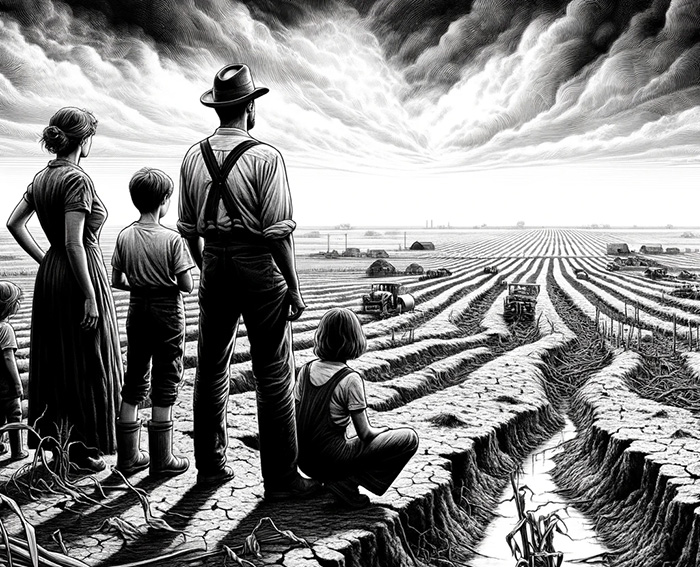
Men stood by their fences and looked at the ruined corn, drying fast now, only a little green showing through the film of dust. The men were silent and they did not move often. And the women came out of the houses to stand beside their men—to feel whether this time the men would break. The women studied the men’s faces secretly, for the corn could go, as long as something else remained. The children stood near by, drawing figures in the dust with bare toes, and the children sent exploring senses out to see whether men and women would break. The children peeked at the faces of the men and women, and then drew careful lines in the dust with their toes.
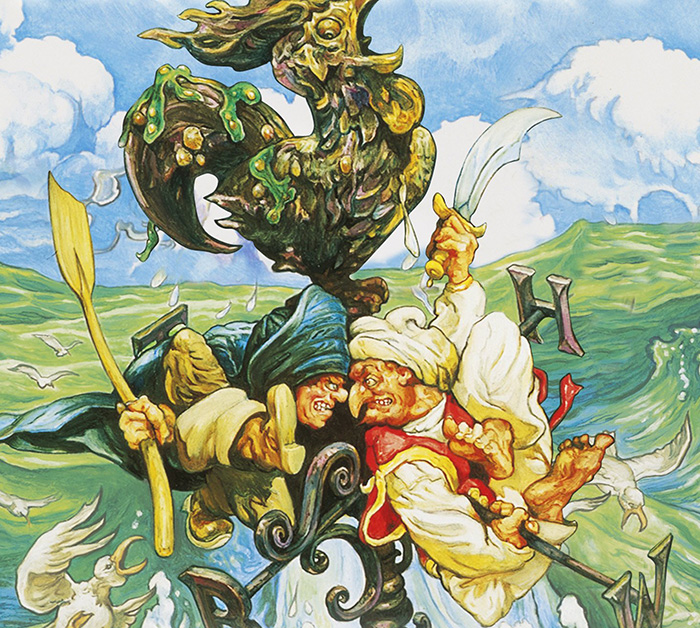
“It was much better to imagine men in some smoky room somewhere, made mad and cynical by privilege and power; plotting over the brandy. You had to cling to this sort of image, because if you didn’t then you might have to face the fact that bad things happened because ordinary people, the kind who brushed the dog and told their children bedtime stories, were capable of then going out and doing horrible things to other ordinary people. It was so much easier to blame it on Them. It was bleakly depressing to think that They were Us. If it was Them, then nothing was anyone’s fault. If it was Us, what did that make Me? After all, I’m one of Us. I must be. I’ve certainly never thought of myself as one of Them. No one ever thinks of themselves as one of Them. We’re always one of Us. It’s Them that do the bad things.”
― Jingo, Terry Pratchett
This quote comes from “Jingo,” a novel by Terry Pratchett, part of his critically acclaimed Discworld series. The Discworld novels are known for their wit, wisdom, and the way they mirror real-world issues through the lens of a fantastical universe.