
More stories · Page 68
5 Fascinating Pieces of History You Probably Didn’t Learn in School
Jamestown governor John Ratcliffe, the villain in Disney’s Pocahontas, died horrifically in real life.

Most people know John Ratcliffe as the scheming villain from Pocahontas, obsessed with gold and conquest. But the real man behind the animated character met a far more disturbing end—one that speaks volumes about the brutal dynamics between the English colonists and the Powhatan Confederacy.
In 1609, with Jamestown on the brink of collapse, Governor Ratcliffe led a delegation into Powhatan territory in a desperate attempt to trade for corn. Supplies were low. Colonists were dying. And Ratcliffe, hoping to stabilize the situation or perhaps restore his damaged political reputation, agreed to meet under what he thought were peaceful terms.
5 Iconic Artworks Worth Slowing Down For
Christ In The Storm On The Sea Of Galilee by Rembrandt van Rijn, 1633

Let’s dispense with the pleasantries: The Storm on the Sea of Galilee is not a painting about a miracle. It’s about fear—that yawning, gut-twisting terror that strikes when the border between the mortal and the divine becomes thin enough to rupture. And no one—certainly no Dutchman, and least of all Rembrandt—was more qualified to chronicle that kind of rupture than the man who turned biblical dread into a chiaroscuro ballet.
A Few Answers To Questions You Always Wondered About

Why Is There So Much Ultra-Processed Food Nowadays?
To understand why our supermarkets are overflowing with ultra-processed foods, you have to go back — not just to the postwar years, but to the very roots of how we came to see food not as culture, but as product.
In the early 20th century, the United States underwent a seismic shift. Industrialization didn’t just change how we worked — it changed how we ate. Food began its transformation from something grown, harvested, and prepared locally to something manufactured, branded, and shipped. Mass production techniques perfected during World War I and II — initially used to feed soldiers — were repurposed in peacetime to feed civilians. Canning, freezing, and dehydration turned food into a shelf-stable commodity.
A Damn Fine Collection of Fascinating Photos
A photo of the world’s first fully titanium heart that was successfully transplanted into a human patient.

In a world-first, an Australian man in his 40s became the first person to leave the hospital with a titanium artificial heart that kept him alive for 105 days. The BiVACOR Total Artificial Heart, a compact device with a single levitating rotor, pumped blood through his body until a donor heart became available. Without it, doctors say he would not have survived the wait. Now, after a successful transplant, he’s back to living life in ways he hadn’t been able to for years.
There Are Some Things You Just Can’t Argue With

35 Photos That Feel Like a Warm Hug From the Past

33 Times Workplace Safety Was Treated Like a Suggestion

5 Historic Photos That Speak Volumes
Joseph P. Kennedy, left, U.S. Ambassador to Great Britain, stands with his 20 year old son, John F. Kennedy, in New York, January 5, 1938

This is one of those moments where, if you could freeze time, you’d see a kind of fork in the American timeline quietly forming beneath the polished shoes and pressed coats.
Joseph P. Kennedy Sr.—sharp, ambitious, and already calculating three moves ahead—stands next to his 20-year-old son, John. The photograph is still. But history is anything but.
29 Memes That Perfectly Encapsulates The Married Life

30 Memes That Hit Different When You Love History

5 Behind-the-Scenes Stories That Make Movies Way More Interesting
Stanley Kubrick Had All the Props from 2001: A Space Odyssey Destroyed So They Couldn’t Be Reused in Bad Sci-Fi Movies
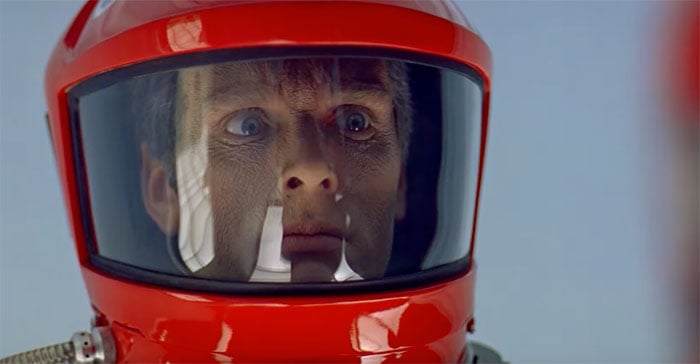
After 2001: A Space Odyssey wrapped, Stanley Kubrick did something that feels less like a post-production decision and more like the final act of a Bond villain: he had all the sets and props destroyed. The glowing monolith? Gone. The EVA pods? Scrapped. The sleek interior of the Discovery One, with its antiseptic beauty and unsettling symmetry? Bulldozed into oblivion.