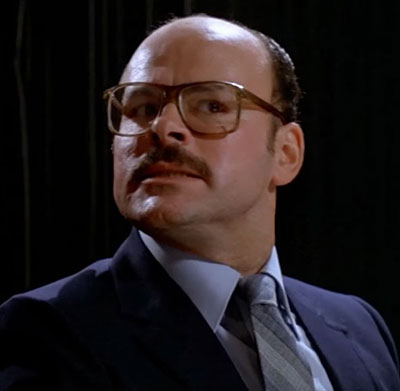
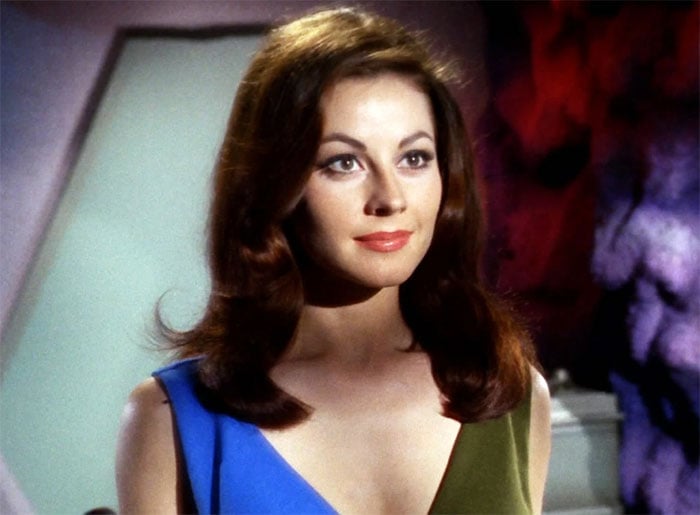
If you know Sherry Jackson at all, you probably know her as Andrea—the impossibly symmetrical android from the Star Trek episode What Are Little Girls Made Of? (1966). Andrea exists in that strange pop-culture territory where the performance is almost beside the point. The lasting memory isn’t the dialogue—it’s the blue-and-green cutout dress, the serene-yet-menacing stare, the sense that she could either follow your every command or break your neck without hesitation.
But Star Trek wasn’t the role her career was built on. It wasn’t even particularly pivotal in the long arc of her résumé. By 1966, she had already been famous, left a hit sitcom, and transitioned into the kind of episodic TV work that was both constant and unglamorous. Andrea was just one stop along the way.
The Unlikely Arc of a Child Star Who Stayed Sane
Born in 1942 in Wendell, Idaho, Jackson moved to Los Angeles with her family after her father’s death. She was quickly absorbed into Hollywood’s gravitational pull. By age seven she had film credits in You’re My Everything (1949) and The Breaking Point (1950).
For the next decade, she became one of those omnipresent child actors in the margins of mid-century entertainment—Ma and Pa Kettle movies, religious dramas, even a John Wayne film or two.
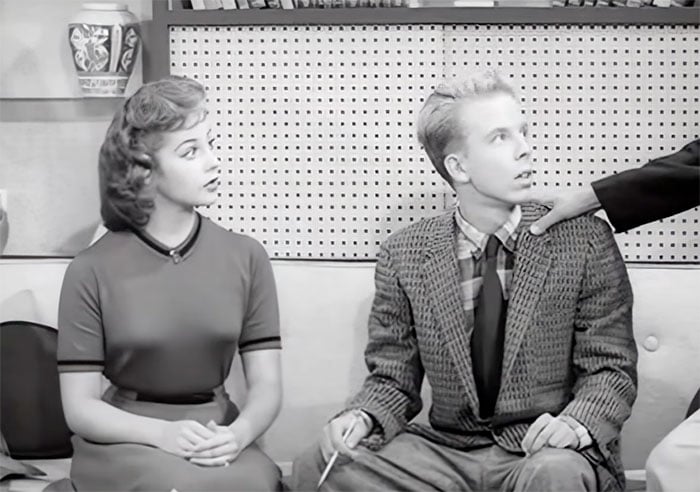
Her real breakout was as Terry Williams on Make Room for Daddy (later The Danny Thomas Show), where she stayed for five seasons. It was the kind of sitcom built on warm predictability, and Jackson was good enough to earn a star on the Hollywood Walk of Fame before she turned 20. Then, with no scandal or meltdown, she simply walked away when her contract ended.
The Star Trek Moment
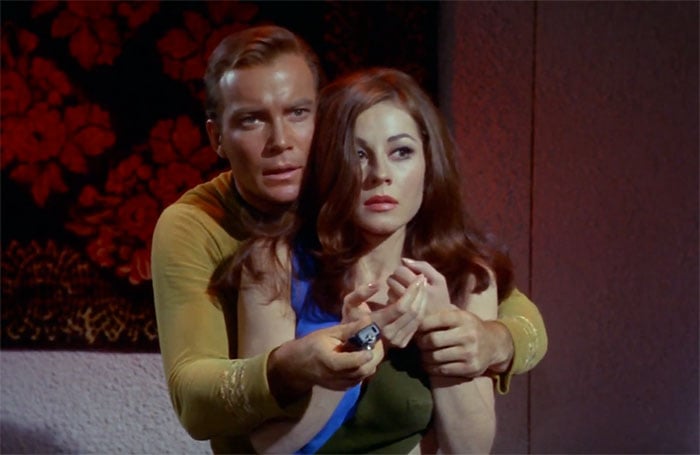
By the mid-’60s, Jackson was working steadily in guest roles across TV, which is how she landed on Star Trek. Andrea was an android created by a rogue scientist—more plot device than character, but still unforgettable thanks to how Jackson played her: graceful, faintly curious, and a little dangerous.
The image stuck. Andrea remains one of those characters people bring up not because of her narrative importance, but because of what she looked like. She’s an artifact of that pre-ironic television era, frozen in a moment before anyone realized TV could be iconic.
Later Career and Life Without the Third Act
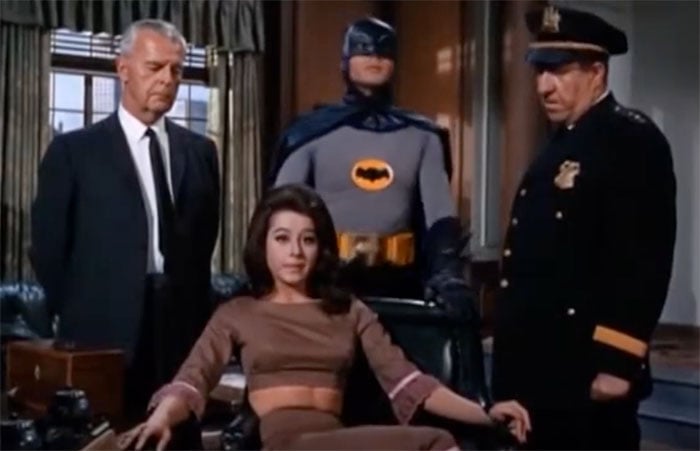
After Star Trek, Jackson’s career drifted toward more daring and sometimes stranger projects. In 1967, she filmed a nude scene for Blake Edwards’ Gunn (cut in the U.S., intact overseas). A year later she appeared in the biker exploitation flick The Mini-Skirt Mob. From there, it was a long guest-star run—The Twilight Zone, Batman, The Rockford Files, Starsky & Hutch, The Incredible Hulk, Charlie’s Angels. Her last roles came in 1982 and 1992, after which she essentially stopped acting.
She never married, though her personal life occasionally surfaced in the press. She had a long relationship with businessman Fletcher R. Jones until his death in a 1972 plane crash (and later sued his estate for palimony). She also briefly dated Elvis Presley, finding him simultaneously charming and maddening—a man who could be a gentleman one moment and entitled the next. But these were footnotes, not defining chapters.
Where is Sherry Jackson Now?
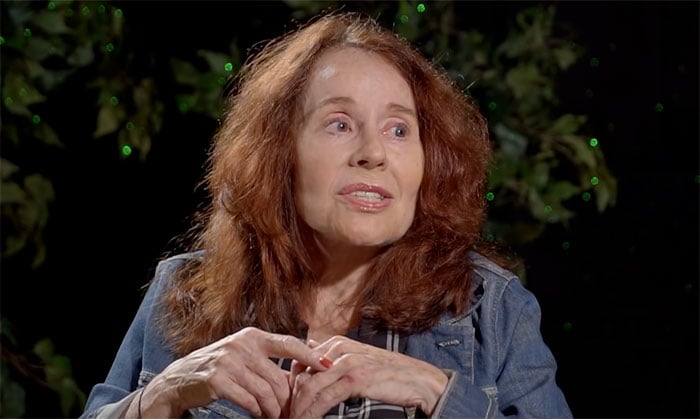
(photo: A Word on Westerns)
Today, Jackson seems perfectly content outside the industry. She practices yoga, studies Spanish, and makes occasional appearances at autograph shows, where fans inevitably hand her Star Trek stills to sign. She doesn’t seem to want a comeback or a reinvention, which—given how Hollywood usually works—might be the most unconventional move of her entire career.