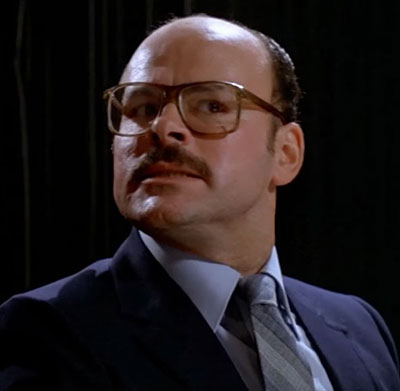
Tonie Perensky’s career was one of those quiet constants in the background of late-20th-century pop culture. You might not have known her name, but you probably remember her face—often playing someone charming, slightly dangerous, or both. She moved fluidly between genres, from cult horror to sports drama to sitcoms, building a résumé that spanned over three decades without ever fully crossing into household-name territory.
From Canadian Prodigy to Hollywood
Despite being associated with Texas through multiple roles, Perensky was born and raised in Canada. By sixteen, she’d already been voted “Top Teen Actor in the Province,” the kind of accolade that sounds small-town but in her case came from a unique program at the University of Alberta. There, she worked alongside elite graduate students under avant-garde director Mark Schoenberg, gaining a level of stage training most young actors never touch. She honed her craft in Edmonton theater, even working with respected figures like Sir John Neville, before deciding to chase the screen. In the late 1980s, she moved to Los Angeles.
The Chainsaw Breakthrough
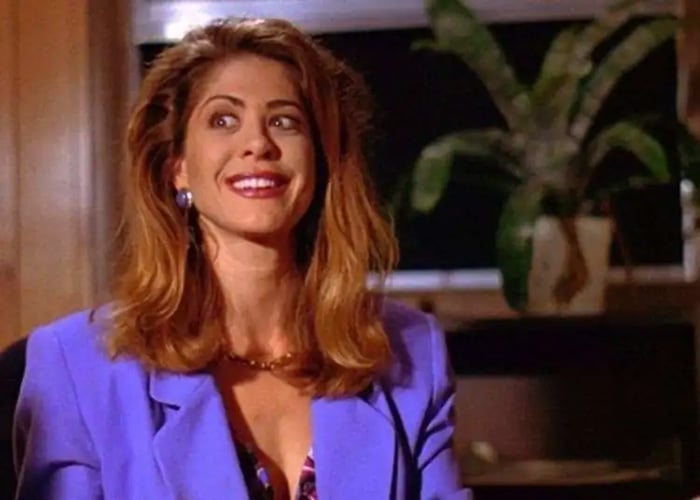
Her early on-screen credits were modest—bit parts in films like Murder Rap (1988) and guest spots on TV shows including Dangerous Curves and Walker, Texas Ranger. But in 1995, Perensky landed the role that would give her lasting cult status: Darla in Texas Chainsaw Massacre: The Next Generation.
The film was not your standard slasher sequel. Written and directed by Kim Henkel, co-writer of the 1974 original, it mixed gore with surreal humor, government conspiracies, and a cross-dressing Leatherface. Perensky’s Darla was the deceptively normal-seeming real estate agent who, as the movie unfolded, revealed herself to be as twisted as the rest of her murderous family. In a film remembered for its oddness—and for starring a pre-fame Matthew McConaughey and Renée Zellweger—Perensky’s performance stood out as both charismatic and unsettling.
Varsity Blues and Cultural Footnotes
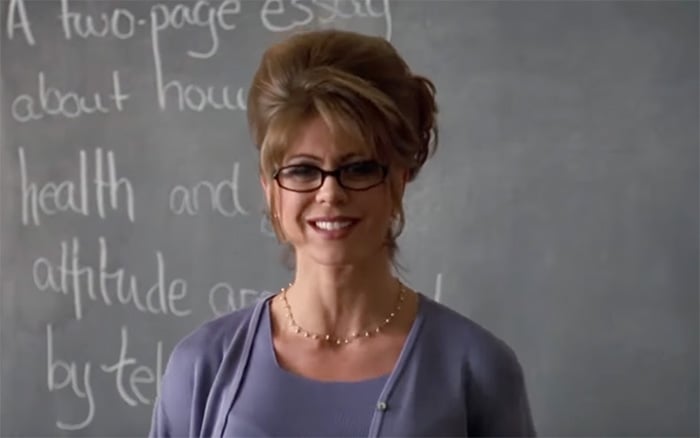
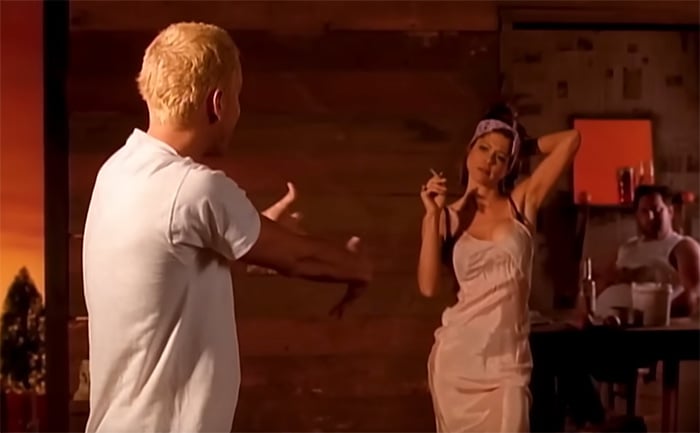
In 1999, Perensky scored another widely remembered role in Varsity Blues, playing Miss Davis, the high school teacher moonlighting as an exotic dancer. It was a subplot played for shock and comedy, but it cemented her as someone who could own a scene even when the role was brief. That same year, she popped up—uncredited—in Eminem’s “My Name Is” video as Slim Shady’s mother, a blink-and-you-miss-it cameo that somehow fit perfectly into the late-’90s cultural fabric she kept intersecting with.
Her work continued through the early 2000s with roles in Fool’s Gold, the short film Bad Habits, and indie projects like Fish Don’t Blink and Project Redlight. She also appeared on the sitcom My Name Is Earl—a show known for its eccentric characters—though her appearances were sporadic.
What happened to Tonie Perensky?
And then—she stopped. Perensky’s last credited role came in 2004 with the short The Vision. Sometime in the mid-2000s, following a significant family tragedy, she retired from acting entirely. She never made a public announcement, never staged a comeback, and never explained the specifics of why she left the industry.
Today, she’s believed to be living in Austin, Texas, far removed from the churn of Hollywood. No interviews, no convention appearances, no memoir. Just an actress who stepped away and stayed away.
Perensky’s career is a reminder that Hollywood isn’t made up only of stars and failures. It’s also sustained by actors like her—versatile, memorable in moments, and forever woven into the cultural memory of people who rented Texas Chainsaw Massacre: The Next Generation on VHS, saw Varsity Blues in the theater, or caught a late-night rewatch of a sitcom episode and thought, I’ve seen her before.