You ever notice how the people who shape the texture of your childhood nightmares and daydreams tend to vanish the fastest? Like, they’re omnipresent on your TV at age nine, and by age twelve, they’ve dematerialized into the collective pop subconscious, only resurfacing when you’re three drinks deep and wondering why you’re so weird about romance and nuclear waste.
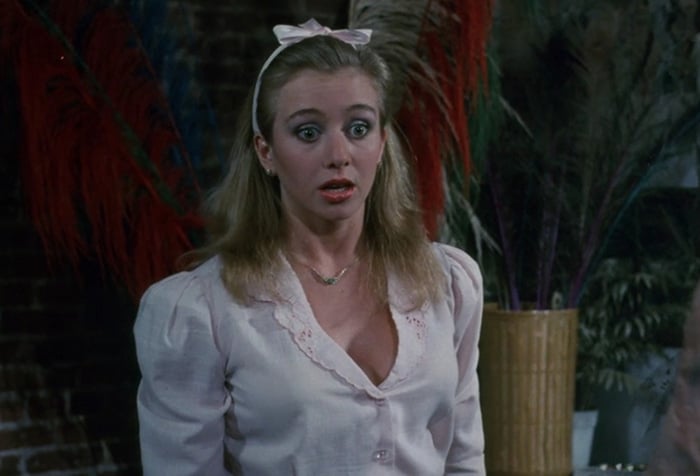
Enter Andree Maranda—if you remember her at all, it’s probably as the beautiful, blind, impossibly sincere Sara from The Toxic Avenger. She’s the girl who falls for a radioactive janitor turned sludge mutant, which sounds like a weird fever dream but is, in fact, 100% real and arguably the least implausible thing to come out of the Reagan administration.
The Toxic Avenger
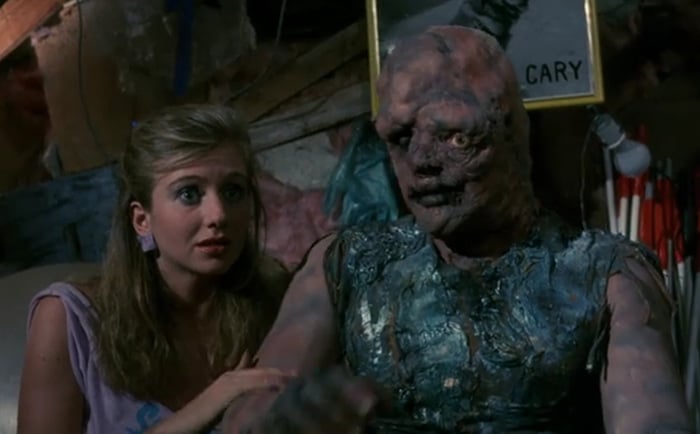
Let’s get one thing straight: The Toxic Avenger is not just a movie, it’s a rite of passage for anyone who ever stayed up way too late, hoping to glimpse something on basic cable that would forever warp their expectations for what cinema could be. It’s grotesque, hilarious, aggressively cheap, and sort of—against all odds—sweet. Our hero is Melvin, a mop-wielding janitor who gets bullied into a barrel of toxic waste and comes out the other side as a mutant superhero with the moral compass of a golden retriever and the facial structure of melting pizza.
And in the eye of this nuclear storm is Andree Maranda’s Sara. She’s blind, which is both a plot device and a metaphor—because only someone who literally can’t see Toxie’s deformities could love him unconditionally. The movie gives us one of those hyper-violent, inexplicably moving rescue scenes: Sara is attacked, her dog is killed, and Toxie shows up to turn the tables with righteous fury. Suddenly, a love story blooms out of the radioactive sludge, and you’re left thinking, “Yeah, this makes total sense in Tromaville.”
Life After Toxic Avenger
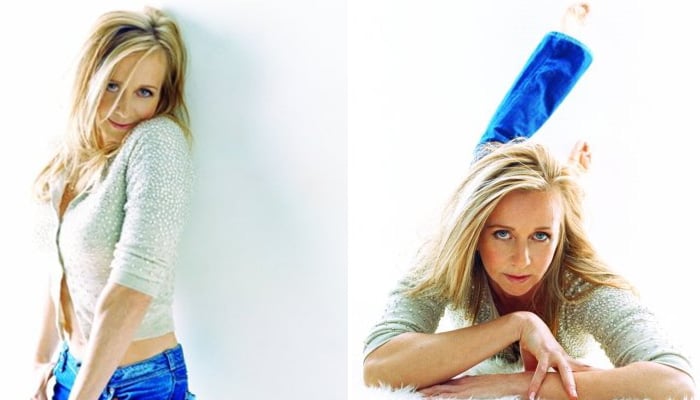
Here’s where things get fuzzier than a fourth-generation VHS tape. Maranda didn’t hang around to milk her cult status. She didn’t become a convention regular or embrace the inevitable “scream queen” label.
Instead, she turned to music. Pop singles with titles like “Rich Boys” and “(Love Is Like An) Itchin’ In My Heart” trickled out in the late ‘80s, all of them landing somewhere between local dance club hopeful and the soundtrack to a movie you’re pretty sure you rented but can’t prove existed. By the end of the decade, her entertainment career seemed to be winding down, drifting further into the kind of trivia you only discover at 2 a.m. on the weird corners of the internet.
What Is She Doing Today?
Now, this is where the plot gets even more “Tromaville.” You want to track her down in 2025? Good luck. She’s got a Facebook page last updated in the Obama era, and a YouTube channel with the digital equivalent of dust on the dashboard. No Instagram. No Twitter. No “Where Are They Now?” interviews. In a world where even the least memorable extras from Saved by the Bell are hustling for attention on Cameo, Andree Maranda just… left. She became the rarest thing in our hyper-documented age: a cult movie icon who genuinely disappeared.
And honestly? That might be the most rock-and-roll thing about her. She played her part, dropped the mic, and walked out before the nostalgia machine could chew her up. The real secret to being a cult legend is knowing when to leave the screen—radioactive glow and all—before anyone gets a chance to turn you into a punchline. Maybe she’s happy, maybe she isn’t. Maybe she’s just a ghost haunting the VCRs of our collective memory. And maybe that’s exactly how it should be.