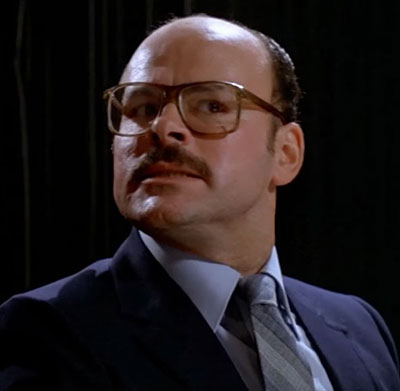
Nikola Tesla, 1943
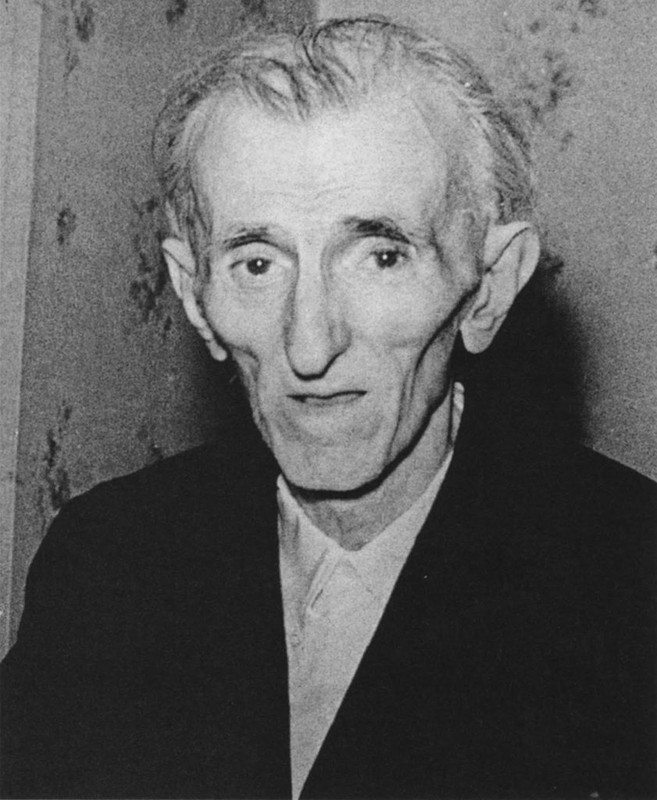
They found him alone.
January 8th, 1943. Room 3327 of the New Yorker Hotel. The chambermaid knocked. No answer. She let herself in and discovered the body of a man who had once dreamed of lighting up the entire planet. Nikola Tesla was dead. Eighty-six years old, broke, and virtually forgotten by the world he had helped shape.
Think about that. This was the man who gave us alternating current—the reason we don’t all have a power station humming outside our homes. He’d gone toe-to-toe with Edison in the War of the Currents, imagined wireless communication long before anyone knew what a radio was, and spoke casually about harnessing the power of Niagara Falls as if he were discussing the weather.
And yet… here he was, dying in a rented room with unpaid bills, surrounded not by accolades or adoring fans, but by the quiet coo of pigeons he called his only friends.
How does someone go from dining with industrial titans like Westinghouse and Morgan to living off stale bread and hotel credit? Part of it was bad timing. Tesla was a visionary in an era that rewarded the practical. He didn’t care about profits. He cared about possibility. He wanted to give the world free wireless energy, to send electricity through the air like magic. Investors wanted to make money. That’s where the divergence began—and it never really stopped.
By the 1920s, his name was already fading. The grand project at Wardenclyffe had crumbled. Funding had dried up. The patents that once made him rich were sold or expired. He survived off the kindness of former benefactors, living alone in various New York hotels, moving only when he could no longer afford the rent. When he died, he had over a dozen suitcases filled with papers. Schematics. Letters. Blueprints for machines that the FBI would later seize—just in case he really had invented something dangerous.
In his later years, Tesla became known more for his quirks than his genius. He claimed to communicate with pigeons. He obsessed over the number three. He walked miles each day, always at the exact same time. He dined alone. He made bold, impossible claims—about death rays, directed energy weapons, earthquake machines. The world stopped listening. The press humored him, when they paid attention at all.
But make no mistake: the light hadn’t gone out. Not really. He still saw the world differently. He still believed, in the deepest part of his being, that energy was the key to human liberation. That if we could just understand how the universe worked—how vibration and frequency and resonance tied all matter together—we could transcend our limitations. Poverty, war, greed—they weren’t inevitable. They were solvable. If only the world would listen.
But the world didn’t listen.
When he died, no one in the hallway outside his door could’ve imagined that this quiet old man had once helped power the modern age. No one guessed that decades later, his name would be resurrected on the side of electric cars and whispered in tech boardrooms like an incantation. No one imagined that *this* was the man who once shook the Earth with his ideas.
They found his lifeless body slumped in bed. A “Do Not Disturb” sign had hung on the doorknob for two days. The pigeons outside the window fluttered nervously, perhaps sensing the absence of their only true friend.
This is how Nikola Tesla died. Not with a flash of lightning, but a flicker in the dark.
History, ever the cruel editor, skipped the ending for a while. But now, we remember. We tell his story. We wrestle with its weight. Because sometimes the greatest minds die in silence—and that silence echoes louder than any thunder.
Vladimir Lenin, 1923

When Vladimir Ilyich Lenin died on January 21, 1924, the world did not just lose a man—it lost a force of nature.
He was 53. And he didn’t die in a blaze of revolutionary glory. He didn’t fall in battle, or face the firing squad like so many of his enemies had. No. He died slowly. Quietly. Over the course of three years, the man who had detonated the Russian Empire from the inside out was undone by a series of strokes that robbed him of speech, movement, and ultimately, presence.
This was a man whose words could once bend armies, incite revolts, and change the trajectory of nations. A man who had returned to Russia in a sealed train like a political virus, bringing with him not just revolution but an entirely new vision of how power could be seized—and how brutally it could be held. And now, at the end? He couldn’t even sign his own name. Couldn’t even speak. The voice that had once thundered in Petrograd was reduced to illegible scribbles and blank stares.
How did he get here?
Lenin had spent most of his life fighting. Fighting the czar, the liberals, the socialists who weren’t radical enough, the bourgeoisie, the church, the aristocracy, and eventually, even the very idea of opposition. He was a man of singular focus. Obsession, even. Everything he did—every exile, every pamphlet, every sleepless night—was aimed at toppling the old world and replacing it with a new one. And in 1917, against all odds, he did it. The Bolsheviks took power. The Romanovs were gone. The Russian Empire became the Soviet Union. And Lenin, somehow, was at the center of it all.
But revolution, it turns out, is easier to ignite than to control. The Civil War that followed was brutal beyond comprehension. Famine. Execution. Repression. Lenin believed the violence was necessary. That history demanded it. That the end justified the means. But those means—mass shootings, concentration camps, the annihilation of entire classes—left a stain that would never wash out.
And the stress of it all, the constant pressure, the weight of building a new world from the rubble of the old—took its toll. His health began to fail. In 1922, the first stroke hit. Then another. By the end of that year, he was a shadow. By 1923, he was mute. And by early 1924, he was dead.
His final days were spent at Gorki, an estate outside Moscow, where caretakers helped him dress, eat, and shuffle through the remnants of a mind that once changed the world. He was isolated. Not just by illness, but by design. The Party, especially Stalin, didn’t want the people to see what had become of their leader. The man of steel had already begun maneuvering to take his place. Lenin knew it. In one of his final dictated notes—before even writing became impossible—he warned of Stalin’s growing power. Called him rude. Dangerous. Unsuitable.
But by then, it was too late. The Revolution had its own inertia. Its founder was dying. And the machinery he built was already being repurposed by harder, colder hands.
When he died, the Soviet state went into orchestrated mourning. His body was embalmed. Put on display. Turned into a relic. Not buried, but entombed. Not mourned, but worshipped. As if the flesh and blood man, with all his contradictions and flaws, could be edited out of history and replaced with something purer. More useful.
But the truth is, Lenin died a tragic figure. A genius who mistook ideology for inevitability. A revolutionary who became a prisoner of his own creation. A man who thought he could control the tides of history—only to be swept away by them.
There was no final speech. No rallying cry. No last act of defiance. Just silence. Just a room at Gorki. Just a nurse watching the clock tick down on one of the most consequential lives in human history.
Lenin didn’t die with a bang. He died with a whisper.
Franklin Delano Roosevelt, 1945

He looked tired. Gaunt. Pale in a way that made you nervous just looking at him.
On April 11, 1945, a day before he died, Franklin Delano Roosevelt sat for what would become the last known photograph of his life. Taken in Warm Springs, Georgia, the image shows a president not basking in the glow of wartime victory, but hanging on by threads. His jaw is slack. His eyes—once so commanding—are sunken and heavy. He wears a loose cape draped around his shoulders like a shroud. This is not the Roosevelt of the fireside chats. Not the man who rallied a nation through the Great Depression and steered the ship of state through two-thirds of World War II. This is a man breaking down. Cell by cell. Hour by hour.
FDR had been ill for some time. But illness is too gentle a word. He was dying. Quietly. Slowly. And everyone around him knew it—except maybe the American people. Because that was the secret, wasn’t it? His condition was carefully hidden, his image tightly managed. Most Americans never saw the wheelchair, never witnessed the labored breathing, never knew how exhausted he truly was. He was elected to a fourth term in 1944—something no other president had done—on the back of hope, legacy, and momentum. But in truth, he was a man already on borrowed time.
Warm Springs had always been a place of comfort for Roosevelt. It was where he sought physical relief from the ravages of polio in the 1920s. A place where he could move with a bit more ease, away from the cameras, the meetings, the war maps. And it’s here, in the quiet of Georgia’s pine forests, that his body finally gave out.
On April 12, 1945, just after lunch, he complained of a massive headache—“I have a terrific pain in the back of my head”—and collapsed in his chair. He never regained consciousness. The cerebral hemorrhage was sudden, catastrophic. A doctor on site pronounced him dead that afternoon. Just like that, the man who had been president for over 12 years—the man who had stared down the Great Depression, Adolf Hitler, and the greatest global war in human history—was gone.
He died just weeks before Germany surrendered. He never saw the end of the war. Never saw the atomic bomb. Never met the United Nations he helped conceive. He died with unfinished plans, unspoken words, and burdens only he truly understood.
And yet that last photo—that quiet, grim snapshot taken the day before—somehow says everything.
It shows a man who gave everything. Who carried the weight of a nation, then a world, and finally collapsed under it. It shows a president who had made himself a symbol of optimism but was, in truth, deeply broken—physically, spiritually, even politically, toward the end. He had grown increasingly distant, isolated even, from the cabinet that once clung to his every word. But the war needed continuity. The country needed stability. So he stayed. And he bore it all in silence.
That photo is more than a document. It’s a historical gut punch. A visual footnote to one of the most consequential lives of the 20th century. You look at it and realize: great men don’t always go out on a podium. Sometimes they fade quietly, in places they once went to heal, while the world they helped save marches on without them.
And the flashbulb clicks. One last time.
Mao Zedong, 1976

They say power is the last thing to die. But in the case of Mao Zedong, it clung to him long after everything else had begun to fail.
The last known photograph of Chairman Mao, taken in 1976, is not an image meant to inspire revolution or showcase ideological zeal. It’s not the firebrand of the Long March or the charismatic figure waving from Tiananmen Square. No. It is a frail, withered man—his face bloated, his eyes vacant, his body slumped in a chair like a wax figure half-melted by time and disease.
This was Mao at the end. Not the “Great Helmsman,” not the godlike image printed on red booklets and posters, but a human being ravaged by illness, propped up by attendants, barely able to speak. And yet—even in that state—he was still Mao. Still the man whose word could bend the fates of millions. Still the architect of a revolution that had reshaped a civilization. Still feared. Still untouchable.
By the time this photo was taken, Mao had suffered multiple heart attacks, his lungs were failing, and he was likely experiencing Parkinson-like symptoms that made movement and speech difficult. Those close to him said his tongue had become so swollen he could barely swallow, let alone speak clearly. Communication came in grunts, eye movements, and scribbled notes. But make no mistake—people still treated those fragments as scripture. The cult of personality didn’t fade just because the man behind it was decaying. If anything, the silence made him more mythic.
How did he get here? How does a man who was once a peasant revolutionary—living in caves, writing poetry by candlelight—become a near-deified figure presiding over a population of nearly a billion, even as his own body collapsed from within?
The truth is, Mao had stopped being a man decades before. He had become a system. An image. A force. After launching the Cultural Revolution in 1966, he unleashed a decade of chaos that tore apart Chinese society, purged intellectuals, shattered families, and replaced reason with dogma. Millions suffered. Millions died. And yet Mao remained—untouchable, unrepentant, and increasingly isolated.
His final years were marked by paranoia and palace intrigue. Factions within the Communist Party jockeyed for position, knowing the end was near. The Gang of Four, led by his wife Jiang Qing, tried to consolidate power. Others, like Deng Xiaoping, watched carefully from the shadows. All the while, Mao drifted in and out of lucidity, receiving only filtered information, speaking less and less. He had become a ghost of himself, but one whose shadow still loomed over everything.
And that final photograph—taken quietly, perhaps even against orders—is damning in its honesty. It shows that even the most powerful cannot escape mortality. That even those who claim to stand above history are eventually dragged down into it. There is no red banner, no roaring crowd, no triumphant pose. Just a tired old man, barely holding on, encircled by handlers, his life ebbing away in a haze of morphine and silence.
On September 9, 1976, Mao Zedong died in Beijing at the age of 82. The official announcement came hours later. His embalmed body was placed in a crystal coffin in Tiananmen Square, where mourners wailed and filed past in the millions. But that last photo? That was the truth. That was the end.
Mao once said that political power grows out of the barrel of a gun. But he never mentioned what happens when the hand holding it begins to tremble… and then goes still.
Harriet Tubman, 1911

The last known photograph of Harriet Tubman doesn’t look like the kind of image that ends up in textbooks. There are no chains. No North Star. No rifle. No dramatic escape across state lines. Just an old woman, worn but upright, wrapped in a shawl and seated with quiet defiance in a wooden chair.
But look closer. That’s not just a woman. That’s a storm in human form. That’s someone who outlived slavery, outmaneuvered slave catchers, outsmarted bounty hunters, and outlasted the Civil War. That’s someone who literally walked hundreds of miles into hell and came back—not just alive, but with people she brought to freedom.
The photo was taken in the early 20th century—likely between 1911 and 1913—on the porch of her modest home in Auburn, New York. By then, Tubman was in her 90s. Her face was furrowed with the grooves of history. Her spine curved with age, but her eyes… her eyes still carried that furnace heat. This was not a woman waiting to die. This was a woman who had done more in one life than most nations do in a century.
She had once carried a revolver, not just to protect herself from danger, but to keep the people she was rescuing from turning back. “You’ll be free or die,” she warned them. And she meant it. She wasn’t bluffing. You don’t bluff when the price of failure is a noose.
She had served as a Union spy during the Civil War. Not a myth—an actual, commissioned spy who gathered intelligence, led armed raids, and liberated entire plantations. She was the first woman in American history to lead a military operation. Let that sink in. A formerly enslaved Black woman, commanding troops in the swamps of South Carolina, executing a midnight river raid that freed more than 700 enslaved people. She didn’t ask for permission. She just did it.
And yet, despite all this, by the time that final photo was taken, Tubman lived modestly, surviving on a small pension for her military service—money she had to fight tooth and nail to receive. America had moved on. Reconstruction had collapsed. Jim Crow had taken hold. The nation was sprinting into modernity, and few wanted to be reminded of the brutality that built the foundation they now walked on.
But Harriet never stopped. Even in old age, she opened her home to the poor and the sick. She fought for women’s suffrage. She gave speeches when her body ached and raised money when her own pockets were empty. She wasn’t content with just being a symbol. She kept working until her hands could no longer grip the railings of the porch where that photo was taken.
She died in 1913, surrounded by family and friends. Her final words were simple: “I go to prepare a place for you.” No drama. No headlines. Just a whisper from a woman who had spent her entire life breaking down doors and carrying people through them.
That last photo—frail as she may look—is not a portrait of decline. It’s a portrait of endurance. Of someone who walked into the darkest parts of America and refused to let it stay dark. It’s not the image of a hero dying. It’s the image of a warrior resting. Finally.