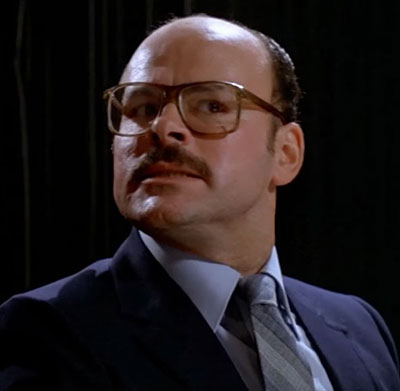
When President McKinley was shot in 1901, the best surgeon around was kneedeep in a complex operation. When told he was needed elsewhere, he replied that he could not leave, not even for the President. Even after he was told who his new patient was, he remained put and finished his work.
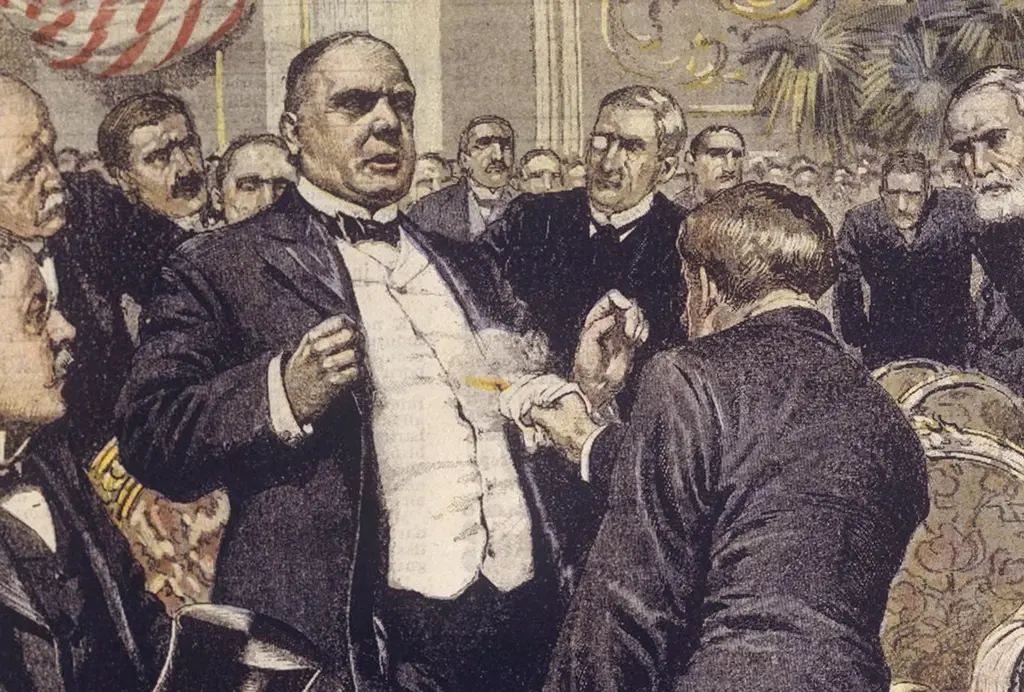
When President William McKinley was shot inside the Temple of Music in Buffalo, medical care for gunshot wounds was still in a very early stage. The worlds most advanced trauma surgeons were clustered in only a few cities, and laboratory science had not yet revealed that infection, not the bullet, usually killed the patient. Roswell Park was the most skilled surgeon in western New York, but he was operating on a woman with a cancerous neck tumor when the call arrived. According to accounts passed down through medical archives, Park was so focused on preventing blood loss that he refused to leave until the surgery was truly stable.
By the time Park finally reached Buffalo, the sun was setting and the operating room had no adequate lighting. Doctors improvised by holding mirrors to catch the last natural light and supplement it with a single early electric lamp. The surgeon who stepped in, Matthew Mann, was a respected professor but a specialist in gynecology rather than trauma surgery. He located one bullet track but never found the second. What historians find remarkable is that McKinley seemed to rally in the first two days. Doctors and newspapers declared the President to be recovering, unaware that unseen bacterial invasion was already taking hold around his pancreas and stomach.
McKinleys death eight days later helped accelerate demand for a modern, professional presidential medical unit, eventually leading to the creation of the White House Medical Office. Some historians privately argue that Park was one of the few surgeons in America with the technical skill to attempt a true abdominal trauma repair at the time, but the chaotic conditions at the Exposition Hospital may have doomed the President regardless.
A man who found $7.5 million in a “Storage Wars” unit he bought for $500. He had to negotiate with the original owners, who paid him $1.2 million to return their money.

The discovery of $7.5 million in a purchased storage locker is one of the most astonishing real life treasure finds ever associated with the Storage Wars universe. The safe inside the unit was so heavy that the buyer initially believed it might contain old tools or outdated electronics. When a locksmith cracked it open and the stacks of cash were revealed, the find instantly became the stuff of auction legend. What makes the story even stranger is that the storage facility had legally auctioned off the space after months of unpaid rent.
The previous owners contacted the buyer through attorneys and explained that the money was tied to a family estate dispute. While the exact origins of the cash were never made public, the settlement agreement for $1.2 million suggests that both sides wanted to avoid federal involvement or a prolonged legal battle. Storage law experts note that under most state laws, the buyer was under no obligation to return anything, but the offer of over a million dollars was so substantial that refusing it made little sense. Several auctioneers later said privately that it was the single greatest financial return they had ever seen from a storage locker, even after giving three quarters of the fortune back.
Most of Costco’s profits comes from membership fees and not products sales. in 2024, 65.5% of company profits comes from membership fees.

Costco operates on a model that is almost completely opposite of traditional retail. Rather than making a profit on products, Costco prices goods to break even and sometimes even sells items at zero margin. The company famously limits markups to extremely small percentages, and it has held the price of its hot dog and soda meal at one dollar and fifty cents since the late nineteen eighties as a kind of promise to its members. Executives have stated in interviews that the membership fee is the engine of the entire enterprise.
The stickiness of the membership is remarkable. Renewal rates in the United States and Canada routinely exceed ninety percent. The predictable flow of membership income also allows Costco to invest heavily in logistics and quality without raising consumer prices. Analysts argue that Costco is actually a subscription company that happens to operate a retail business on the side. This financial structure explains how the company thrives even when inflation or shipping disruptions wreak havoc on other retailers.
Donating blood plasma can significantly reduce the levels of PFAs forever chemicals in your blood
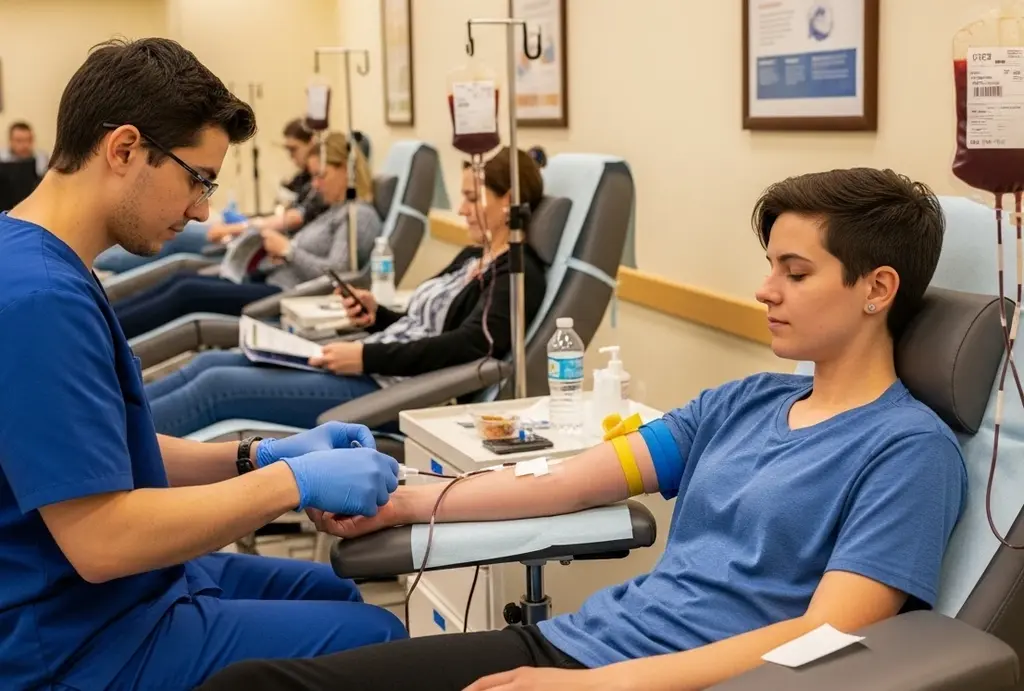
PFAS compounds, often called forever chemicals, build up in human blood because the body has limited biological pathways for eliminating them. These chemicals have been found in firefighting foam, nonstick cookware, fast food wrappers, waterproof clothing and thousands of manufactured goods. Studies began emerging in recent years revealing that plasma donation might offer a rare method of accelerating the removal of these chemicals from the bloodstream.
The most significant research came from a large controlled study in Australia, which found that individuals who donated plasma on a regular schedule saw a noticeable drop in PFAS concentrations. The mechanism is simple but powerful. Plasma carries a large portion of PFAS load, and removing and replacing it through the donation process effectively pulls these chemicals out of circulation. Scientists are now exploring whether targeted therapeutic plasma exchange could be used for communities exposed to extremely contaminated water supplies.
Hall of Fame linebacker Lawrence Taylor would hire prostitutes and send them to his opponents’ hotel rooms the night before a game to try to tire them out

Lawrence Taylor redefined defensive football with a combination of speed, violence and unpredictability that had never been seen before. His off field lifestyle became nearly as legendary as his on field dominance. Several teammates have confirmed that Taylor regularly looked for psychological advantages in unusual ways. His most infamous tactic involved sending escorts to the hotel rooms of opposing players the night before games in the hope of disrupting their rest and concentration.
There are accounts from former players who admit that Taylor’s reputation alone created anxiety in locker rooms long before the opening whistle. Opposing coaches sometimes altered protection schemes just to account for Taylor. His methods, legal or otherwise, contributed to a mythology surrounding him that made him feel larger than life. By the end of his career, offensive coordinators credited him with forcing entire changes in blocking philosophy across the league, something few individual athletes have ever accomplished.
John F. Kennedy was dating Miss Denmark in the 1940’s, and when they stayed at Sumter House in Charleston the FBI bugged their room because they thought she may be a Nazi spy. The reason the FBI thought she was a Nazi spy was that she was Adolf Hitler’s companion during the 1936 Summer Olympics. Turns out they didn’t hear a lot of conversation, but instead a lot of NSFW time. Tapes are in the Library of Congress for those interested.

Inga Arvad, the woman at the center of the story, had once been a celebrated beauty queen and journalist. Her career intersected with politics when the German government invited international reporters to cover the nineteen thirty six Olympic Games. Photographs of Arvad with Adolf Hitler made their way into American newspapers during the war, creating suspicion when she became romantically involved with a young naval officer named John Kennedy. The FBI believed she might have been recruited as a foreign agent.
The surveillance operation on Kennedy and Arvad was extensive. Agents monitored their movements, secretly opened their mail and recorded their hotel room conversations at the Sumter House in Charleston. What they captured was far more intimate than the officials expected. The recordings were transcribed and stored, and they now sit deep in the archives of the Library of Congress. Historians view the episode as an early example of how wartime intelligence efforts sometimes collided with the personal lives of future political leaders.
In 1986, nurse Sandra Clarke could not stay with a patient who asked her to stay. When she returned, the patient had died alone. In 2001, she was key in starting No One Dies Alone, a program where volunteers sit with terminal patients who have no one else. The program is now worldwide

The moment that shaped Sandra Clarkes mission happened in a busy hospital in Oregon, where she was overwhelmed with routine tasks. The patient who asked her to stay was elderly and visibly afraid. Clarke promised she would return as soon as she could. When she stepped back into the room later, the bed was still and silent. That encounter stayed with her for years, leading her to consider how many people pass away without family, friends or comfort at their side.
In two thousand one, Clarke spearheaded the No One Dies Alone program at Sacred Heart Medical Center. Volunteers known as companions are trained to sit quietly, hold a hand, read aloud or simply be present for patients who have no one. The idea quickly spread across the United States and later internationally. Medical ethicists often cite the program as an example of how small acts of humanity can transform the culture of end of life care in hospitals.
After the Siege of Leningrad was broken, the Soviets wanted to prosecute those who had resorted to cannibalism. However, so many were accused over two thousand that the NKVD had to divide them into two groups; corpseeating and personeating. The former were jailed, the later were shot

The Siege of Leningrad lasted nearly nine hundred days and pushed the citys population to the brink of absolute starvation. Rations were reduced to levels far below what the human body requires for survival. Bread was sometimes made with sawdust or wallpaper paste. Eyewitness accounts describe crowds fainting in the streets, bodies frozen in courtyards and children collapsing from hunger on their way to school. In this environment, cases of cannibalism, while horrifying, were not unheard of.
When the siege ended, Soviet security forces launched a sweeping criminal investigation. The NKVD, Stalin’s internal police, found more than two thousand individuals accused of cannibalism. Officials created two stark categories. Corpseeaters were those who used the bodies of people who had already died. Personeaters were accused of murder for the purpose of consumption. The punishments reflected these distinctions. Corpseeaters were imprisoned, while personeaters faced execution. In later years, survivors of the siege described the classification as a coping mechanism for authorities faced with a moral catastrophe beyond precedent.
A Russian child lived with a pack of dogs for two years after he gave the dogs food. In return the dog pack protected him and made him packleader. He later relearned language and served in the Russian Army

Cases of feral children are extremely rare in the modern world, but social workers in Russia encountered one in the early two thousands. The boy had been living in a neglected neighborhood where stray dogs formed loose packs around abandoned buildings. After he offered food scraps to one of the dogs, the animals began following him and eventually accepted him into their group. Residents later reported that the dogs slept near him, guarded him from strangers and even responded to his gestures.
When authorities intervened, the child displayed behaviors more common in animals than humans. He barked, crouched and avoided eye contact. Specialists described the rehabilitation as long and difficult. He had to relearn basic speech patterns and social norms. Over time, he adapted, attended school and eventually joined the Russian Army. Psychologists who studied his case said that the dogs provided the kind of protection and structure that his living situation failed to offer, demonstrating the extraordinary social intelligence of domesticated animals when interacting with abandoned children.