
In North Korea, crystal meth is commonly given as a Lunar New Year gift and is often viewed more like an energy booster than a dangerous drug.
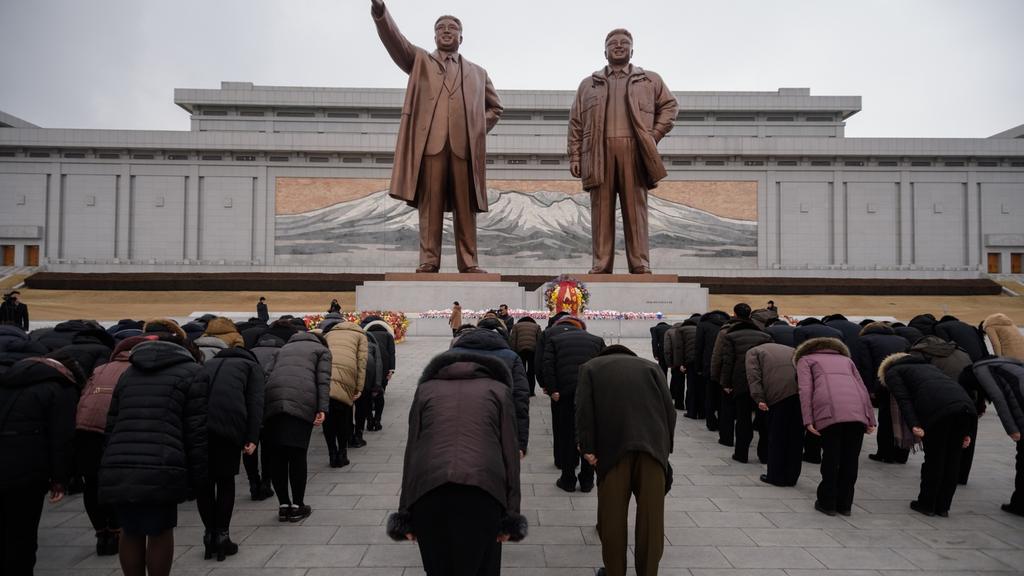
It sounds almost surreal, but in North Korea, crystal meth has at times been treated less like a dangerous narcotic and more like a functional, everyday stimulant. Around the Lunar New Year, a holiday typically associated with thoughtful gifts like food, clothing, or small luxuries, some North Koreans have reportedly exchanged methamphetamine instead. In a country where access to consumer goods is limited and economic hardship is widespread, the drug has filled an unusual cultural niche. It has been described not as a vice, but as something closer to an energy booster, like a far more intense version of caffeine, used to power through long workdays, night shifts, or the physical toll of daily life.
This normalization did not happen in a vacuum. During the economic collapse and famine of the 1990s, North Korea’s state systems began to break down, and methamphetamine, already being produced by the government for export, started leaking into the domestic population. Over time, as centralized control weakened, individuals with the knowledge to manufacture the drug began producing it themselves, creating a widespread and accessible supply. What emerged was a strange and unsettling shift. A substance that devastates communities elsewhere became, for some, just another tool for getting through the day.
Users have reportedly smoked, snorted, or injected meth as casually as someone might light a cigarette, often with little understanding of its addictive nature or long term effects. In many cases, it was not even seen as a serious problem. And that is what makes it so jarring. The gap between perception and reality is enormous. In much of the world, meth is synonymous with ruin. In parts of North Korea, it became something you might share with a friend, offer to a guest, or even wrap up as a holiday gift.
Catholic priests are absolutely forbidden from revealing anything heard in confession under any circumstances—even to save a life, report a crime, or defend themselves—and breaking this rule results in automatic excommunication.

In the Catholic Church, the secrecy of confession is considered absolute. When someone confesses their sins to a priest, that conversation is protected by what’s called the “seal of the confessional,” and it cannot be broken under any circumstances. This is not just a strong guideline or a professional standard like doctor patient confidentiality. It is treated as sacred law. A priest is forbidden from revealing anything he hears in confession, whether directly or indirectly, no matter the situation or consequences.
That means even in the most extreme cases, such as someone confessing to murder or even planning a future crime, the priest still cannot disclose that information to anyone. He cannot report it to authorities, warn potential victims, or even use the knowledge to defend himself if falsely accused. The consequences for breaking this seal are severe, including automatic excommunication from the Church. The idea behind this strict rule is that confession is ultimately between the individual and God, with the priest acting only as a mediator, and that trust must remain absolute, no matter the cost.
In 1933, a group of wealthy American financiers allegedly plotted to overthrow Franklin D. Roosevelt and install a fascist-style government, but the plan failed after a retired general exposed it to Congress.

In the early months of 1933, the United States was in a state of deep economic crisis. The Great Depression had devastated the country, banks were collapsing, and millions were unemployed. When Franklin D. Roosevelt took office, he began implementing aggressive reforms to stabilize the economy through what would become known as the New Deal. While many Americans supported these efforts, some wealthy financiers and business leaders viewed his policies as dangerous and believed they threatened the foundations of capitalism.
Amid this tension, a group of prominent businessmen allegedly discussed a plan to remove Roosevelt from power and replace him with a more authoritarian system. They approached Smedley Butler, a highly respected and decorated Marine Corps general, asking him to lead a force of veterans that could pressure or effectively take control of the government. Butler did not go along with the proposal. Instead, he reported the plot to Congress, leading to an investigation by the House Un-American Activities Committee.
The investigation confirmed that there had been discussions of such a plan, but no one was ever prosecuted or formally charged. The individuals involved denied any wrongdoing, and the case ultimately faded without legal consequences.
Drivers of the Ram 2500 have the highest DUI rate of any vehicle in the U.S., with about 1 in 22 drivers reporting a DUI—more than double the national average.

A recent analysis of insurance data found that drivers of the Ram 2500 stand out for an unfortunate reason: they have the highest rate of DUI citations of any vehicle in the United States. According to the study, about 45 out of every 1,000 Ram 2500 drivers reported a DUI, which works out to roughly 1 in 22 drivers. That is more than double the national average, putting the truck well ahead of every other vehicle on the list.
The data came from millions of insurance applications, where drivers disclose both their vehicle and recent driving history. While the list is dominated by pickup trucks like the Chevrolet Silverado, Ford Ranger, and GMC Sierra, it also includes a few luxury cars such as the BMW 4 Series and Audi A4.
At the opposite end of the spectrum, vehicles like the Toyota RAV4, Hyundai Santa Fe, and Toyota Sienna had the lowest rates of DUI associated with their drivers. It is worth noting that the data reflects the vehicles owned by drivers with DUIs, not necessarily the cars they were driving at the time of the offense, but the pattern still reveals a striking correlation between certain types of vehicles and higher rates of impaired driving.
A real-life “Lord of the Flies” situation in 1965 involved six shipwrecked boys who survived for 15 months by cooperating, sharing duties, and caring for each other—unlike the violent breakdown depicted in the novel.

In 1965, six teenage boys from Tonga set out on what was supposed to be a short adventure. They “borrowed” a fishing boat, packed minimal supplies, and planned to sail far from their strict boarding school. Instead, they were caught in a storm, lost their sail and rudder, and drifted helplessly at sea for eight days with almost no food or water. Against the odds, they eventually washed ashore on the remote and uninhabited island of ‘Ata, where they would remain stranded for more than a year.
What happened next stands in stark contrast to the dark story told in Lord of the Flies. Rather than descending into chaos, the boys worked together to survive. They organized themselves into teams, created a rotating schedule for duties like cooking, gardening, and keeping watch, and maintained a fire that burned continuously for months. They built shelters, collected rainwater, and even fashioned tools and a makeshift guitar to keep morale up. When conflicts arose, they resolved them by taking time apart rather than turning on one another.
Their cooperation proved critical when things went wrong. At one point, one of the boys broke his leg after falling from a cliff, and the others carefully set it using basic materials and cared for him until he healed. After 15 months, they were finally spotted and rescued by an Australian fisherman. When they returned home, they were initially arrested for taking the boat, but were later freed. Their story is often cited as a real world example of how people, even in extreme conditions, can choose cooperation and resilience over conflict and collapse.