A woman named Violet Jessop survived three major ship disasters, including the Titanic, earning her the nickname “Miss Unsinkable”
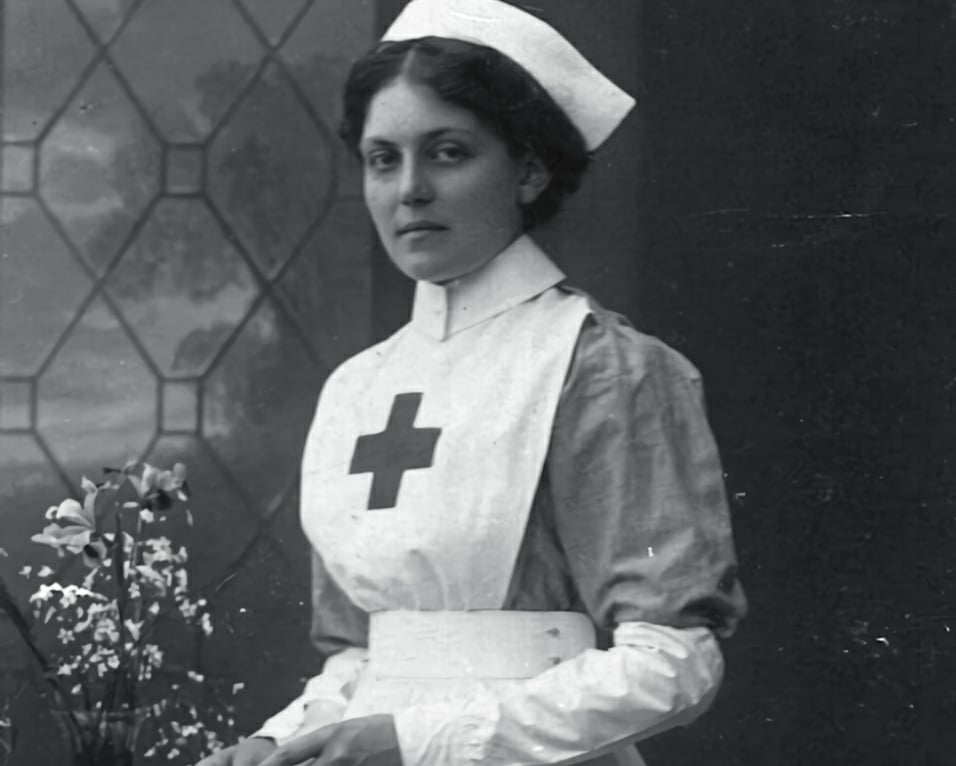
There are people who cheat death once and spend the rest of their lives telling the story. And then there’s Violet Jessop—who did it three times and mostly just kept going to work. She wasn’t chasing danger or trying to prove anything; she was a stewardess and later a nurse on ocean liners in the early 1900s, showing up for a job that happened to place her at the center of history’s worst maritime disasters.
In 1911, she was aboard the RMS Olympic, one of the largest and most advanced ships in the world, when it collided with a British warship—serious enough to shake confidence in ships that were supposed to be nearly unsinkable, but not enough to end her career. She survived, and she went back to work.
A year later, she was assigned to a new ship, the RMS Titanic. On April 14, 1912, when it struck an iceberg, the disaster didn’t feel immediate—passengers lingered, unsure if anything was truly wrong—but Jessop’s job was to keep people calm and guide them into lifeboats as the illusion of safety slowly unraveled. Eventually, she was placed into Lifeboat 16, and as the ship slipped beneath the surface, she found herself holding a baby an officer had simply placed in her arms without explanation. Hours later, aboard the rescue ship Carpathia, a woman rushed up, grabbed the child, and disappeared without a word. She survived, and she went back to work.
By 1916, during World War I, she was serving as a nurse aboard the HMHS Britannic, a hospital ship, when it struck a mine and began sinking rapidly. This time was different. On the Titanic, there had been hesitation, uncertainty, a strange calm before the truth set in. On the Britannic, there was no pause—one moment the medical staff were at breakfast, and the next, everything broke. People stood up and moved immediately. No confusion. No illusion that the ship might hold.
Jessop had gone below deck to care for a sick nurse. She took her time—calming her, dressing her, even making her eat before trying to get her to safety. By the time she returned above, most of the others were already gone.
Lifeboats were being lowered, but something had gone terribly wrong. The ship’s propellers were still spinning as it went down, churning the water and dragging nearby boats toward them. From where she stood, the choice became clear in a way choices rarely are—stay and risk being pulled into the blades, or jump.
She jumped.
The impact slammed her head against the keel. She went under hard, disoriented, swallowing water. She couldn’t swim. For a moment, it was just pressure, noise, and the sense that if she took another hit like that, it would be over.
When she surfaced, the water was filled with debris—life belts, wreckage, fragments of the ship breaking apart. Somewhere nearby, a man cried out for help and was told to wait his turn. Jessop drifted, holding on to whatever she could, staying afloat long enough for a rescue boat to reach her.
She was pulled from the water alive. Later, doctors would discover she had suffered a skull fracture from the impact.
People eventually gave her a nickname: “Miss Unsinkable.”
An entire town in Missouri was unknowingly poisoned for years after officials sprayed contaminated oil on its roads to control dust, eventually forcing the government to evacuate and buy out the whole town

In the early 1970s, the small town of Times Beach, Missouri had a simple problem: dust.
Like many rural towns, its roads were unpaved, and in dry weather, cars would kick up thick clouds that settled over homes, yards, and everything in between. It was annoying, messy, and constant. So the town hired a local waste hauler to spray oil on the roads to keep the dust down—a common practice at the time.
It worked.
The dust disappeared. The roads stayed damp. Life went on.
What no one realized was that the oil being sprayed wasn’t just oil.
It was contaminated with dioxin—one of the most toxic chemicals ever studied.
The waste hauler had been mixing in industrial chemical byproducts, unknowingly turning the town’s roads into a delivery system for poison. The contamination didn’t announce itself right away. There were no immediate alarms, no dramatic collapse. Just a slow, invisible spread into the soil, into homes, into the bodies of the people living there.
Years passed before the truth began to surface.
Animals started getting sick. Birds died. Horses exposed to the oil developed severe symptoms and had to be euthanized. Investigations eventually traced it back to the sprayed oil, and when officials tested the soil, the results were staggering.
The entire town was contaminated.
In 1982, after years of growing concern—and in a moment of almost surreal timing—a massive flood hit Times Beach, spreading the contaminated soil even further. It became the tipping point. The federal government stepped in and made a decision that’s almost unthinkable.
They bought the entire town.
Every home. Every business. Every street.
Residents were forced to leave, their town effectively erased because the ground beneath it had become too dangerous to live on. It remains one of the largest civilian exposures to dioxin in U.S. history.
Today, where the town once stood, there’s a state park.
No houses. No neighborhoods. No sign that thousands of people once lived there.
Just land that, for years, quietly carried something no one could see.
An entire English colony in North America disappeared without a trace in the late 1500s, leaving behind only a single word carved into a post: “CROATOAN”
.jpg)
In 1587, more than 100 English settlers arrived on an island off the coast of what is now North Carolina, establishing what would become known as the Roanoke Colony. It wasn’t the first attempt to settle the area, but it was meant to be the one that finally worked—a permanent foothold in the New World.
The colony was led by John White, who, within weeks of arriving, found himself facing a problem they couldn’t ignore: they weren’t prepared. Supplies were already running low, and tensions with local Indigenous groups made survival uncertain.
So White made a decision. He would sail back to England to gather more supplies and return as quickly as possible.
He never imagined how long that would take.
War broke out between England and Spain, and every available ship was pulled into service. What was supposed to be a short trip stretched into three years.
When White finally returned to Roanoke in 1590, he wasn’t greeted by struggling colonists.
He wasn’t greeted at all.
The settlement was empty.
There were no bodies. No signs of violence. No evidence of a battle or sudden catastrophe. The houses had been dismantled, as if the colonists had packed up and left deliberately. It didn’t look like a disaster. It looked… planned.
But they were gone.
The only clue left behind was a single word carved into a wooden post: “CROATOAN.”
Nearby, the letters “CRO” had been carved into a tree.
Before he left, White and the colonists had agreed on a system: if they were forced to relocate, they would carve the name of their destination. If they were in danger, they would add a Maltese cross.
There was no cross.
“Croatoan” was the name of a nearby island, inhabited by a Native American tribe. It suggested the colonists may have relocated there—perhaps willingly, perhaps out of necessity.
White wanted to investigate. He intended to sail to Croatoan Island and follow the trail.
But the weather turned.
A storm forced the ships back out to sea, and he was never able to search further.
He never saw his daughter again. Or his granddaughter—Virginia Dare, the first English child born in the Americas.
The disappearance of the Roanoke Colony has never been definitively explained.
No mass grave. No confirmed records. No clear ending.
Just a settlement that vanished… and a single word, carved into wood, left behind like a message no one ever fully understood.
A British man named Nicholas Winton helped rescue 669 children from Nazi-occupied Europe before WWII and never told anyone—his secret was only discovered decades later when his wife found a scrapbook in their attic

In 1938, as Nazi control tightened across Europe, thousands of families faced a reality that hadn’t fully reached the rest of the world yet—this wasn’t temporary. This wasn’t political tension. Something much worse was coming.
Nicholas Winton wasn’t a government official or a career diplomat. He was a stockbroker from London who had planned a ski trip.
Instead, he went to Prague.
What he found there were refugee camps filled with Jewish families who were trying to get their children out—anywhere—before borders closed and options disappeared. There was no system in place to help them. No organized evacuation. Just urgency and fear.
So Winton decided to create one.
From a hotel room, he began organizing what would become a rescue operation. He worked through paperwork, negotiated with officials, and found foster families in Britain willing to take in children they had never met. Each child needed documentation, travel arrangements, and a guaranteed sponsor.
Time was running out.
Trains began leaving Prague, carrying children away from their parents—many of whom they would never see again. One by one, groups made it out. The effort would eventually save 669 children.
A final train, carrying hundreds more, was scheduled to leave in September 1939.
It never did.
Hitler invaded Poland. Borders closed. War began.
The window slammed shut.
After the war, Winton returned to his life in England. He didn’t publish a memoir. He didn’t give interviews. He didn’t even tell most people what he had done.
For decades, the story stayed hidden.
Until 1988.
While going through their attic, his wife found a scrapbook filled with names, photographs, and records—evidence of the children he had helped rescue. It was the first time she realized what he had done.
The story eventually reached the public, and Winton was invited onto a BBC program.
He sat quietly in the audience.
At one point, the host asked if anyone there owed their life to Nicholas Winton.
People around him began to stand.
Then more.
And more.
Row after row, until he was surrounded by the now-grown children he had saved decades earlier—people who had gone on to live full lives, raise families, and build futures that had once seemed impossible.
Winton, who had carried the story alone for most of his life, was finally sitting in the middle of it.

Lenin believed Stalin was too crude and this defect was unacceptable for the position of General Secretary. He was looking for a plan in 1923 to remove Stalin with someone “more tolerant, more polite and more attentive towards comrades, less capricious, etc.”
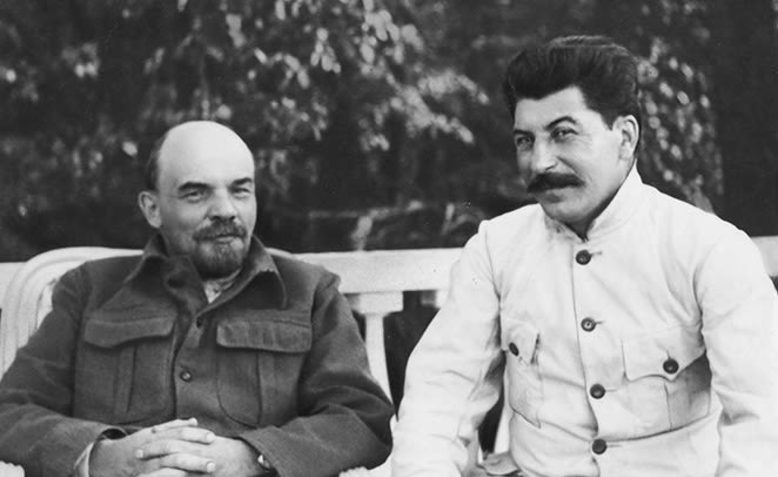
By 1923, Vladimir Lenin was dying.
A series of strokes had left him weakened, partially paralyzed, and increasingly removed from the day-to-day control of the Soviet government he had helped create. But even as his health failed, he was still thinking about what would happen after he was gone.
Specifically, who would take his place.
One name kept rising to the top: Joseph Stalin.
Stalin wasn’t yet the figure history would remember. He wasn’t the all-powerful dictator. At the time, he was General Secretary of the Communist Party—a role that, on paper, sounded administrative. But in practice, it gave him control over appointments, influence over party structure, and a growing network of loyalists.
Lenin noticed.
In what would later be called his “Testament,” Lenin dictated a series of notes evaluating the leading figures of the party. He wasn’t writing for the public. This was meant for the inner circle—the people who would shape the future of the Soviet Union.
When it came to Stalin, Lenin’s assessment was blunt.
He described him as too “crude,” and argued that this defect—tolerable in some roles—was dangerous in someone holding so much power. He warned that Stalin had concentrated enormous authority in his hands and questioned whether he could use it with enough caution.
Lenin didn’t just criticize him.
He suggested a solution.
He proposed that Stalin be removed from his position as General Secretary and replaced with someone more patient, more loyal to collective leadership, and more considerate toward others—someone, in Lenin’s words, “more tolerant, more polite and more attentive towards comrades, less capricious.”
It was a direct warning, written at the very moment the Soviet system was beginning to solidify.
But Lenin’s voice was fading.
After his death in 1924, the document was not widely circulated. Party leadership chose not to act on it. Stalin remained in his position, continuing to build influence behind the scenes, placing allies in key roles, and consolidating control.
Over the next few years, rivals were sidelined, outmaneuvered, or removed.
The administrative role Lenin had worried about became the center of power.
And the man he had described as too crude to lead would go on to dominate the Soviet Union for decades.
Under Stalin’s rule, that concentration of power turned into something far darker. Political opponents were purged, often through forced confessions, show trials, and executions. Millions were sent to labor camps in the Gulag system, where many died from exhaustion, starvation, or exposure. Policies like forced collectivization contributed to devastating famines, including one in Ukraine that killed millions. What Lenin had warned about in a single word—“crude”—would later manifest as a system defined by repression, fear, and mass death.