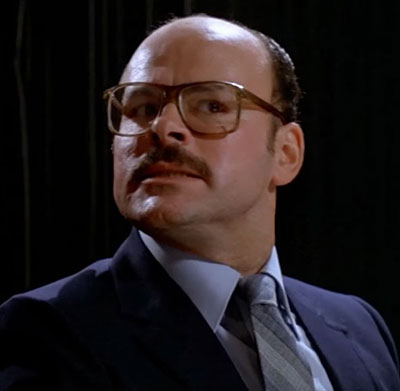
The “Dark Forest Hypothesis” suggests the universe is like a dark forest at night. Advanced civilizations intentionally stay silent and hidden, because any species that reveals its location risks immediate destruction by older, paranoid civilizations.
The Dark Forest Hypothesis is one of those ideas that sticks with you in a way that feels a little too real once it clicks. It starts with a simple question from the Fermi Paradox: if the universe is so vast and so old, where is everybody?
The Dark Forest answer is blunt and unsettling. Imagine the universe as a dense forest at night. You can’t see far. You don’t know who or what is out there. Every rustle could be something harmless or something that can wipe you out instantly. In that kind of environment, making noise isn’t curiosity. It’s suicide.
Applied to space, the idea is that any advanced civilization eventually comes to the same conclusion. Survival depends on staying hidden. Broadcasting your location through radio signals, megastructures, or anything detectable is like shouting into the dark. You’re announcing that you are here to entities that may be older, more advanced, and operating under the assumption that anything unknown is a potential threat.
And that assumption isn’t paranoia for the sake of it. It’s strategy. If you detect another civilization, you have no way of knowing their intentions, their capabilities, or how quickly they could evolve into something dangerous. Waiting to find out might be the last decision you ever make. So the safest move, the rational move, is to eliminate the risk before it becomes a problem.
What makes the hypothesis so unsettling isn’t just the violence. It’s the logic. It doesn’t require aliens to be evil. It only requires them to be cautious. Even peaceful civilizations, given enough time and uncertainty, might arrive at the same cold conclusion that silence is safety.
It also flips the usual way we think about searching for extraterrestrial life. Projects that try to actively send signals into space start to look less like hopeful outreach and more like someone lighting a flare in a place where everything else has chosen to stay quiet. The silence we observe in the universe might not be emptiness. It might be discipline.
And if that’s true, then the quiet isn’t comforting. It’s a warning.
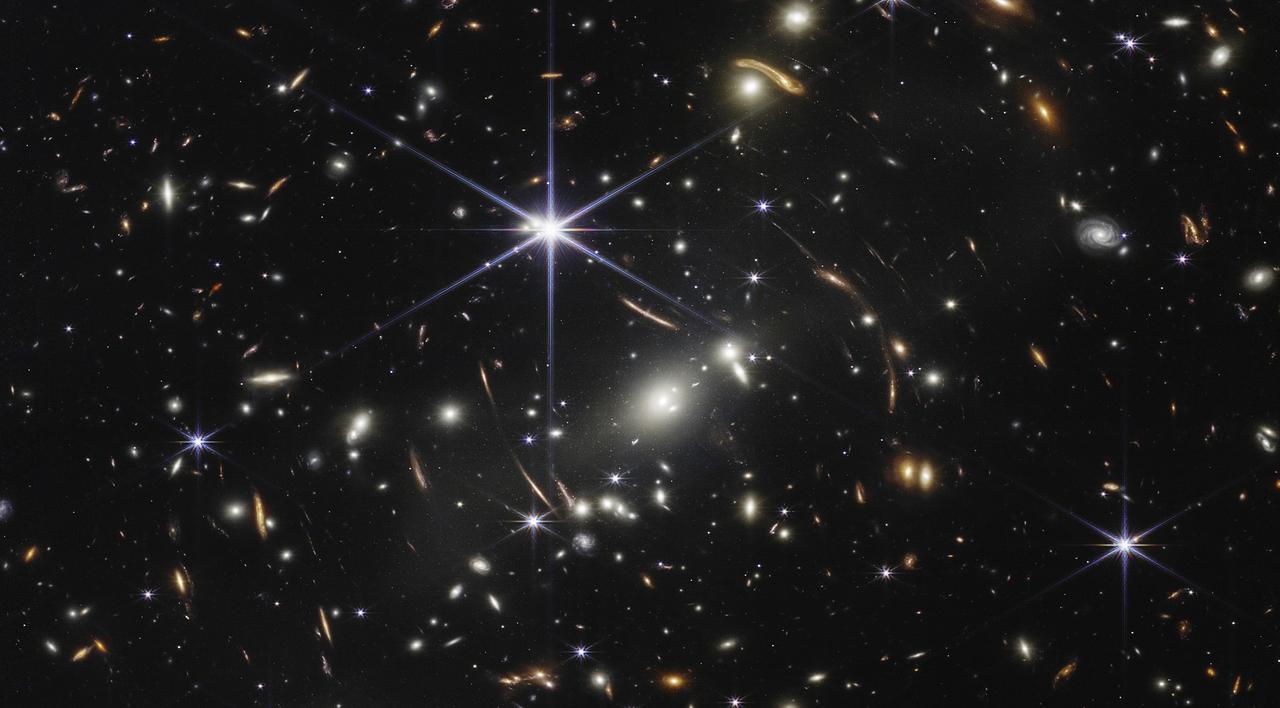
Ghostbusters: The Video Game (2009) has voice acting from all four of the original cast members (Bill Murray, Dan Aykroyd, Harold Ramis, Ernie Hudson), who helped write the script as well. Aykroyd considers it “essentially the third movie”
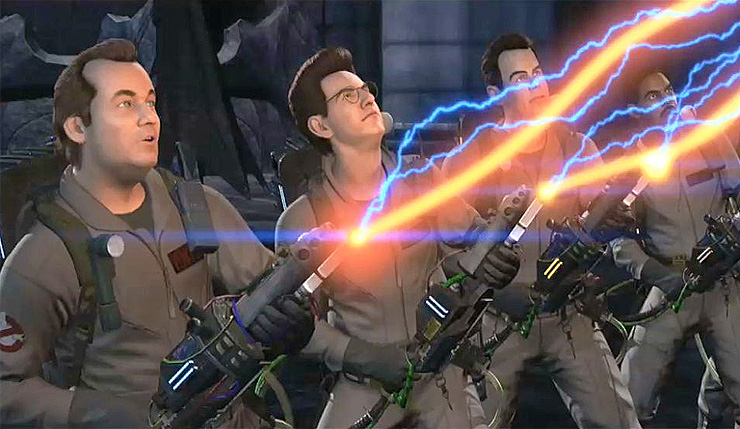
There’s something strange about Ghostbusters: The Video Game, and it’s not the ghosts. It’s the fact that, somehow, the closest thing we ever got to a real third Ghostbusters movie didn’t happen in theaters—it happened on a console.
All four original Ghostbusters came back. Bill Murray, Dan Aykroyd, Harold Ramis, and Ernie Hudson all reprise their roles, not just lending their voices but stepping fully back into the rhythm of the characters. That alone feels like a minor miracle when you consider how long a third movie stalled out, largely because getting everyone—especially Murray—on the same page proved nearly impossible.
What makes it more than a nostalgia play is that this wasn’t some throwaway tie-in. Aykroyd and Ramis helped shape the script, pulling from ideas that had been floating around for a long-gestating third film. You’re not playing a random side story—you’re stepping into something that feels like it grew out of the same creative soil as the originals. Aykroyd has even called it “essentially the third movie,” and for once, that doesn’t sound like marketing spin.
The game quietly solves a problem the films never could. Instead of forcing the original crew into a new spotlight, it introduces you as “the Rookie,” a new Ghostbuster who tags along while the veterans do what they’ve always done. It’s a smart move. It lets the original cast interact naturally, trading lines and slipping back into their old dynamics, while you exist just close enough to feel like part of the team. You’re not replacing them—you’re witnessing them.
The story leans into that sense of continuity. Set after Ghostbusters II, it brings you back to New York and ties directly into the mythology of the first film, with a cult trying to resurrect the original threat. It feels less like an episodic adventure and more like a continuation, the kind of narrative thread a proper sequel would pick up without hesitation.
And it doesn’t forget what made Ghostbusters work in the first place. The tone shifts between humor, chaos, and moments that feel surprisingly tense, even brushing up against horror when you’re left on your own without the rest of the team. It’s that same balancing act the movies pulled off—never fully one thing, always a mix.
Even the structure works in its favor. The game is relatively short and linear, more interested in moving you from one set piece to the next than letting you wander. In another context, that might feel limiting, but here it does the opposite. It makes the whole thing feel like a tightly paced film you happen to be inside of rather than a bloated game trying to justify its runtime.
There’s an irony to all of this. For years, Hollywood couldn’t figure out how to make a third Ghostbusters movie with the original cast. Scripts stalled, ideas fell apart, and time kept moving. But when it finally worked—when everyone showed up, contributed, and told another chapter of the story—it didn’t arrive with a red carpet premiere.
It just quietly showed up in 2009, handed you a proton pack, and let you play it.
There is strong belief that James Buchanan may have been the first gay President of the United States. Never married, Buchanan had a close relationship with another man for many years which he referred to as a “communion”. Andrew Jackson once called the pair “Miss Nancy and Aunt Fancy”.
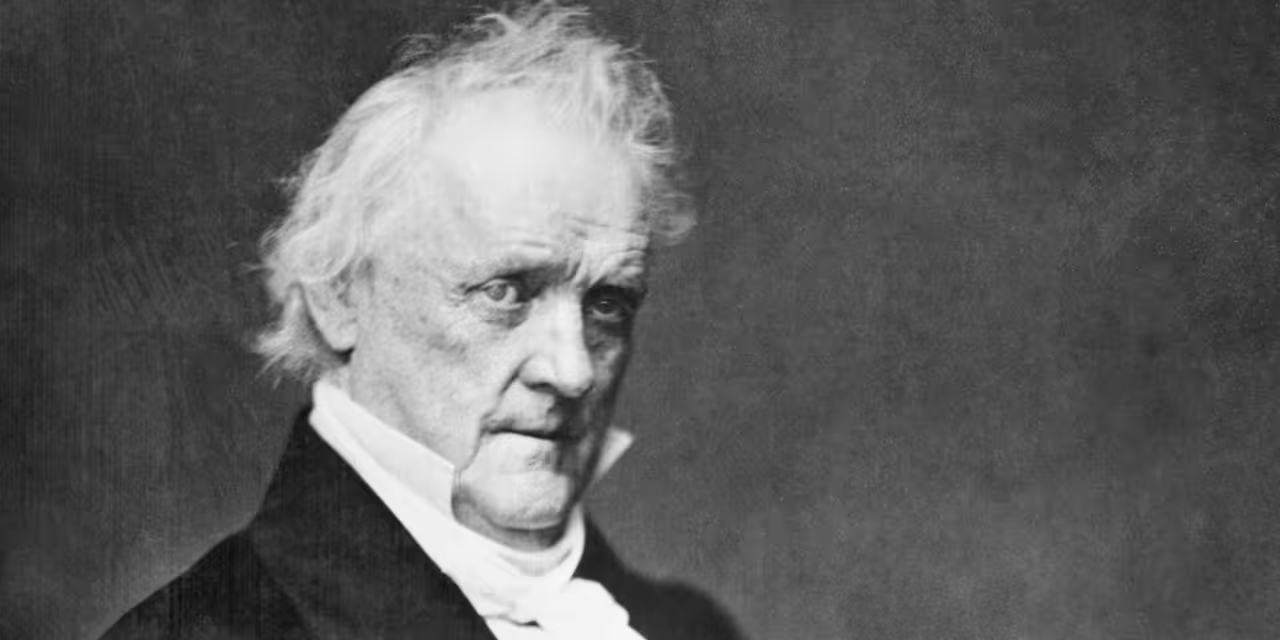
James Buchanan stands as one of the more complicated figures in the American story. The only president never to marry. A career politician who seemed, for decades, almost purpose built for high office. Congressman, senator, Secretary of State, minister to Great Britain. By the time he reached the presidency in 1857, he had spent a lifetime moving through the upper ranks of American power. He knew the system. He believed in it. And he believed, perhaps more than anything, that it could hold together.
That belief would be tested in the most unforgiving way possible. Buchanan took office as the country was coming apart over slavery, each compromise thinner than the last. He supported the Dred Scott decision, thinking it might settle the issue once and for all. Instead, it poured fuel on a fire that was already spreading. His presidency became defined by a kind of paralysis. A conviction that the Union could not be held together by force, even as it began to fracture in real time. By the time he left office, the nation was on the brink of civil war.
But running alongside that political life is something quieter. Something more personal. For years in Washington, Buchanan shared his life with William Rufus King. Not just allies. Not just men who happened to be in the same orbit. They lived together, formed a household, and were widely understood as a pair. In a city built on ambition and calculation, that kind of long standing domestic partnership stood out.
Buchanan referred to the relationship as a “communion,” a word that carries weight. Even in the 19th century, with its more elaborate language of friendship, it suggests something deeper, something binding. And others noticed. Andrew Jackson reportedly referred to them as “Miss Nancy and Aunt Fancy,” a nickname that only really makes sense if the relationship was visible enough to become part of the political conversation.
Then King leaves for France, taking up a diplomatic post. And Buchanan writes that he feels “solitary and alone.” It’s one of those lines that survives across time because it reveals something the official record usually doesn’t. Not policy. Not strategy. Just absence.
King dies in 1853. Buchanan continues on, eventually reaching the presidency, carrying the weight of a nation that is already starting to split apart. He never marries. Never forms another partnership like the one he had with King.
And so you’re left with two parallel tracks. One is the public life, the statesman trying to manage forces that may have already been beyond control. The other is more difficult to define, built out of letters, shared homes, and the way people talked when they thought history wasn’t listening.
“The Final Experiment” was a 2024 Antarctica expedition where flat Earth YouTubers saw the 24 hour sun, which could not be explained by non-spherical models. This prompted at least one YouTuber to publicly admit they were wrong, and leave the flat Earth community.

In 2024, a small but unusual expedition to Antarctica set out with a very specific goal. It was called “The Final Experiment,” and it brought together a group of flat Earth YouTubers and independent observers to witness something that has long been a point of contention: the 24 hour sun.
The idea was simple. Travel far enough south during the Antarctic summer and observe whether the sun ever sets. On a spherical Earth, the answer is clear. The tilt of the planet means that during certain parts of the year, the sun remains continuously above the horizon at the poles. But for many flat Earth models, explaining a sun that never dips below the horizon presents a serious problem.
So they went to see it for themselves.
What they encountered was not ambiguous. The sun stayed up. It circled the sky without setting, remaining visible for a full 24 hours. There was no clean way to interpret it as a trick of perspective or a temporary anomaly. It behaved exactly as standard astronomy predicts it would on a spherical Earth.
For some participants, that observation forced a direct confrontation with the limits of their model. At least one YouTuber who had previously promoted flat Earth ideas publicly acknowledged the contradiction, stating that what they witnessed could not be reconciled with their prior beliefs. Shortly after, they announced they were stepping away from the flat Earth community.
The moment didn’t convert everyone. Belief systems rarely collapse all at once. But it did create a rare instance where a long argued claim was tested in a shared, physical environment, with results that were difficult to reinterpret.
In a small town in County Cork, Ireland, a monument stands in appreciation to the American Choctaw Indian Tribe. Although impoverished, shortly after being forced to walk the Trail of Tears, the tribe somehow gathered $170 to send to Ireland for famine relief in 1847

In the town of Midleton in County Cork, there’s a striking monument made of stainless steel feathers, curved upward as if caught in motion. It’s called Kindred Spirits, and it stands as a quiet thank you to the Choctaw Nation for an act of generosity that feels almost impossible when you look at the timing.
In 1847, Ireland was in the grip of the Great Famine. Crops had failed, food was scarce, and entire communities were struggling to survive. News of the famine eventually reached the Choctaw people in North America.
What makes what happened next so remarkable is where the Choctaw stood at that moment in their own history. Just years earlier, they had been forced from their ancestral lands in the American Southeast and made to endure the Trail of Tears, a brutal displacement that caused widespread suffering and death. They were rebuilding their lives in unfamiliar territory, with limited resources and little stability.
And yet, in 1847, members of the Choctaw community gathered what they could and sent $170 to aid famine relief in Ireland. Adjusted for modern value, it would amount to several thousand dollars, but the raw number matters less than the context. This was not a wealthy nation offering surplus aid. This was a recently displaced people, still recovering from trauma, choosing to help strangers across an ocean.
The gesture did not disappear into history. Over time, it became part of a shared memory between Ireland and the Choctaw Nation. The monument in Midleton reflects that connection, its feather-like forms symbolizing both movement and solidarity across distance.