
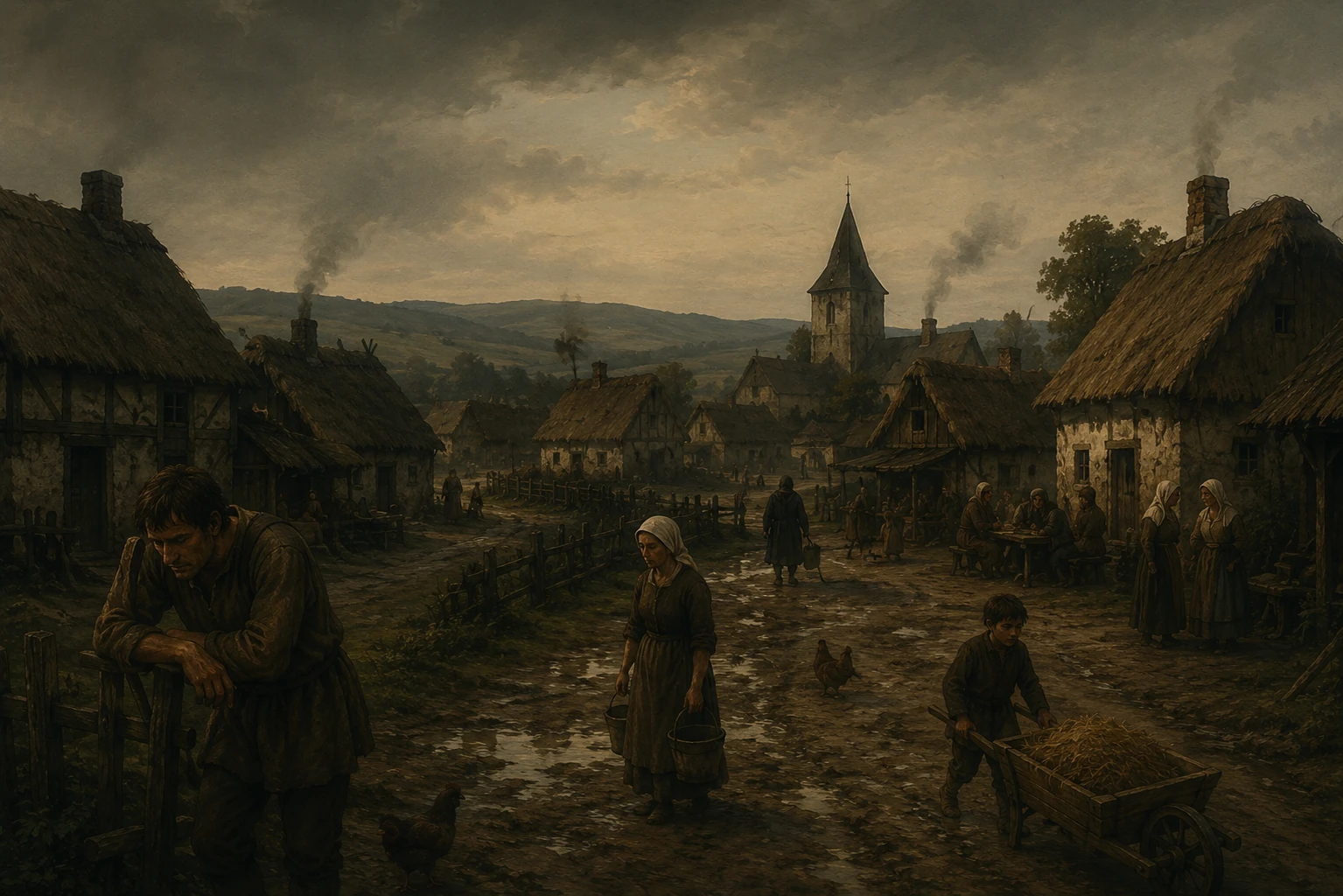
For most of the Middle Ages, being a peasant was simply what it meant to be a person—around 85 percent of everyone alive worked the land, one hard year away from ruin.
It was rarely the dramatic dangers that killed them, but the harvest that failed, the dues that came due anyway, the small wound that turned bad. Survival was a matter of judgment: what to store and what to spend, whom to rely on, which risks were worth taking. Each scenario drops you into a villein’s shoes over a single hard year. Pick the choice you think gives you the best odds of seeing the next harvest—and find out whether you’d have made it.
Medieval Peasant
The harvest is in, but it was a poor one. Your lord's rent and the Church's tithe are still due in full. Winter is coming. What's the wise move?
It's spring and your family is hungry, having stretched the winter stores thin. You still have a sack of grain set aside. What must you absolutely not do with it?
You cut your hand badly on a scythe during the harvest. It's throbbing and starting to redden. In your world, what's the real danger?
You hear that people are saying the average person in your village barely lives past thirty. What does that grim figure actually reflect?
Your infant is feverish and your neighbor swears by a folk remedy involving a poultice and a charm. The village has no physician. What's the sober truth about your options?
A neighbor's harvest failed completely while yours scraped by. He asks for help through the winter. Beyond simple kindness, why might you agree?
You have a chance to send your young son to learn a craft as an apprentice in the nearby town, though it means losing his help in the fields. Is it worth considering?
Your one-room home has a fire burning in the center but no chimney, and it fills with smoke. Beyond the discomfort, what did peasants gain by living this way?
Winter approaches and you're deciding how to get through it. Which of these was the peasant's most reliable defense against a lean season?
After surviving years of this, what truly separated the peasants who endured from those who didn't?