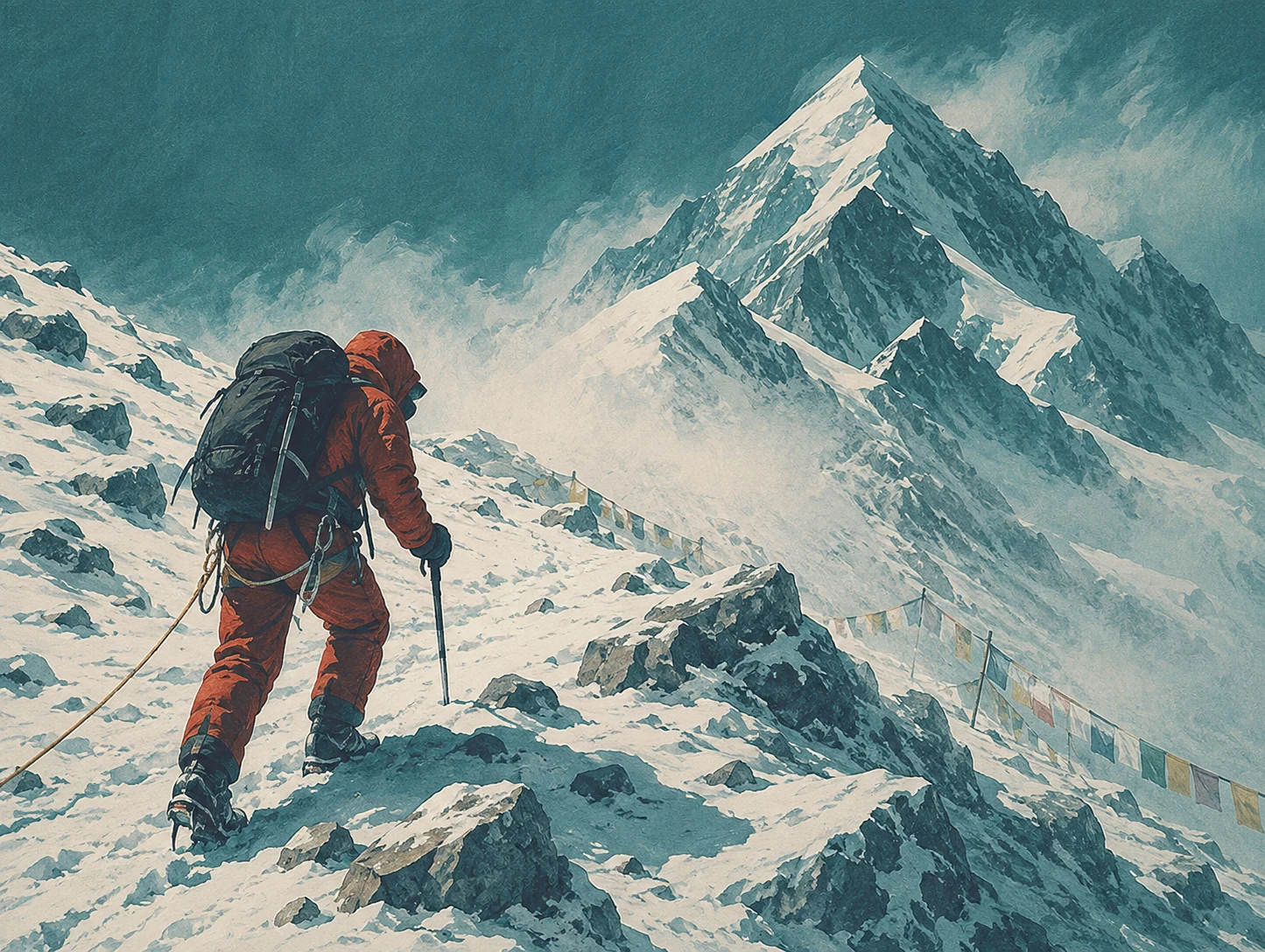
Above 26,000 ft (8,000 meters), the human body is dying. There is not enough oxygen to sustain life, only to delay its ending, and every hour spent there draws down a reserve that cannot be refilled.
Most climbers who die on Everest do not fall. They run out of time. About six in ten deaths happen on the way down, when the summit has already been won and the mountain collects what it is owed.
This quiz isn’t about gear or elevation records. It’s about judgment, in the one place on earth where your brain is too starved of oxygen to make good decisions. Each scenario puts you in the Death Zone facing choices real climbers have faced. Pick the option you think gets you home—and find out whether you’d have come down that mountain.
Everest
It's 2:15 in the afternoon. You're perhaps ninety minutes from the summit. The weather is clear and you feel strong. What do you do?
You've been climbing for eleven hours and you're bone-tired. There's a flat rock. You want to sit down for ten minutes. Is that safe?
You reach the summit at 1:00 PM. You've dreamed of this for a decade. How long do you stay?
A queue has formed at a fixed rope below the summit. Thirty climbers are waiting. You'll stand still in the cold for two hours. What's the right call?
Your climbing partner develops a hacking cough, gurgling breath, and confusion. What is happening and what do you do?
Near the summit you find a climber collapsed in the snow, conscious but unable to stand. You have oxygen and strength. What can you actually do?
You're on a guided climb. Your guide calls the turnaround, but you've spent your savings and years training. You're certain you can make the top. What do you do?
You are climbing without supplemental oxygen to make the achievement purer. How does this change your odds?
Descending at dusk, you realize you're moving very slowly and the cold is deep. Camp IV is hours away. What's the greatest danger now?
You're on the summit, and a teammate two hours behind radios that they're still climbing. It's past turnaround. What do you do?
Was this worth your time?
What missed? (optional)