Section

Category: History

History

5 Historical Photos That Speak Volumes

Wedding bands that were removed from holocaust victims before they were executed

There is a photograph—simple, brutal, and impossible to forget. It shows a heap of wedding bands. Thousands of them. Gold and silver. Some engraved. Some bent. Some still glinting faintly under the light. They were taken from Holocaust victims. Not lost. Not discarded. *Taken.* Stripped from fingers before bodies were marched into gas chambers, before names were erased, before ash was scattered over Europe.
Read more 5 Historical Photos That Speak Volumes
History

5 Historical Photos That Speak Volumes


Former president Andrew Jackson aged 78, one of the few existing photographs of him, taken in 1845, The year he died.

Andrew Jackson sits stiffly before the camera, his frame frail, his face lined with the deep creases of a man who has lived through nearly eight decades of American history. The year is 1845, and photography itself is still in its infancy — a rare privilege, reserved for those whose names carried weight. This daguerreotype, one of the few surviving photographs of the seventh president of the United States, freezes him in the twilight of his life, only months before his death.

Read more 5 Historical Photos That Speak Volumes
History

A Few Questions From History, Answered

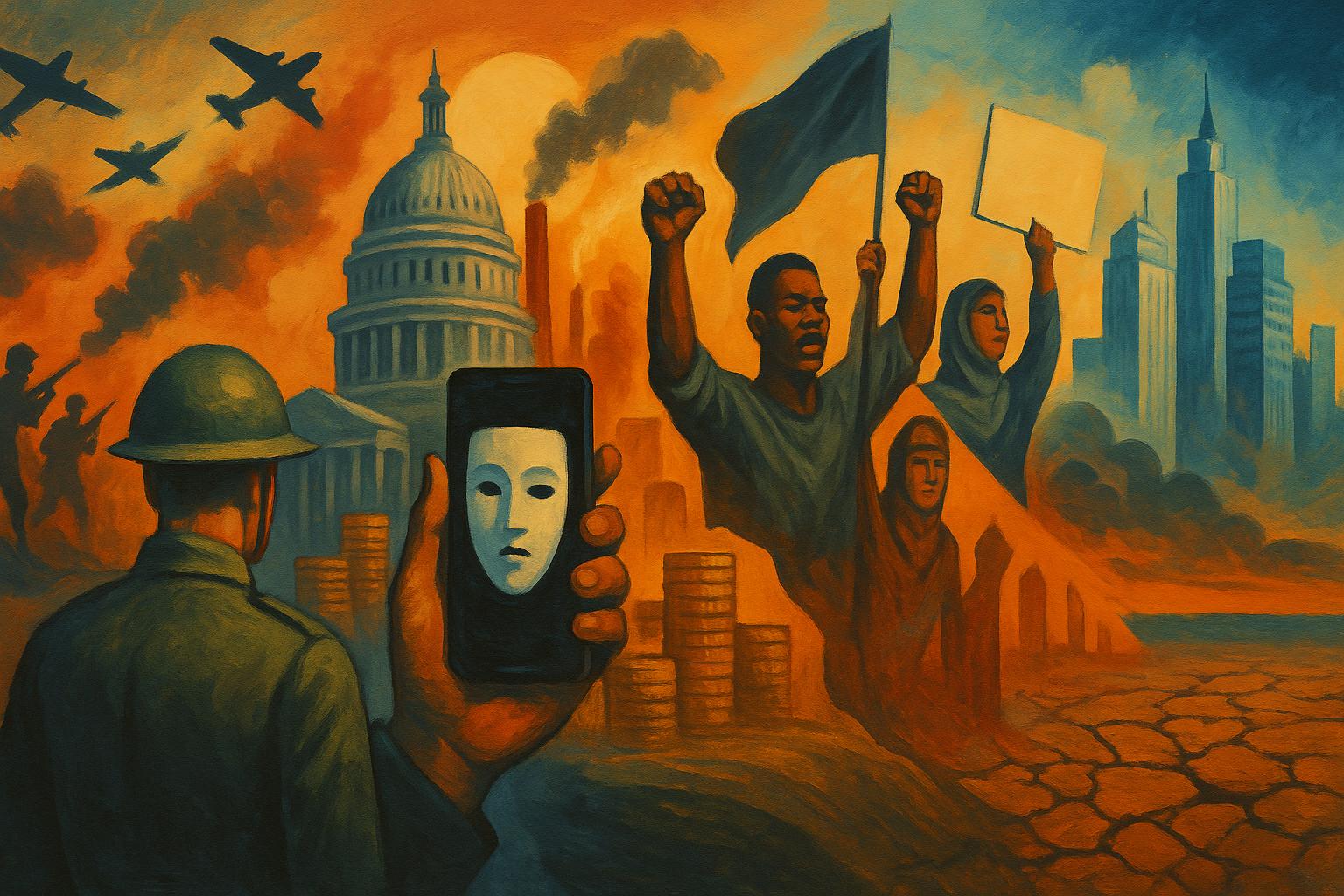
They say history repeats itself, how is history repeating itself today?

History doesn’t repeat like a bad TV rerun. It mutates. It takes on new costumes, new sets, new actors — but when you listen closely, the rhythm underneath is the same.

Take geopolitics. In 1914, Europe’s great powers were locked into alliances, rattling sabers, convinced their enemies would back down. They didn’t. Today, NATO stares across the line at Russia as the war in Ukraine drags on, while the Taiwan Strait simmers with the potential to draw in the U.S. and China. Everyone swears they don’t want another world war. That’s exactly what they said before the last two.

Read more A Few Questions From History, Answered
History

6 Historical Photos That Speak Volumes

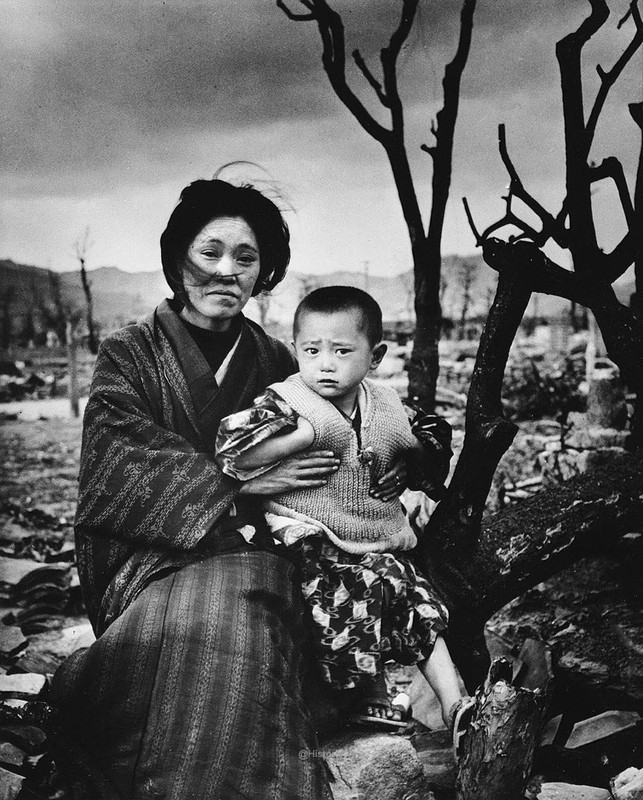
A mother and child in Hiroshima, four months after the atomic bombing. 1945

The air is cool, the kind that seeps into your bones, but it’s not the weather that makes her hold him so tightly. Her arms are wrapped around the boy in a way that’s half-embrace, half-shield — though against what’s already happened, no shield could have mattered.

Four months earlier, at precisely 8:15 a.m., the sky over Hiroshima tore open. In a fraction of a second, a flash hot enough to fuse metal and bone erased the morning as if someone had ripped the page from time itself. The blast wave flattened everything within miles. The firestorm that followed roared through what was left. And the radiation — invisible, silent — began rewriting the cells of every living thing it touched.

Read more 6 Historical Photos That Speak Volumes
History

5 Historical Photos That Speak Volumes

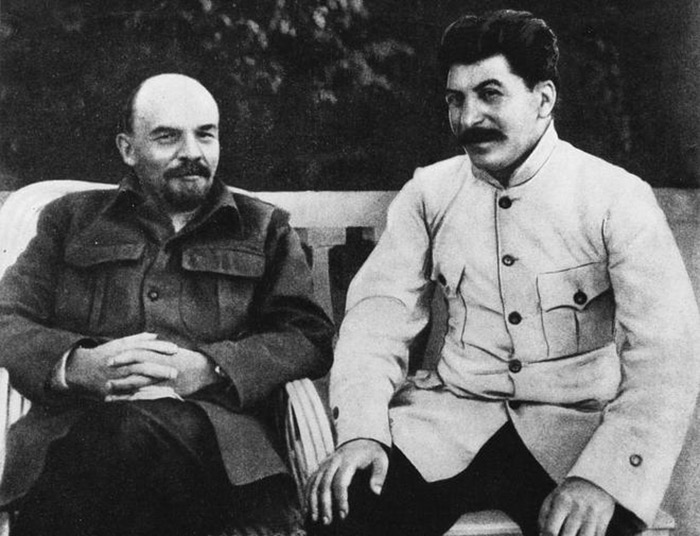
Lenin and Stalin at Gorki, just outside of Moscow, September 1922

There’s a strange, almost theatrical quality to the moment when two of the 20th century’s most consequential figures sat together at Gorki in 1922. By then, the Russian Revolution’s victorious whirlwind was slowing, but beneath the surface, new storms were brewing. Lenin, the ideological engine of the Bolsheviks, was well aware that the revolution he’d birthed was at a crossroads—and that the men surrounding him were already thinking about what came next.

Read more 5 Historical Photos That Speak Volumes
History

16 Fascinating Photos Collected From History

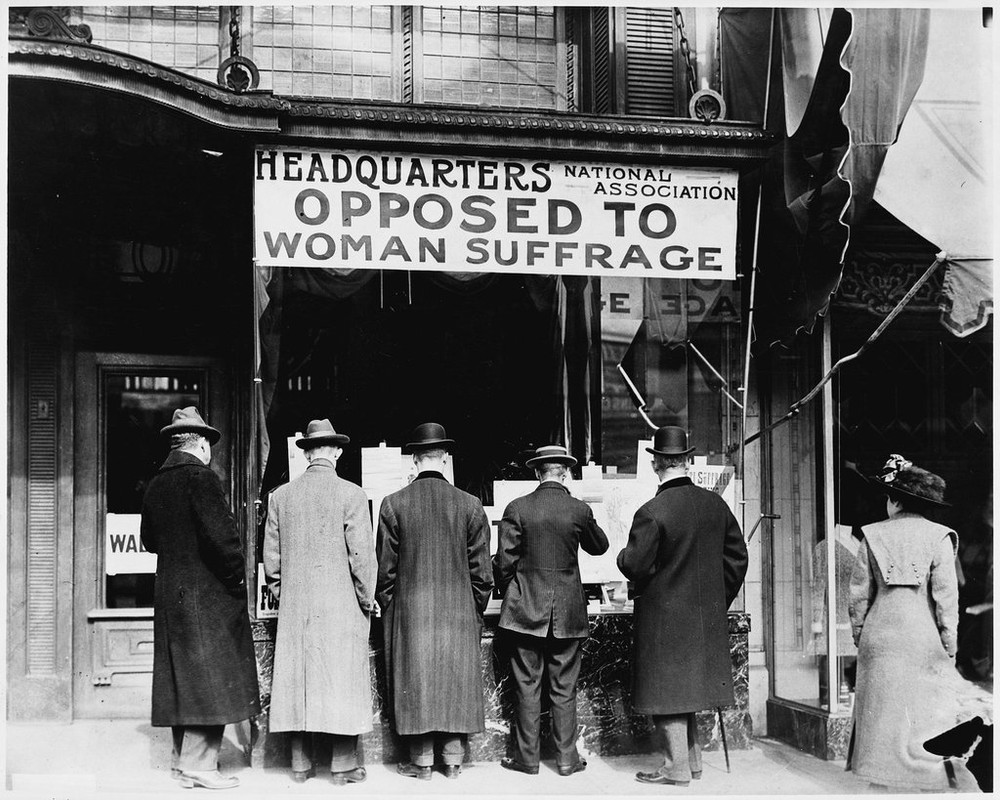
Outside of the Headquarters of National Association Opposed to Woman Suffrage, 1914

In an era when women were rallying, marching, and risking arrest to win the right to vote, here was a group—led and largely staffed by women—fighting fiercely to preserve the status quo. The building itself was unassuming, yet from its doors poured pamphlets, petitions, and editorials warning of the dangers women’s suffrage would supposedly bring: a disruption of social order, the decline of the family, and chaos in politics. Signs and banners would have declared the group’s purpose in bold letters, standing as both a literal and symbolic barrier to progress.

Read more 16 Fascinating Photos Collected From History
History

5 Historic Photos That Speak Volumes

Russian conscript with his family before being deployed to the front, Karachev, Bryansk, Russia, 1943.

Karachev, Bryansk Oblast, 1943. A Russian conscript holds his family like he’s trying to memorize them by touch.

He’s not crying. He can’t afford to. His face is clenched, eyes fixed on something just beyond the frame—something far off and final. War. It’s already reached him. It’s there in the weight of the uniform on his back, the roughness of the wool, the burn of the sun on his neck. But mostly, it’s in the way his mother breaks against him. Her face twisted in a cry too deep for sound. She’s holding him like a lifeline, like a dam about to burst, like if she lets go for even a second the entire world will crack in two.

Read more 5 Historic Photos That Speak Volumes
History

5 Historic Photos That Speak Volumes

Bread and soup during the Great Depression

What you’re seeing here is a snapshot of hunger—not the gnawing you get when you skip lunch, but a slow, humiliating starvation that cuts at pride and dignity. Four men, maybe more behind them, hunched at a counter. Their faces are weathered, their hats battered, their eyes hollowed out by fatigue. They’re eating bread and soup, the kind that’s stretched thin so everyone gets a little, but no one ever gets enough.

Read more 5 Historic Photos That Speak Volumes
History

16 Fascinating Photos Collected From History

A man holding his daily ration of food (125 grams of bread, of which 50–60% consisted of sawdust) during the Siege of Leningrad, 1941-1944

More civilians died of starvation, cold and disease in the first few months of the siege than all the US Military deaths in all theaters of the war.

Total US military deaths from all causes: 407,000

Total number of dead from the beginning of the siege, September ’41, to December ’41: 780,000, almost entirely civilian deaths.

And the siege lasted 900 days. Out of a population of around 3.5 million civilians, 400,000 survived in the city.

historical photos

Read more 16 Fascinating Photos Collected From History
History

5 Historic Photos That Speak Volumes

One of the most prolific murderers in history. Vasily Blokhin, Stalin’s chief executioner, was personally responsible for the deaths of over 10,000 people including political dissidents, rivals of Stalin and Polish military officers. Date unknown (c. 1920-1940)

There’s a moment in history—many of them, really—when the bureaucratic machinery of murder requires not generals or ideologues, but men. Flesh-and-blood men willing to do the job others order but dare not witness. That’s where Vasily Blokhin steps in. Stalin’s chief executioner. A man whose hands were stained with more blood than perhaps any single human being in the 20th century. Not because he designed genocide. Not because he pushed paper. But because he pulled the trigger—again and again and again.

Read more 5 Historic Photos That Speak Volumes
Skip to content