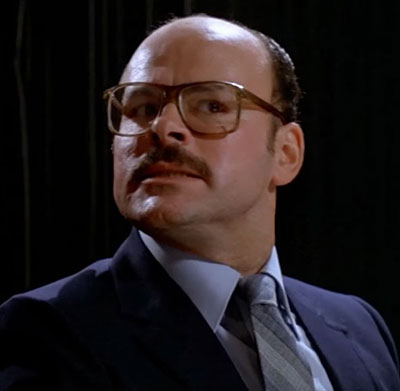
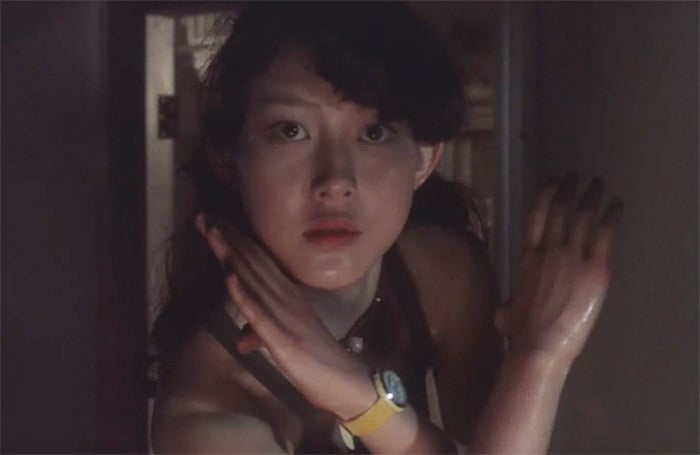
For a certain kind of film nerd—the kind who uses the word “auteur” in casual conversation and unironically owns Criterion tote bags—Nobuhiko Obayashi’s 1977 film House (Hausu, if you’re really in the know) is the cinematic equivalent of a lucid dream mixed with a soda commercial and a haunted puppet show. And among the film’s unforgettable cast of high school girls with on-the-nose nicknames (like Fantasy, Prof, and Mac), there was one character who managed to both parody and transcend the genre simultaneously: Kung Fu.
Played by a then-17-year-old Miki Jinbo, Kung Fu wasn’t just a name—it was a vibe. She wasn’t the final girl in a slasher flick. She was the girl who dropkicked the haunted grandfather clock and survived a demonic house by sheer force of karate and charisma. In a film that has more visual metaphors than plot points, Kung Fu was kinetic, grounded, and kind of awesome.
So what happened to her?
The Girl Who Kicked a House in the Face
Before House, Miki Jinbo was already on the rise in Japan. She won a TV talent show (Star Tanjō!) in 1976 and released a debut single that same year. In America, this would be like if someone won American Idol, dropped a ballad, and then showed up in a cult horror film where she gets eaten by a light fixture. In Japan, that kind of cross-media jump isn’t unusual. Jinbo was part of that uniquely Japanese tradition where idols could sing, act, and karate-chop furniture—sometimes all in the same week.

Her role in House made her instantly iconic, even if most people wouldn’t realize it until decades later. The film wasn’t exactly a mainstream smash when it came out. It confused critics, baffled audiences, and pretty much disappeared for years before being resurrected by midnight movie circuits and blog-era cinephilia. But that’s the thing about cult fame: it’s slow-burning. By the time people got how brilliant House was, Miki Jinbo had already moved on.
A Career That Didn’t Stay in the House
Jinbo never stopped working. Throughout the 1980s and 1990s, she racked up TV dramas, police procedurals, historical epics—your classic Japanese post-idol, post-cult-film acting resume. She wasn’t trying to ride the wave of House forever. She just kept showing up on screen, often playing characters far more serious than a girl who literally kung-fu’d a ghost to death.
Her final credited acting role came in 2009 in a travel mystery television movie. After that, things got quiet. No scandals. No press tours. No tell-all memoir titled The Girl Who Kicked the Haunted House. Just… silence.
Kung Fu Grows Up

Which makes the occasional reappearance that much more poignant. In 2019, Jinbo reunited with Ai Matsubara (who played Melody) to celebrate House and reminisce about the shoot. It wasn’t a huge media event—just two women remembering the weirdest job they ever had. They talked about being teenagers on a surreal set, working with a director who treated film like jazz, and being cast not because they were experienced, but because they were exactly what the film needed.
There’s something comforting in that.
Jinbo is now in her sixties and seems to have stepped away from acting entirely. She values her privacy, and there’s not a ton of information out there about her life now. Which, in a world where every former celebrity is two steps away from a reality show comeback or a sponsored Instagram post, feels kind of revolutionary. She doesn’t seem interested in explaining herself. She did something unforgettable, and that was enough.
Maybe that’s the real legacy of Miki Jinbo—not just as the actress who played Kung Fu, but as someone who walked away on her own terms. She was iconic in a film that only later got its due, and instead of chasing that second act in public, she just lived it in private.
Sometimes, the coolest thing you can do after kicking a haunted house to death… is log off.