There was a time when Mimi Craven was one of those people who’d show up in a movie, say two lines, and then leave you wondering: “Wait, who was that? She seemed important.”
She wasn’t a scream queen. She didn’t get disemboweled in a cabin or chased through the woods by a guy with a mask and mother issues. But she was there. She was part of that VHS-era horror ecosystem. Swamp Thing. A Nightmare on Elm Street. Minor roles. Blink-and-you’ll-miss-it stuff. But still — there.
Midwest to Movie Sets
Let’s start in Indiana, because all inexplicable Hollywood stories start somewhere aggressively normal. Mimi Craven was born in Indianapolis in 1957. She studied ballet at Indiana University, taught dance in Texas, and eventually moved to L.A., where she took acting classes from Roy London — the same guy who coached everyone from Sharon Stone to Brad Pitt to Geena Davis. In the Eighties, that was like saying you trained under Yoda, but for monologues.
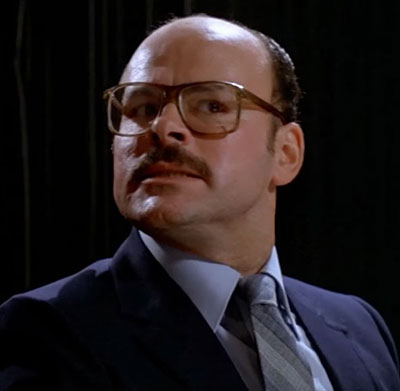
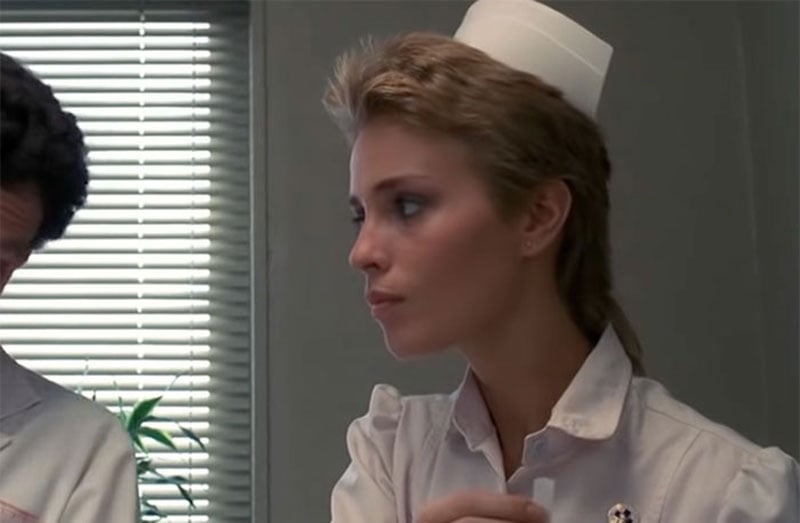
She gets a gig in Swamp Thing (1982) as Arcane’s secretary — which sounds like a joke, but is real. Two years later, she pops up in A Nightmare on Elm Street as a nurse. She doesn’t survive the dreamscape, because she doesn’t need to. Her job is to be part of the mise-en-scène — the ambient terror of early Wes Craven movies, back when horror looked like it was shot on molasses-stained film stock and everyone smoked indoors.

Working Actress, Then Exit Stage Left

She kept working — small roles in The Twilight Zone, Chiller, Seinfeld, Star Trek: Voyager, ER — the usual orbit of actors who were always one role away from getting remembered. But eventually, Mimi walked away.
Not in a dramatic, “Hollywood chewed me up” kind of way. More like a slow fade. She looked at the roles she was getting — “high blonde hair, big tits, long legs,” as she bluntly put it — and realized she didn’t want to keep showing up just to be someone’s objectified expository device. She started noticing what other people might be noticing. That she was aging. That she was being pigeonholed. That she was done.
Turning the Lens Around

So she flipped the camera around.
Mimi became a photographer. Not a hobbyist — a real one. She started shooting movie posters. She learned on Sharon Stone, of all people. “If you can pass muster shooting Sharon Stone,” she once said, “you can shoot anybody.” She worked her way into the industry’s visual bloodstream — celebrity portraits, magazine covers, the Joe Dirt poster. Seriously.
Eventually, she burned out on digital photography, too — said it turned people into lazy shooters who wanted to “fix it in the mix.” And just like that, she faded again. But it wasn’t sadness. It wasn’t bitterness. It was freedom.
Seen on Her Own Terms
She didn’t disappear. She just decided she didn’t need to be seen anymore on someone else’s terms.