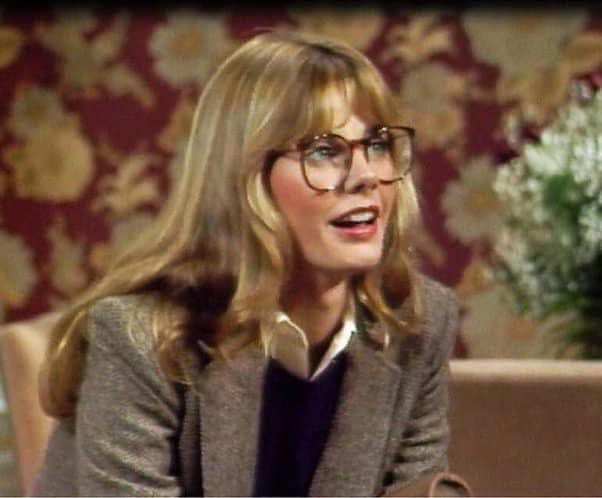
Let’s talk about Jan Smithers. If you know the name at all, it’s because of Bailey Quarters—the introverted, bespectacled brunette on WKRP in Cincinnati who managed to be the brainy underdog and the stealth crush of anyone who preferred liner notes to leather pants. She was the Anti‑Loni, and that contrast was the show’s secret engine.
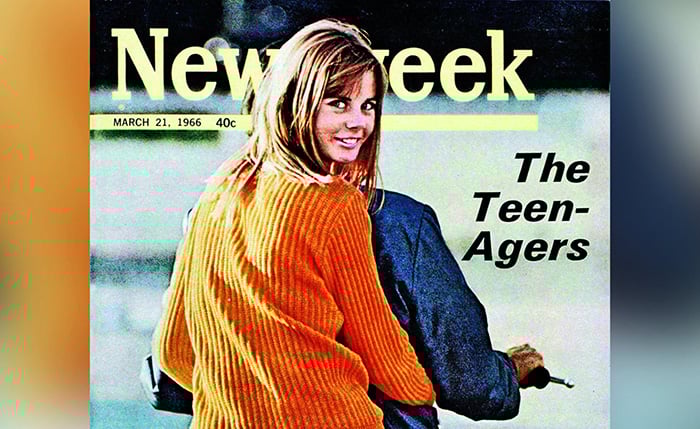
Before any of that, Smithers was a Valley kid who cut school, went to the beach, and accidentally walked into American pop culture. Newsweek snapped her on the back of a motorcycle in an orange sweater, put her on the cover (1966), and turned truancy into a career move. Modeling led to commercials, then to acting: anthology TV, a well‑received turn in Where the Lilies Bloom (1974), and eventually WKRP (1978–82).
Bailey Was Real—Literally
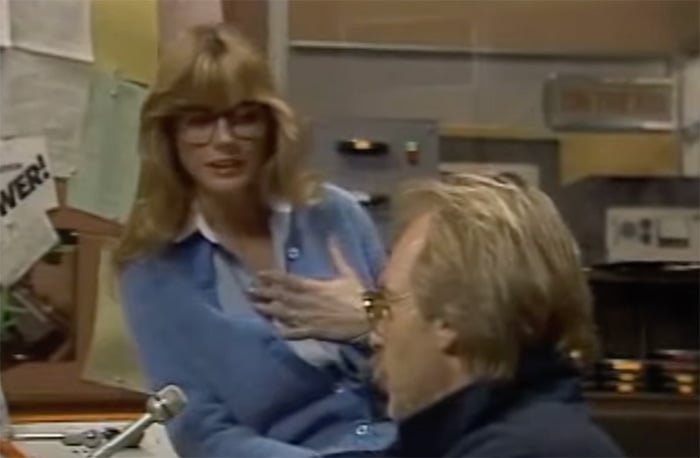
Here’s the part most people don’t know: Bailey wasn’t a network committee character. Showrunner Hugh Wilson told Smithers he hired her because she was Bailey—and that he’d modeled Bailey on his wife, Charters Wilson. That’s why the character feels weirdly specific, like someone you actually knew in a communications class. And Smithers didn’t treat Bailey as a static archetype. Early on, when she had fewer lines, she went to Wilson and asked him to let Bailey grow. He said yes.
Across 86 episodes, the shy assistant becomes the station’s competent conscience—writing copy, booking guests, quietly steering chaos. In the “Daydreams” episode, Bailey imagines herself as President; syndication often chopped that bit, but the subtext remained: she had bigger gears.
The 1980s Exit
After WKRP, Smithers did the quintessential 1980s circuit—The Love Boat, The Fall Guy, Murder, She Wrote, Hotel, and more. On Hotel, she met James Brolin; they married, had a daughter (Molly), and later split.
By 1987, the credits stop. No comeback vehicle, no “special guest star” nostalgia lap. If you’re looking for the mystery, there isn’t one: she’s said she’s “really shy” and basically is Bailey. When asked what’s most important in her life, she answers motherhood without hedging. That explains more about her exit than any industry gossip ever could.
India, Activism, and One-on-One Healing
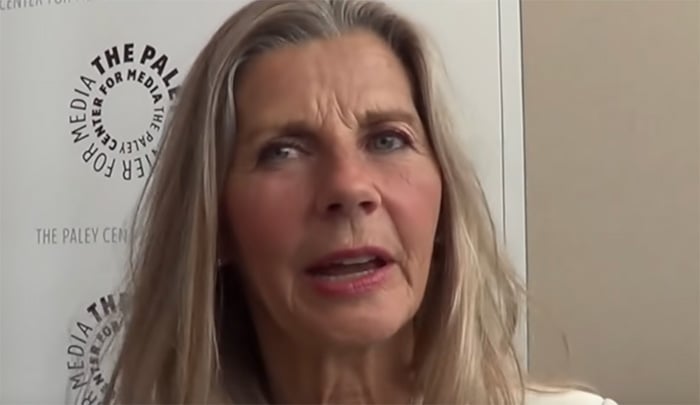
What came next wasn’t a vacuum; it was a reallocation of energy. Smithers traveled to India repeatedly—meditation, service work, the kind of spiritual inventory that makes Hollywood feel like an unhelpful metaphor.
But she also went practical. She spoke in Washington for the solar lobby, says she helped bring that lobbying effort to California (at one point housing organizers), worked alongside Helen Caldicott on anti‑nuclear advocacy, and connected with Sea Shepherd to boost ocean protection. This wasn’t celebrity‑adjacent activism; it was the grindy, unglamorous kind where your big “win” is a boring policy meeting that moves a comma into a better place.
There’s also the micro scale: she describes informally counseling people—one story involves a young woman who’d been on heroin for seven years. Smithers told her, “I see you healed.” The woman eventually got clean and pursued a master’s to help others. It’s tidy to call that a redemption arc; it’s more accurate to call it Smithers’ current operating system—one person at a time, love as a verb.
Jan Smithers, Off the Air
If you’re trying to map the public Jan Smithers onto the private one, the coordinates line up. A shy Southern California artist type gets discovered by accident, plays a character modeled on her showrunner’s wife, asks for that character to grow, and then leaves when the off‑camera job (motherhood, service, activism) feels more urgent than the on‑camera one.
Somewhere in there she became the low‑volume icon for people who liked competence more than spectacle. Which, if you watched WKRP closely, was always the point.