
The Beatles trip to India ended badly because the Maharishi wanted the band to deposit up to 25% of their next album’s profits in his Swiss bank account as a tithe.
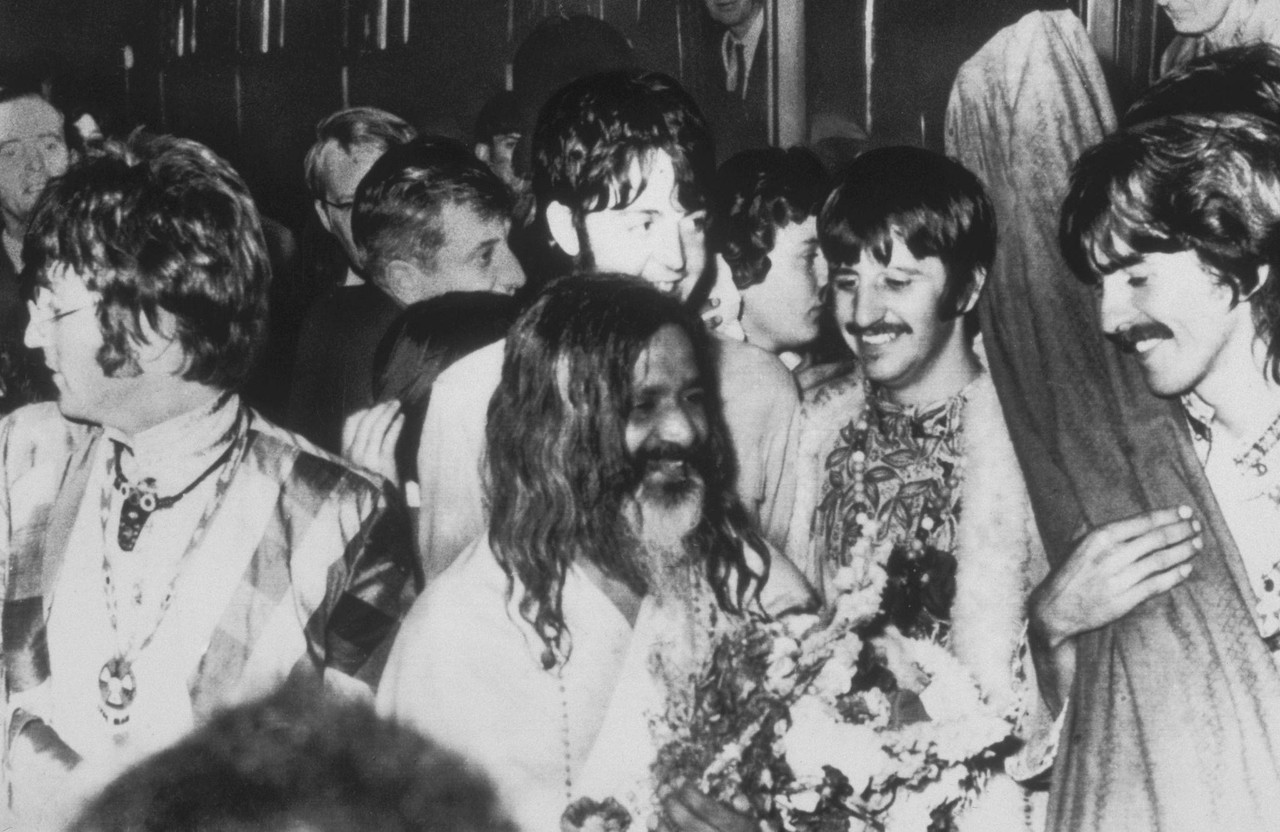
In early 1968, the Beatles traveled to Rishikesh, India, to study Transcendental Meditation with Maharishi Mahesh Yogi. At that point, the band was searching for something deeper. Fame, money, and worldwide adoration had not exactly brought them peace, and India seemed like the place where they might finally find it.
For a while, the trip felt like a reset. The Beatles lived simply, meditated daily, and wrote a huge number of songs, many of which would later end up on The White Album. The retreat drew a strange mix of celebrities, musicians, and spiritual seekers, and for a moment it seemed like the band had found a kind of escape from the chaos surrounding them.
But the mood soured. According to later accounts, the Maharishi wanted the Beatles to deposit up to 25% of the profits from their next album into his Swiss bank account as a tithe. For a band that had come looking for spiritual clarity, that request hit like a splash of cold water.
John Lennon was especially outraged. His response was direct and cutting: “Over my dead body.”
The disillusionment set in fast. The Beatles left the ashram, and whatever sense of spiritual purity had surrounded the trip was gone. Lennon later poured some of that bitterness into a song first called “Maharishi,” which eventually became “Sexy Sadie,” a sharp and not especially subtle shot at the guru he felt had revealed himself to be something very different from what he claimed to be.
The trip to India still mattered. It was hugely productive creatively, and it became part of Beatles mythology forever. But it also showed that even a search for enlightenment could get tangled up in money, ego, and disillusionment.
During the Battle of Stalingrad, German soldiers suffered more casualties attempting to take 1 apartment building (Pavlov’s House) then they did taking the city of Paris

During the brutal street fighting of the Battle of Stalingrad in 1942, a single four-story apartment building became one of the most famous strongpoints of the entire war. The building would later be known as Pavlov’s House, named after Red Army Sergeant Yakov Pavlov, who led the group of Soviet soldiers that captured and defended it.
The building sat in a strategically important position overlooking a large square and the approaches used by German forces. After seizing it from the Germans, Pavlov and a small group of soldiers turned the apartment block into a fortress. They mined the surrounding ground, knocked holes through the walls to move between rooms, and placed machine guns and anti-tank rifles to cover every possible approach.
For nearly two months, the small Soviet garrison held the building against repeated German assaults. German troops and armor tried again and again to dislodge them, but every advance across the open ground was met with devastating fire from the building.
The fighting around the structure became so intense that Soviet propaganda later claimed the Germans suffered more casualties trying to capture Pavlov’s House than they did during the entire conquest of Paris in 1940. Whether the comparison was meant literally or symbolically, it captured the brutal reality of Stalingrad: every street, every room, and sometimes every single building had to be fought over.
In a war that often involved sweeping offensives and massive armies, Pavlov’s House became a symbol of something different — the grinding, desperate, close-quarters combat that defined Stalingrad, where a handful of soldiers inside one apartment building could stall an entire German advance.
Christine Maggiore, AIDS skeptic who wrote the book “What if Everything You Thought You Knew About AIDS Was Wrong?” ultimately died from AIDS-related pneumonia.

Christine Maggiore became one of the most prominent figures in the AIDS denial movement during the late 1990s and early 2000s. After testing positive for HIV in 1992, she began questioning the scientific consensus that HIV causes AIDS. Over time she became a vocal activist, arguing that HIV was harmless and that the medical establishment had misunderstood the disease.
Maggiore wrote the book What If Everything You Thought You Knew About AIDS Was Wrong?, which laid out her belief that HIV was not the cause of AIDS and that the treatments used to fight it were dangerous. She appeared in documentaries, spoke at conferences, and worked with groups that promoted similar views, becoming one of the movement’s most recognizable advocates.
She also made deeply personal decisions based on those beliefs. Maggiore chose not to take antiretroviral drugs and publicly rejected standard medical advice. Her views extended to her family as well. When she gave birth to her daughter, Eliza Jane, she chose not to take medications that reduce the risk of transmitting HIV from mother to child.
In 2005, Eliza Jane died at the age of three from complications related to HIV infection. The death drew widespread attention and criticism from the medical community, which warned that the tragedy illustrated the dangers of rejecting established science about HIV and AIDS.
Maggiore continued to defend her views in the years that followed. But in 2008, she became seriously ill and died at the age of 52 from pneumonia related to AIDS. Her death stood in stark contrast to the message she had spent years promoting.
Today, her story is often cited by doctors and public health experts as a cautionary example of how misinformation about medicine can have devastating real world consequences, not only for the person spreading those beliefs, but also for the people closest to them.
King Tut had a club foot, feminine hips, an overbite, He had Kohler’s disease. DNA determined that Pharaoh’s parents were undoubtedly brother and sister.

For decades, the image of King Tutankhamun was shaped mostly by the dazzling treasures found in his tomb. The golden mask, the ornate jewelry, and the lavish burial chamber created the impression of a powerful and healthy young ruler. But modern scientific studies have revealed a very different picture of the boy king behind the gold.
CT scans and DNA testing performed on Tutankhamun’s mummy in the early 2000s showed that the pharaoh likely suffered from a number of physical conditions. He had a club foot, which would have made walking difficult and may explain why dozens of walking sticks were found in his tomb. His skeletal structure suggests he had relatively feminine hips, and examinations of his skull indicate he had a noticeable overbite.
Researchers also believe he suffered from Köhler’s disease, a rare bone disorder that affects blood flow to bones in the foot. The condition can cause pain and bone damage, which may have further limited his ability to walk normally.
One of the most striking discoveries came from genetic testing of royal mummies. The DNA evidence strongly indicates that Tutankhamun’s parents were full siblings. Royal families in ancient Egypt often practiced close intermarriage in an attempt to preserve the divine bloodline of the pharaohs. But these repeated unions likely contributed to a number of inherited health problems.
Tutankhamun died at around 18 or 19 years old, and while the exact cause of his death is still debated, many researchers believe his fragile health played a role. The discoveries have transformed our understanding of the famous young king, revealing that behind the golden mask was a teenager struggling with significant physical challenges.
Ernest Hemingway begged his wife not to send him for more electroshock treatments because he lost so much of his memory he couldnt even remember his own name. He committed suicide the day after his 36th shock treatment.

In the final years of his life, Ernest Hemingway was struggling with severe depression, paranoia, and declining health. Once known for his sharp memory and powerful prose, the famous writer began to feel that his mind was slipping away from him.
In 1960, Hemingway was admitted to the Mayo Clinic where doctors treated him with electroconvulsive therapy, commonly known as electroshock treatment. At the time it was considered a standard treatment for severe depression, but the repeated shocks had devastating side effects for him.
Hemingway complained that the treatments were destroying the very thing that defined him as a writer: his memory. He reportedly told friends and family that he could no longer remember things clearly and feared he was losing the ability to write. According to accounts from those close to him, he begged his wife not to allow any more treatments, saying that the memory loss had become unbearable.
Over the course of his hospitalization, Hemingway received dozens of electroshock treatments. The effects left him feeling disoriented and frightened about the state of his mind.
On July 2, 1961, the day after receiving his 36th electroshock treatment, Ernest Hemingway took his own life at his home in Ketchum, Idaho. He was 61 years old.
His death remains one of the most tragic chapters in literary history. The man who had once written with such clarity about courage, war, and the human spirit spent his final months terrified that the treatments meant to help him were slowly erasing the very memories that made him who he was.