Iraqi dictator Saddam Hussein published a best-selling romance novel that spawned a twenty-episode TV series and a stage musical.
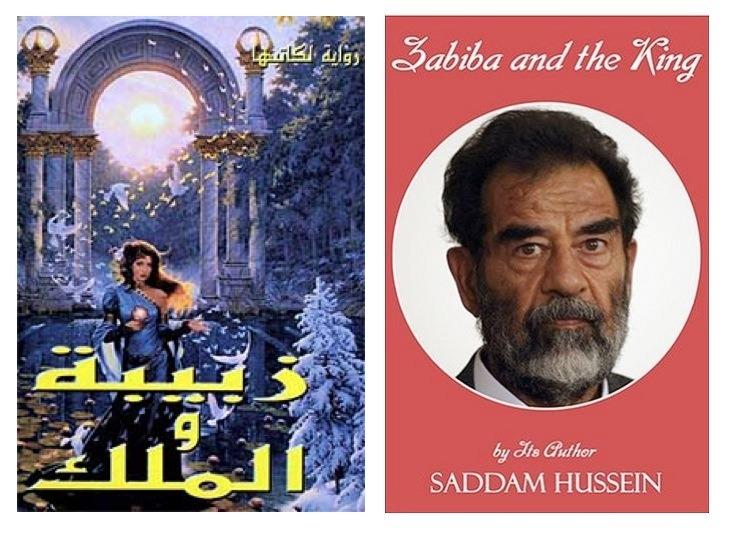
One of the strangest footnotes of Saddam Hussein’s rule over Iraq had nothing to do with tanks, palaces, or politics. In 2000, the Iraqi dictator secretly published a romance novel titled Zabiba and the King. At first glance, it appeared to be a simple love story between a powerful king and a common woman named Zabiba. But readers quickly recognized that the novel was packed with political symbolism. The king represented Saddam himself, while Zabiba symbolized the Iraqi people. Their enemies stood in for foreign powers and political rivals.
The book became an enormous success inside Iraq, though its popularity was helped considerably by the fact that criticism of Saddam’s work was not exactly encouraged. Millions of copies were printed and distributed across the country. State-controlled media praised the novel, and bookstores prominently displayed it. For many Iraqis, reading the book was as much a political act as a literary one. The story promoted themes of loyalty, sacrifice, and resistance to foreign influence, all wrapped in the language of romance and historical fiction.
Saddam’s literary ambitions did not stop with the printed page. The novel was adapted into a lavish twenty-episode television series that aired on Iraqi television, bringing its allegorical characters to an even wider audience. It was also transformed into a stage musical, complete with songs and dramatic performances celebrating the themes of the story. The adaptations turned what might have been a curious vanity project into a full-fledged cultural phenomenon orchestrated by the Iraqi state.
Looking back, Zabiba and the King remains one of history’s most unusual examples of political propaganda. Few world leaders have attempted to shape their public image by writing bestselling romance novels, and fewer still have seen those novels turned into television dramas and musicals. The story serves as a reminder that authoritarian rulers often seek control not only over politics and the military, but also over culture, entertainment, and the stories people tell themselves about their nation.
F. Scott Fitzgerald died believing he was a failure. Two years later 155,000 copies of ‘The Great Gatsby’ were shipped to WWII soldiers overseas, making it a widespread success. As of 1945 it’s believed to be a classic, selling 500,000 copies annually
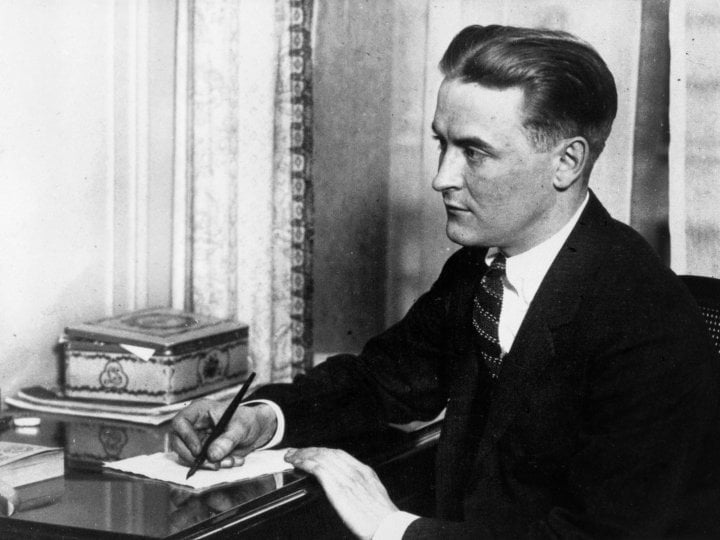
When F. Scott Fitzgerald died in December 1940 at the age of 44, he believed he had failed. Once celebrated as the voice of the Jazz Age, he spent his final years struggling financially, battling alcoholism, and watching his literary reputation fade. His most famous novel, The Great Gatsby, had sold poorly compared to expectations, and by the time of his death many of his books were out of print. Fitzgerald reportedly worried that history would forget him.
What he could not have known was that his masterpiece was only beginning its journey. During World War II, the U.S. military distributed millions of paperback books to American servicemen through a program known as the Armed Services Editions. In 1945, approximately 155,000 copies of The Great Gatsby were shipped overseas and placed into the hands of soldiers stationed around the world. Many encountered Fitzgerald’s novel for the first time while serving far from home.
The exposure proved transformative. A generation of readers returned from the war with a newfound appreciation for Gatsby’s story of ambition, longing, and the pursuit of an elusive dream. Universities soon adopted the novel in literature courses, critics began reassessing Fitzgerald’s work, and his reputation steadily grew. What had once been viewed as a commercial disappointment was increasingly recognized as one of the defining American novels of the twentieth century.
Today, The Great Gatsby stands as one of the most widely read books in the English language. It sells hundreds of thousands of copies each year and is considered a cornerstone of American literature. The irony is difficult to miss: the novel that Fitzgerald thought had failed ultimately secured his immortality. He spent his final years convinced that he had missed his chance, never knowing that his greatest success would arrive only after he was gone.
Mayo Clinic data found that individuals living within one mile of a golf course have a 126% higher risk (more than double the odds) of a Parkinson’s diagnosis compared to those living six or more miles away

Living near a golf course may come with an unexpected health risk. A recent study involving researchers from the Mayo Clinic found that people living within one mile of a golf course had a 126% higher likelihood of being diagnosed with Parkinson’s disease compared to those living six or more miles away.
Scientists believe pesticides may be the key factor behind the association. Golf courses often use significant amounts of herbicides, fungicides, and insecticides to maintain their greens and fairways. Previous research has linked certain pesticides to Parkinson’s disease, leading researchers to investigate whether people living nearby could be exposed through contaminated groundwater, airborne drift, or runoff.
The study found even stronger associations among people whose drinking water came from service areas that included a golf course. Residents in those areas had nearly double the odds of developing Parkinson’s disease compared to residents in water systems without a golf course. The risk was especially elevated in regions where groundwater is more vulnerable to contamination.
Researchers caution that the findings do not prove that golf courses directly cause Parkinson’s disease. The study identified a correlation rather than a cause-and-effect relationship, and it did not directly measure pesticide exposure. Still, the results add to a growing body of evidence suggesting that environmental factors may play an important role in the development of Parkinson’s disease and deserve further study.
A letter that Johnny Cash wrote to June Carter in 1994 was voted the greatest love letter of all time. They were married from 1968 till June passed away in 2003. Johnny died 4 months later
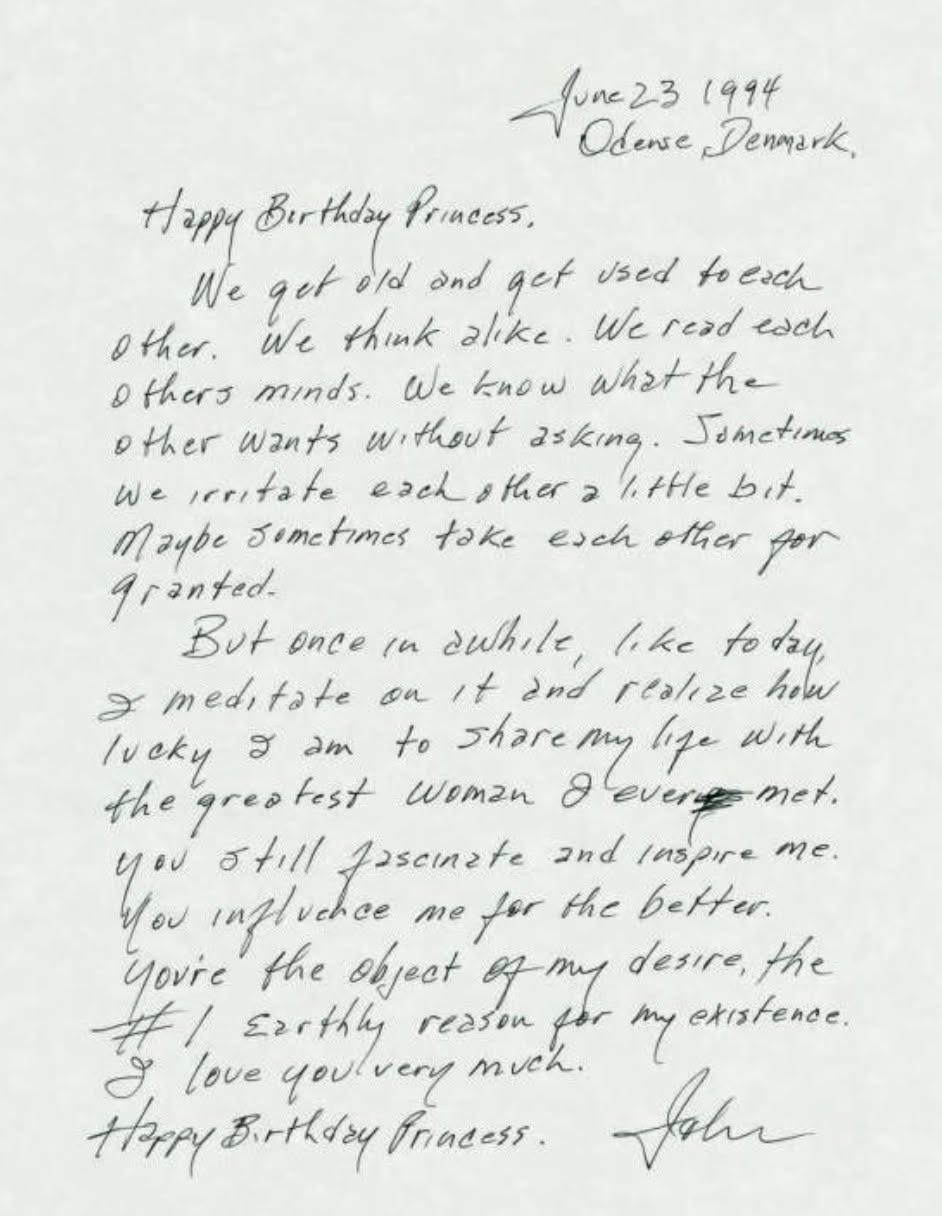
In 2015, a letter that Johnny Cash wrote to his wife June Carter Cash was voted the greatest love letter of all time in a survey conducted by a British poll of readers. The letter was written in 1994 for June’s 65th birthday, and what made it so memorable was its simplicity. Rather than relying on grand poetic language, Cash wrote about the quiet reality of a long marriage—the way two people grow older together while remaining each other’s closest companion.
By the time Johnny wrote the letter, the couple had already been married for more than 25 years. Their relationship had endured career highs and lows, addiction struggles, health problems, and the pressures of life in the spotlight. Through it all, they remained one of country music’s most enduring partnerships, recording together, touring together, and raising a family. Cash described June as the person who still fascinated him after all those years, writing that she was the center of his life and the reason he looked forward to each day.
Their love story began long before their 1968 marriage. The two first met backstage at the Grand Ole Opry in the 1950s and spent years performing together before eventually becoming husband and wife. Over the following decades, they became inseparable both professionally and personally, earning a reputation as one of music’s great couples. Their chemistry was evident not only on stage but in countless interviews and performances where their affection for one another was impossible to miss.
The ending of their story only added to the letter’s lasting power. June Carter Cash died in May 2003 at the age of 73. Johnny Cash, devastated by the loss, continued recording music but struggled without her. Just four months later, in September 2003, he died at age 71. Looking back, the birthday letter reads less like a romantic gesture and more like a testament to a lifetime spent loving the same person. More than three decades after they married, Johnny Cash was still writing about June with the admiration and gratitude of a man who knew exactly how fortunate he had been.
The Mona Lisa’s long-debated identity and creation date were confirmed in 2005 when a German researcher found a verified, handwritten note in the margin of a book stating that Leonardo da Vinci was painting a portrait of Lisa del Giocondo in 1503.
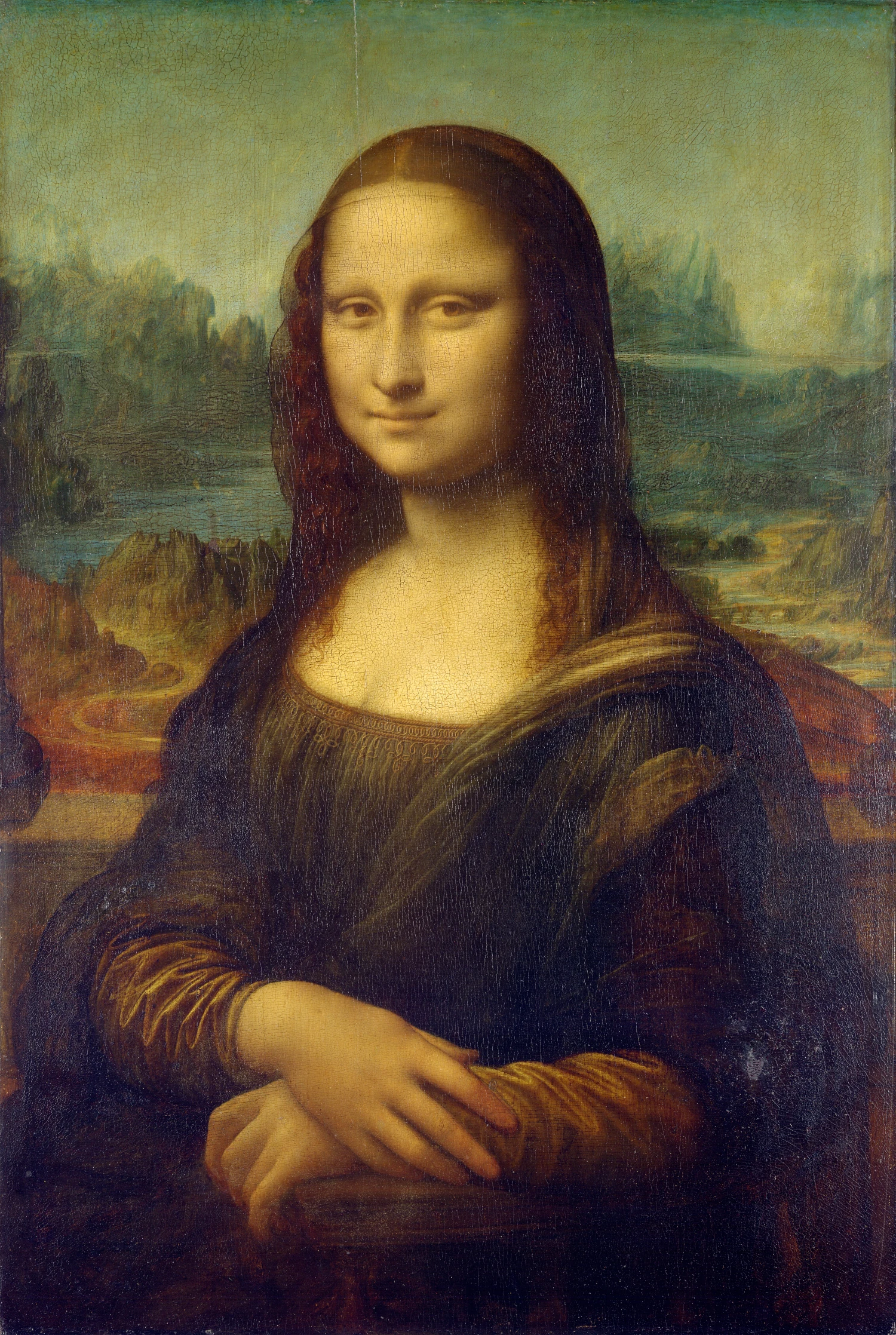
For centuries, one of the biggest mysteries surrounding the Mona Lisa was surprisingly simple: who was the woman in the painting, and when exactly did Leonardo da Vinci create it? Art historians had long suspected that the subject was Lisa del Giocondo, the wife of a wealthy Florentine silk merchant, but definitive proof remained elusive. The painting’s origins were debated for generations, with competing theories about both the sitter’s identity and the timeline of its creation.
A breakthrough came in 2005 when German researcher Armin Schlechter discovered a handwritten note in the margin of a 500-year-old book housed in a library in Heidelberg, Germany. The note had been written by Agostino Vespucci, a Florentine official who was a contemporary of Leonardo. Dated October 1503, the annotation stated that Leonardo was working on a portrait of Lisa del Giocondo, providing a rare piece of firsthand evidence from someone living at the time.
The discovery was significant because it linked two long-standing questions with a single document. Not only did the note strongly support the theory that the woman in the painting was Lisa del Giocondo, but it also established that Leonardo had begun work on the portrait in 1503. Prior to the discovery, scholars had relied largely on later historical accounts and educated guesses. The Vespucci note offered direct contemporary confirmation from the Renaissance era itself.