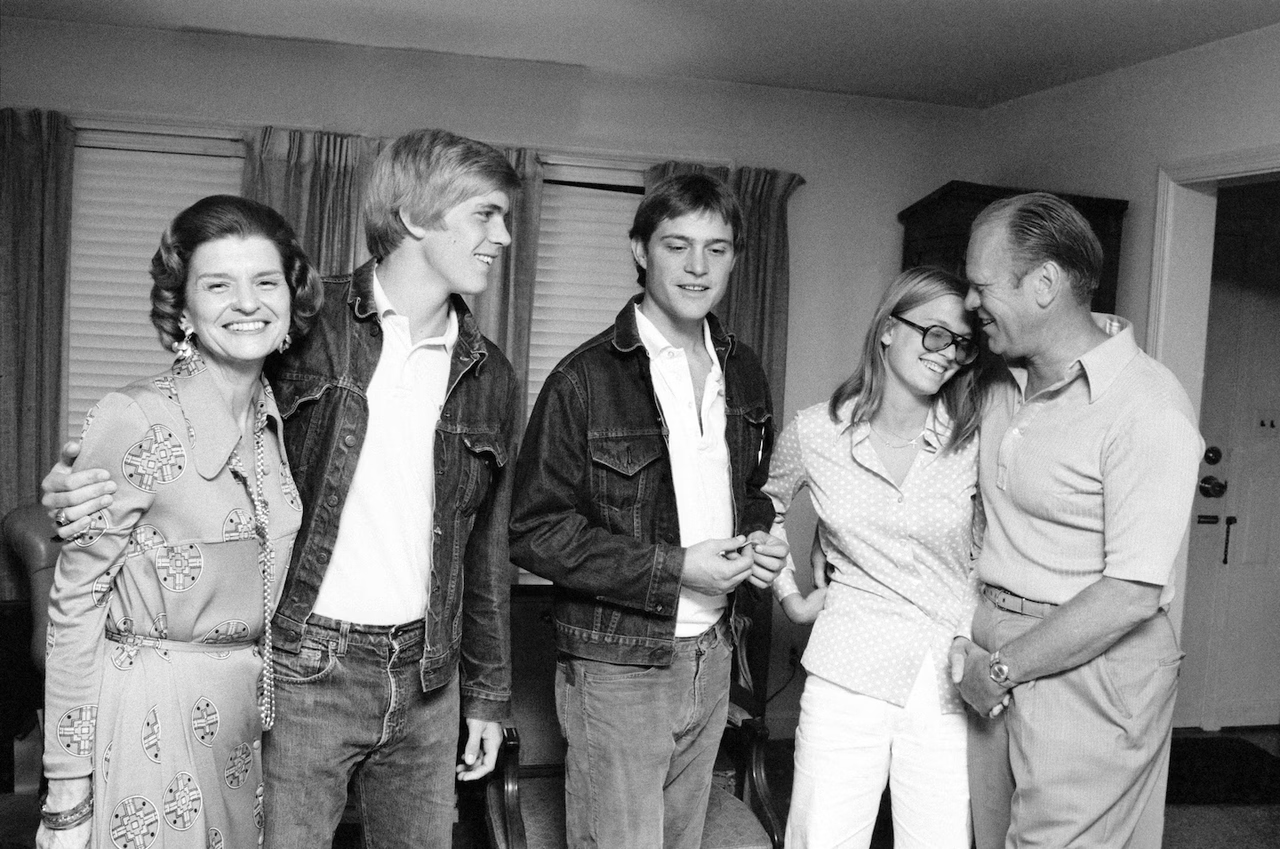
Gerald Ford’s teenage son Steven once sneaked twenty friends to party at the White House and ordered food and drinks, assuming they were free. The next day, his father showed him the bill from the Oval Office and he learned it came out of his salary


Ever wonder what it takes to land a job at one of the most competitive companies in the world? Google is legendary not just for its perks, but for its notoriously tough interview process. Rather than sticking to straightforward technical questions, Google likes to throw curveballs — brain teasers and logic puzzles designed to test how candidates think on their feet.

For decades, Russia’s prison system developed its own complex visual language — one where tattoos weren’t just decoration, but a detailed record of a person’s crimes, rank, beliefs, and life story. Every symbol carried meaning. Every mark told a history.
This collection documents the work of Soviet criminologist Arkady Bronnikov, who spent years photographing and cataloging the tattoos of inmates in Soviet prisons and labor camps during the mid-20th century. Often called the foremost expert on Russian criminal tattoo iconography, Bronnikov helped preserve a hidden culture where ink functioned as identity, status, and personal code.
What follows is a rare look at this visual language — a world where the body itself became a biography.


Walter Francis White was a Black civil-rights investigator whose white appearance—blonde hair, blue eyes, pale skin—allowed him to infiltrate white supremacist environments during the height of racial terror in the early 20th century. He risked his life repeatedly by posing as a white man to gather eyewitness accounts of lynchings, mob planning, and law enforcement complicity.



In 1993, during a high-stakes Greek League playoff game between Panionios and Panathinaikos, Boban Janković’s life changed forever. After being controversially called for an offensive foul, he erupted in frustration—slamming his head against the padded metal pole supporting the backboard. The impact was catastrophic. The blow crushed his spinal cord, and Janković instantly collapsed to the ground, paralyzed from the neck down. The gym fell into stunned silence. At just 28 years old, one of Yugoslavia’s brightest basketball talents saw his playing career—and the life he had known—come to an abrupt and brutal end.