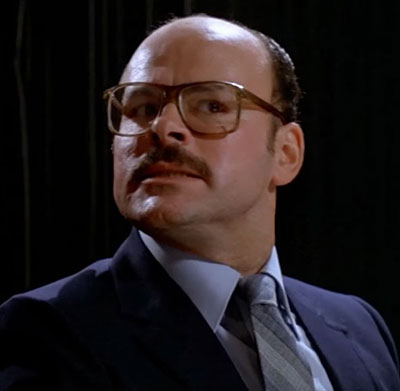
Mike Tyson and his trainer, Cus D’Amato, before his first professional fight
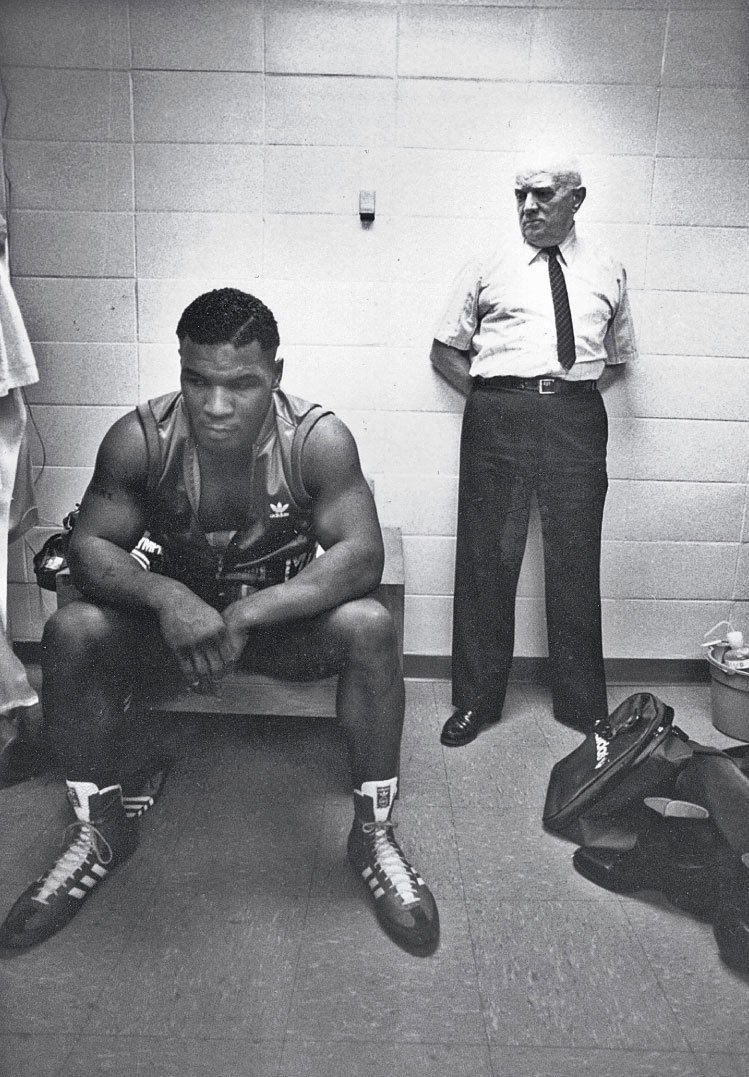
There is a photograph of Mike Tyson before his first professional fight where he still looks like a kid trying to wear the armor of a grown man. Thick neck. Heavy eyes. Nervous energy packed into a body that already looked dangerous. Beside him stands Cus D’Amato, staring at Tyson less like a trainer and more like a man inspecting a weapon he spent years building in secret.
By 1985, Cus already belonged to another era of boxing. He had trained Floyd Patterson back when Eisenhower was president. But Cus was never just teaching punches. He taught fear. According to him, fear was the central force of human existence. Heroes and cowards both felt it. The difference was that one acted anyway.
Tyson absorbed that philosophy completely.
The kid from Brownsville arrived carrying more fear and rage than most adults ever learn to manage. Arrests. Violence. Survival instinct. Cus recognized immediately that Tyson’s aggression came from terror as much as toughness. Instead of calming him down, Cus built a mythology around him. He fed Tyson stories about warriors and predators. He convinced him he was destined to become heavyweight champion of the world.
Before Tyson’s first professional fight against Hector Mercedes in Albany, he was only eighteen years old but already moved like something ancient and violent. Black trunks. Fast head movement. No wasted motion. He didn’t look like the cautious heavyweights of the era. He looked like panic given physical form.
Cus loved that.
He believed boxing was psychological warfare disguised as sport. Every detail mattered. The walk to the ring mattered. The stare mattered. The intimidation mattered. He wanted opponents defeated mentally before the first punch landed.
When Tyson destroyed Hector Mercedes in the first round, most people saw a terrifying young prospect. Cus saw proof of his life’s philosophy.
Because to Cus D’Amato, boxing was never really about punches.
It was about what happens when one frightened human being convinces another frightened human being that resistance is hopeless.
Japanese war criminal, Tojo Hideki, attempted suicide after the surrender. He was saved and resuscitated by Allied forces, who then hanged him – September 8, 1945
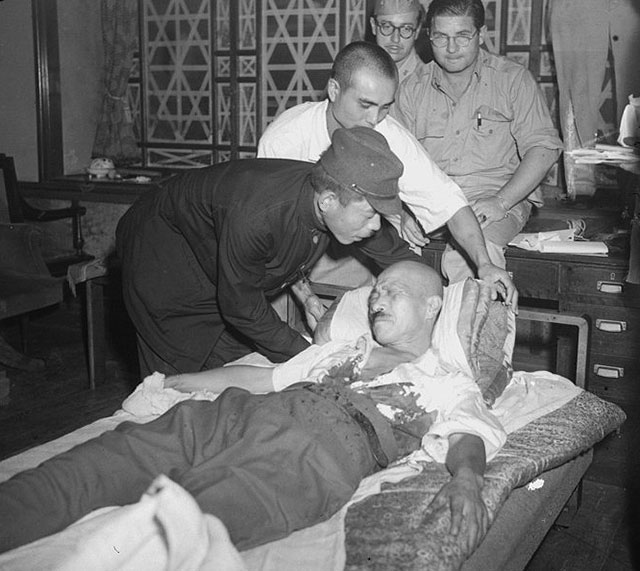
When American soldiers arrived at the home of Japanese wartime leader Hideki Tojo in September 1945, they were not expecting a dramatic final act. Japan had already surrendered. The war was over. The empire Tojo had helped lead into catastrophe had collapsed.
But Tojo had one last decision to make.
As reporters and occupation forces gathered outside his home, Tojo retreated inside and shot himself in the chest with a pistol. He had reportedly asked a doctor beforehand where his heart was located to ensure the attempt would succeed.
It didn’t.
The bullet missed.
Blood soaked his shirt. He collapsed. But he remained alive.
And then one of the strangest scenes of the postwar period unfolded.
American military doctors rushed in and worked to save the life of the man many Americans considered one of the principal architects of the Pacific War. The same war that had left Pearl Harbor burning, consumed countless islands across the Pacific, and ended with Hiroshima and Nagasaki.
The doctors succeeded.
Tojo later apologized for taking so long to die.
But by then, his fate was no longer his to decide.
The Allied powers had little interest in allowing one of Japan’s most important wartime leaders to escape judgment through suicide. They wanted trials. They wanted testimony. They wanted the world to hear evidence of how Japan had waged its war across Asia and the Pacific.
Tojo recovered from his wound and spent the next several years in Allied custody.
During the Tokyo War Crimes Trials, prosecutors portrayed him as one of the central figures responsible for Japan’s military aggression. He accepted a significant share of responsibility for the war, though historians continue to debate the extent of his personal control within Japan’s complex wartime government.
The verdict was ultimately clear.
Guilty.
In December 1948, more than three years after the failed suicide attempt, Tojo was led to the gallows and executed by hanging.
There is something almost cinematic about the sequence of events. A defeated leader attempts to choose his own ending. His enemies save his life. They nurse him back to health. Then they place him on trial and carry out the sentence he had tried to avoid.
The image has survived because it captures a larger shift that was taking place after World War II.
The victors were not interested in simple revenge. They wanted something else. They wanted a public reckoning. They wanted the architects of the war to answer for their actions before history.
And so Hideki Tojo survived the war by a matter of inches, only to spend the next three years walking toward an execution that would arrive on someone else’s timetable.
Bonnie Parker and Clyde Barrow posing for the camera; photo recovered from their hideout in 1933
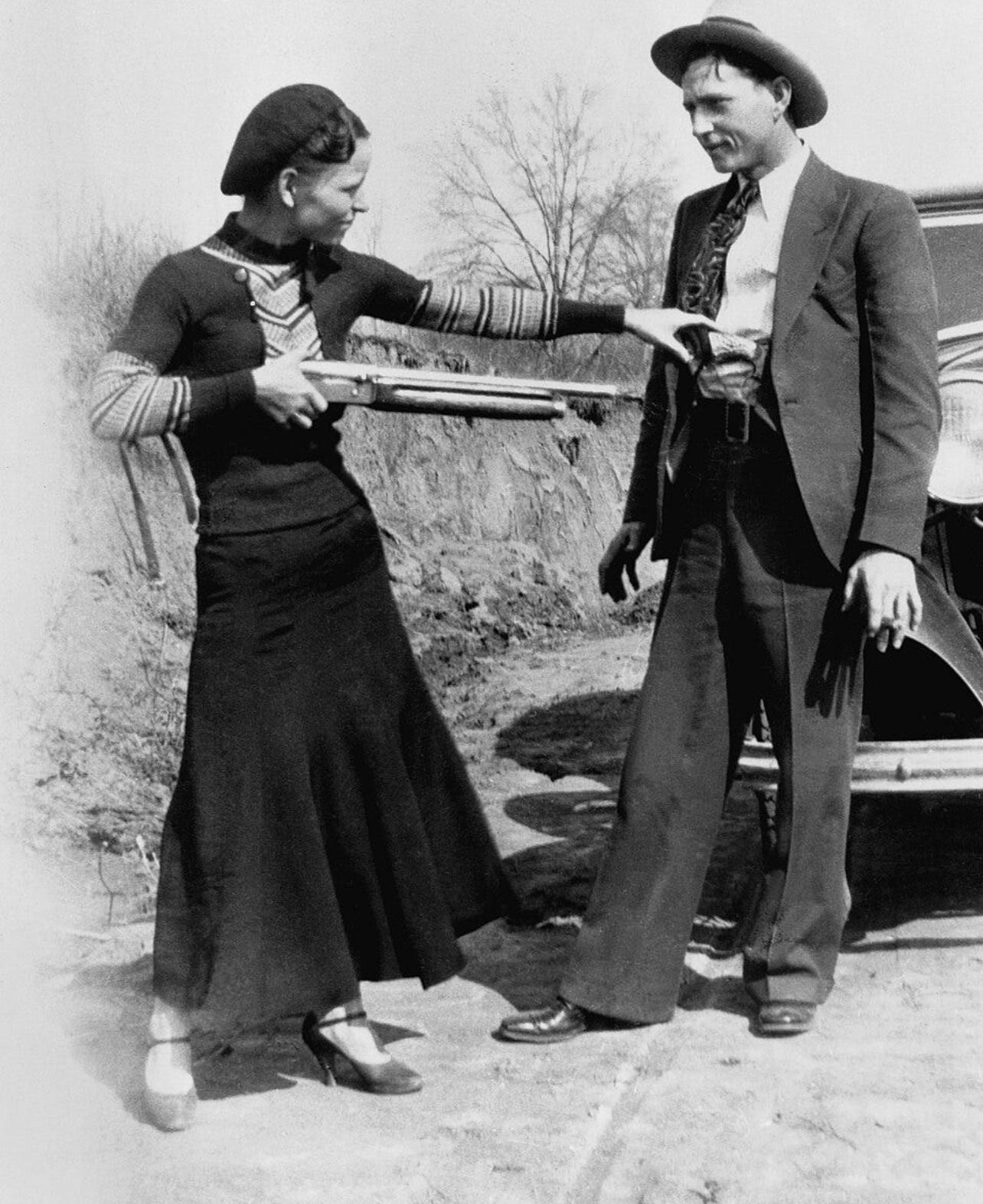
By 1933, Bonnie Parker and Clyde Barrow were no longer small-time criminals from Texas.
They had become two of the most wanted fugitives in America.
The pair first met in Dallas in 1930. Bonnie was a waitress with dreams of becoming an actress. Clyde was a restless young man already drifting deeper into crime. Within a few years, they would become inseparable and find themselves at the center of one of the most famous manhunts in American history.
The timing mattered.
America was in the depths of the Great Depression. Banks were failing, unemployment was soaring, and public trust in institutions was collapsing. Across the country, criminals like John Dillinger, Pretty Boy Floyd, and Baby Face Nelson were becoming household names. Bonnie and Clyde emerged from that same era, but unlike most gangsters, they became famous as a couple.
In reality, their lives were far less glamorous than later movies would suggest.
The Barrow Gang spent most of 1933 sleeping in stolen cars, hiding in tourist cabins, and constantly moving across state lines. They survived through robberies of gas stations, grocery stores, banks, and small businesses. Law enforcement agencies across multiple states were pursuing them, and violent encounters became increasingly common.
The gang’s situation worsened dramatically in April 1933 when police discovered one of their hideouts in Joplin, Missouri. A fierce gun battle erupted. Bonnie, Clyde, and the others escaped, but two law enforcement officers were killed. The shootout transformed them from notorious criminals into national headlines.
From that point forward, the pressure intensified.
Every robbery attracted more attention. Every escape narrowed their options. Friends and accomplices were arrested or killed. Bonnie suffered severe injuries in a car accident that left her struggling to walk. Clyde became increasingly determined to stay free, no matter the cost.
Yet despite the constant danger, they continued moving from town to town, staying one step ahead of capture for more than a year.
Looking at Bonnie and Clyde in 1933 is to see them at the peak of their notoriety. The legend was growing. Newspapers followed their movements. Lawmen obsessed over catching them. The public debated whether they were ruthless criminals or Depression-era folk heroes.
History has largely settled the question.
They were violent outlaws responsible for a trail of robberies, shootings, and deaths. But they were also products of a desperate era that turned criminals into celebrities.
Less than thirteen months later, on a rural road in Louisiana, the manhunt would finally end in a barrage of gunfire.
Bonnie was twenty-three years old.
Clyde was twenty-four.
OJ Simpson tells the jury that the gloves used to murder Nicole Brown “don’t fit” – June 15, 1995
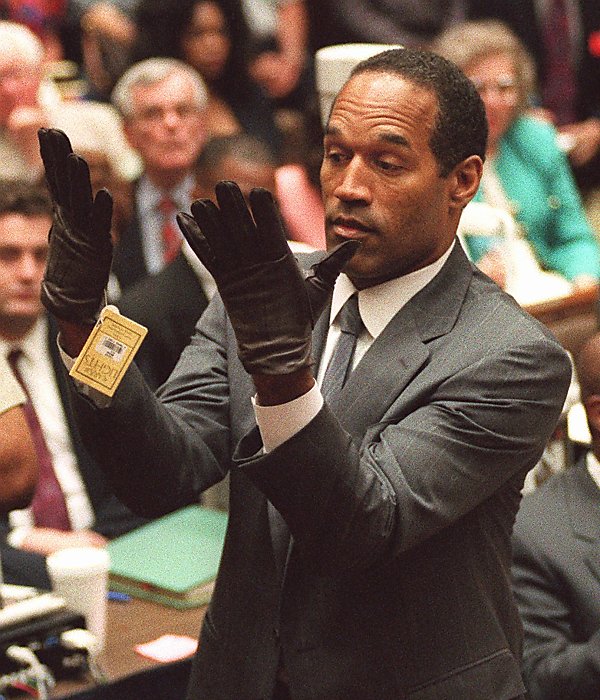
On June 15, 1995, millions of Americans watched something that prosecutors would later wish had never happened.
In a Los Angeles courtroom, O.J. Simpson stood before the jury and struggled to pull on a pair of black leather gloves.
The gloves were among the most important pieces of physical evidence in the murder trial that had already become the biggest media spectacle in modern American history. One glove had been found near the bodies of Nicole Brown Simpson and Ronald Goldman. Its apparent match had been found outside Simpson’s home.
The prosecution believed the demonstration would be devastating.
If the gloves fit, jurors would see a direct connection between Simpson and the crime scene.
Instead, they watched Simpson tug at the gloves and appear unable to get them fully onto his hands.
It was a disaster.
Years later, prosecutors would openly admit they regretted allowing the demonstration. Simpson had reportedly stopped taking arthritis medication during the trial, causing his hands to swell. He also wore latex gloves underneath the evidence gloves during the demonstration. The leather gloves themselves had been soaked in blood and subjected to years of shrinking and deterioration.
None of that mattered in the moment.
What mattered was what the jury saw.
The image instantly became one of the defining moments of the trial. In a case filled with DNA evidence, forensic testimony, police misconduct allegations, racial tensions, celebrity fascination, and wall-to-wall media coverage, a simple visual demonstration cut through all of it.
Jurors did not need an expert witness to explain what they were seeing.
The gloves appeared not to fit.
The defense understood the power of that image immediately. Lead attorney Johnnie Cochran would later crystallize it into one of the most famous lines in legal history:
“If it doesn’t fit, you must acquit.”
The phrase became inseparable from the case itself.
Looking back, it is remarkable how much of the trial hinged on a few seconds in a courtroom. By the mid-1990s, DNA evidence was still relatively new to much of the public. Complex forensic testimony could be difficult to follow. But everyone understood a glove.
The prosecution had spent months building a mountain of evidence. The defense seized upon a single visual moment that cast doubt on all of it.
Four months later, the jury found Simpson not guilty of the murders of Nicole Brown Simpson and Ronald Goldman.
To this day, legal scholars, attorneys, and trial consultants study the glove demonstration as one of the most consequential courtroom decisions ever made.
Because sometimes history turns not on pages of testimony or stacks of evidence, but on a moment so simple that everyone in the room believes they understand exactly what they are seeing.
Russians wait in line outside a first McDonald’s fast food restaurant in Moscow 1991
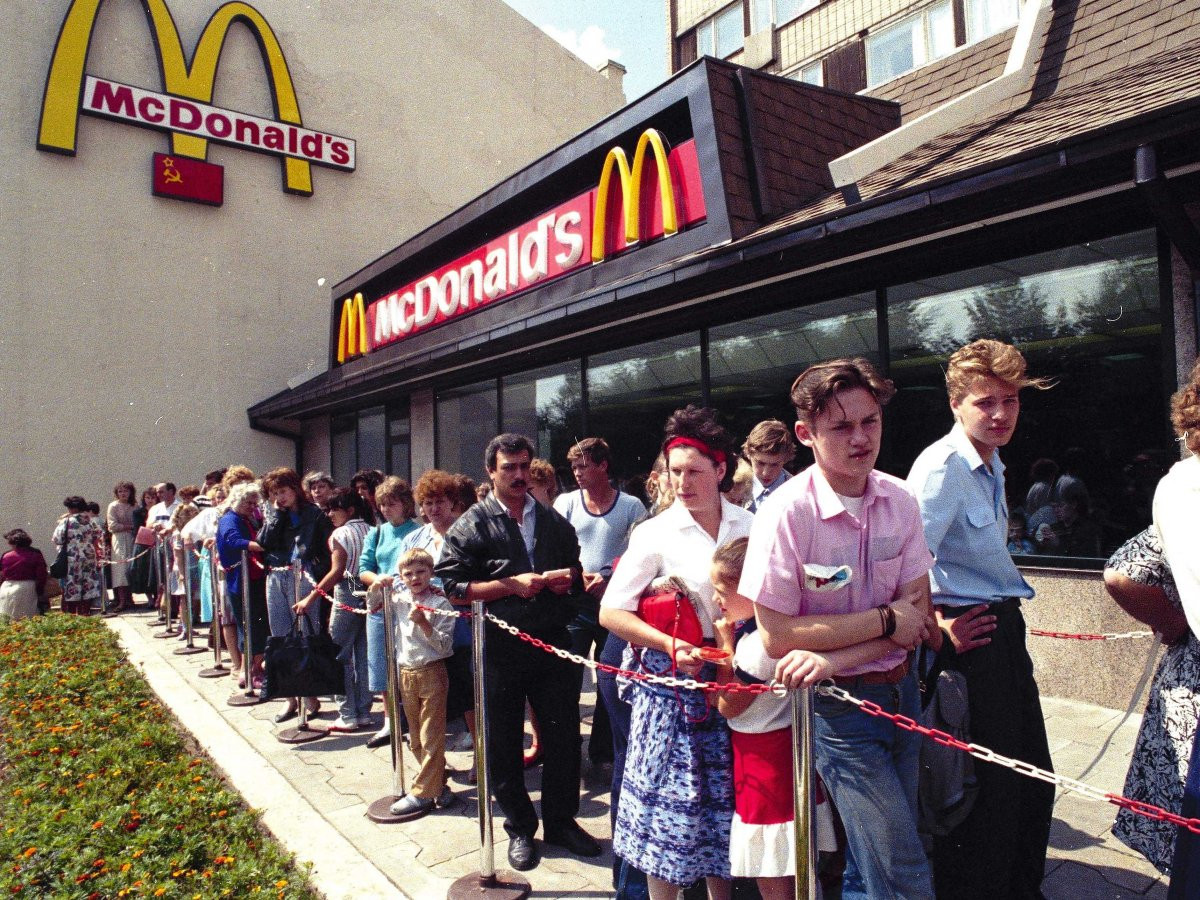
At first glance, the photograph seems almost absurd.
Thousands of Russians standing in line for hamburgers.
Not food in general. Not bread during a famine. Not emergency supplies.
McDonald’s.
Yet the massive line outside Moscow’s first McDonald’s in 1990 and throughout its early months of operation became one of the defining images of the end of the Soviet era.
Some people waited for hours.
Others waited for most of the day.
To modern eyes, it is easy to misunderstand what they were lining up for. The attraction was never just the food. It was what the restaurant represented.
For most of the Cold War, the Soviet Union and the West existed as rival worlds. Ordinary Soviet citizens had limited access to Western products, brands, and consumer culture. While Americans took fast-food chains, supermarkets, and endless product choices for granted, many Soviet citizens spent decades dealing with shortages, rationing, and long lines for basic goods.
Then suddenly, there it was.
The Golden Arches.
Bright. Modern. Efficient. Unmistakably Western.
When the restaurant opened on Moscow’s Pushkin Square in January 1990, more than 30,000 customers reportedly visited on the first day alone. It became the largest McDonald’s in the world at the time. Employees were trained to smile at customers, something many Soviet visitors found unusual. The restaurant emphasized speed, consistency, and customer service—concepts that seemed surprisingly novel after decades of state-run bureaucracy.
The timing was significant.
The Soviet Union was already beginning to crack. Mikhail Gorbachev’s reforms had loosened some restrictions, but the economy was struggling badly. Store shelves were increasingly empty. Political tensions were rising. Within two years, the Soviet Union itself would cease to exist.
The line outside McDonald’s became a symbol of something much larger than a restaurant opening.
It represented millions of people catching a glimpse of a different economic system.
Some observers saw hope. Others saw surrender. Critics argued that a hamburger chain should not be treated as a triumph of civilization. Supporters saw it as evidence that the Cold War was ending and barriers between East and West were finally breaking down.
What makes the photograph so fascinating today is that everyone in line knew they were participating in something historic, even if they couldn’t fully explain why.
They weren’t simply buying hamburgers.
They were standing at the intersection of two worlds.
Behind them was the Soviet Union.
Ahead of them was an uncertain future that was arriving much faster than anyone expected.