Parisians on the first Bastille Day under Nazi occupation, in 1940.
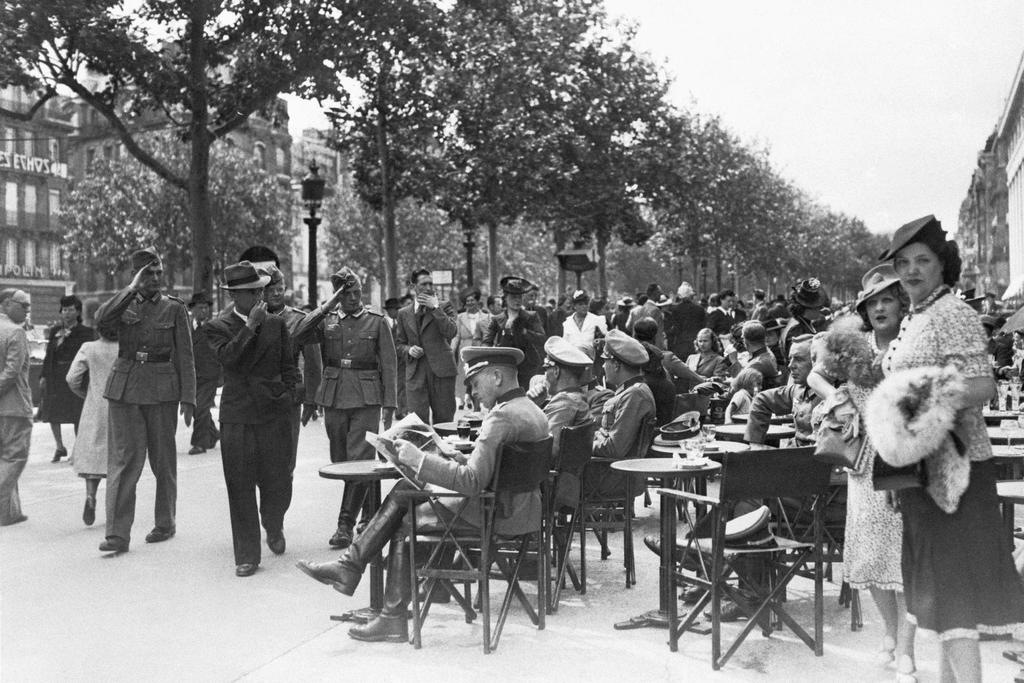
On July 14, 1940, France celebrated Bastille Day for the first time as a defeated nation.
Barely a month earlier, the German Army had swept across the country with astonishing speed. Paris had fallen without a fight on June 14, and within days France had signed an armistice that divided the country between the German occupation zone in the north and the collaborationist Vichy government in the south.
The Third Republic, which had endured for seventy years, collapsed in a matter of weeks.
Bastille Day commemorated the storming of the Bastille prison in 1789, the symbolic beginning of the French Revolution. It was a holiday dedicated to liberty, citizenship, and national pride.
In 1940, those ideals had acquired a painful irony. There would be no military parade down the Champs-Élysées, no celebration of French arms, and no display of national confidence.
Instead, German soldiers patrolled the streets while Parisians marked the day under the watchful eyes of a foreign occupier.
The occupation transformed even the smallest rituals of daily life. Cafés reopened, newspapers were printed, and people went to work, but every familiar routine unfolded against a backdrop of defeat.
German uniforms became an ordinary sight in the city’s squares and boulevards. French police enforced German directives. Swastika flags hung from buildings that only weeks before had flown the Tricolore.
Many Parisians responded not with open defiance but with quiet endurance. The military balance left little room for resistance in the summer of 1940.
Most people focused instead on obtaining food, protecting their families, and adapting to a reality they hoped would prove temporary.
Others chose accommodation, convinced that cooperation offered France its best chance of preserving some measure of independence. Still others quietly nurtured the first seeds of what would become the French Resistance.
The years that followed brought shortages, censorship, deportations, and the persecution of France’s Jewish population.
As the occupation deepened, resistance networks expanded, gathering intelligence, distributing underground newspapers, sabotaging German operations, and preparing for the day Allied forces would return to the continent.
Looking back, the first Bastille Day under occupation stands as one of the most poignant moments in modern French history.
A holiday created to celebrate freedom was observed in a city that had lost it. Yet the ideals commemorated on July 14 were not extinguished.
Four years later, after the liberation of Paris in August 1944, Bastille Day would once again be celebrated in a free French capital, its meaning strengthened rather than diminished by the years in which it had been denied.
Stalin’s inner circle during the last years of his reign
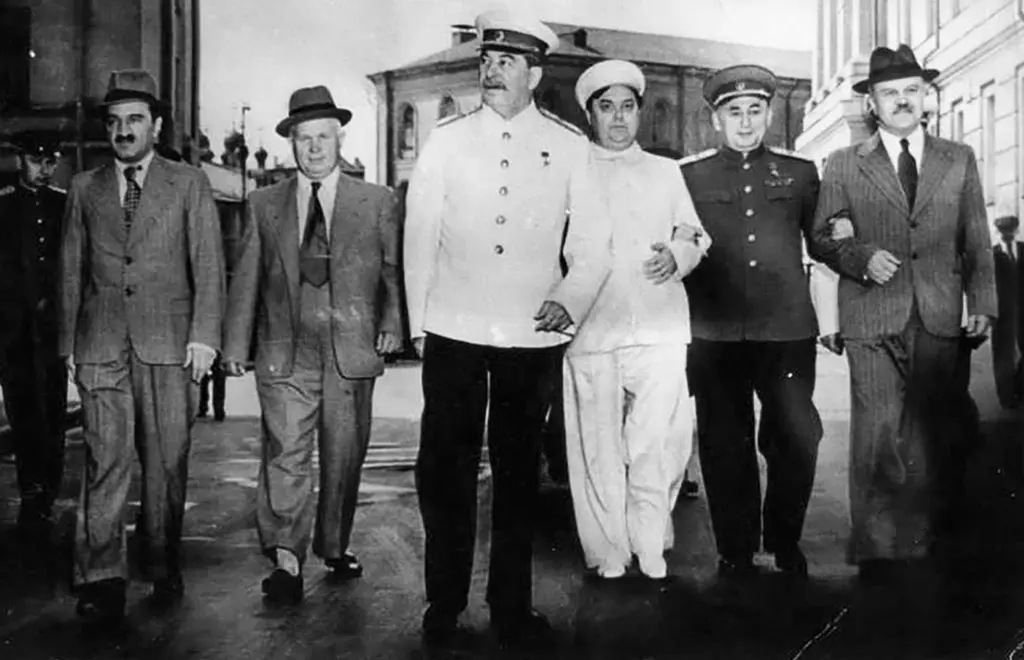
At first glance, the photograph suggests stability. Six statesmen walk together through the streets of Moscow in an orderly procession, their pace unhurried, their expressions composed.
The central figure, Joseph Stalin, dominates the scene without apparent effort. Around him are the men who governed the Soviet Union during the final years of his rule: Anastas Mikoyan, Nikita Khrushchev, Georgy Malenkov, Lavrenty Beria, and Vyacheslav Molotov.
Together they formed what appeared to be the most secure government in the world. In reality, they inhabited one of history’s most precarious courts.
No monarchy of Europe, however burdened by intrigue, demanded so constant a vigilance from its ministers. The danger did not lie beyond the palace gates but within them. The dictator’s favor was absolute, yet it was never permanent.
To stand close to Stalin was to enjoy immense authority while living under the perpetual shadow of suspicion. The fate of countless predecessors had demonstrated that distinction offered no immunity. Indeed, it often invited destruction.
Each man in the photograph represented a different quality that Stalin valued. Molotov was steadfast obedience, the loyal administrator who had survived decades by subordinating his judgment to that of his master.
Beria embodied fear itself, commanding the vast machinery of the secret police that had carried out the arrests, interrogations, and executions upon which the regime depended.
Malenkov possessed administrative skill and had already begun to attract attention as a possible successor. Khrushchev concealed beneath his outward affability a keen instinct for political survival, while Mikoyan, perhaps the most adaptable of them all, had endured successive purges through caution, flexibility, and an extraordinary talent for remaining indispensable.
Yet what united them was greater than what distinguished them. Each had risen by participating in the construction of a system whose central principle was insecurity.
The Soviet leadership did not merely administer fear; it lived by it. Decisions of immense consequence were made by men who understood that a misplaced remark at dinner, an unfortunate association, or an ill-timed display of independence could end not only a career but a life.
The irony of the image lies in its appearance of permanence. Stalin, by then in his seventies, seemed as immovable as the state itself.
The elaborate rituals of Soviet power—the parades, congresses, portraits, and orchestrated displays of unity—encouraged the belief that the regime rested upon foundations too solid to be shaken.
History would prove otherwise.
Within months, Stalin was dead. The disciplined ranks that had marched behind him dissolved into a struggle for succession.
Beria, whose authority had once terrified an empire, was arrested and executed before the year had ended. Malenkov briefly inherited the premiership only to lose it. Molotov, long the embodiment of loyal service, fell from favor.
Khrushchev, underestimated by many of his colleagues, emerged as the dominant figure and would eventually denounce the very system that had elevated him.
Mikoyan alone would continue to navigate the shifting currents of Soviet politics with the resilience that had already become his hallmark.
Thus the photograph captures not the confident maturity of Stalin’s government but its final equilibrium before collapse.
Like so many moments preserved by history’s camera, its true significance lies not in what the participants knew, but in what they could not. They walked together believing themselves the custodians of an enduring order. Unseen, the foundations beneath their feet had already begun to crack.
Patty Hearst Robbing the Sunset District branch of the Hibernia Bank in San Francisco at 9:40 A.M. April 15, 1974.
By the spring of 1974, America had become a nation unsettled by violence, political extremism, and disillusionment. The Vietnam War was winding down, trust in government had been battered by Watergate, and radical groups on both the left and right believed revolution was no longer an abstract ideal but an immediate necessity.
It was into this atmosphere that one of the strangest episodes in modern American history erupted.
On February 4, 1974, nineteen-year-old Patty Hearst, granddaughter of publishing titan William Randolph Hearst, was kidnapped from her Berkeley apartment by the Symbionese Liberation Army, a tiny, heavily armed revolutionary group that envisioned itself as the spark for a nationwide uprising.
For nearly two months, Hearst disappeared from public view. Then came a series of recorded messages in which she announced that she had joined her captors, denounced her family, and adopted the name “Tania,” borrowed from a revolutionary associated with Che Guevara.
Whether these declarations reflected genuine conviction, psychological coercion, or a desperate strategy for survival became the subject of fierce public debate.
That debate intensified dramatically on April 15, 1974, when surveillance cameras captured Hearst carrying a rifle during the robbery of the Hibernia Bank in San Francisco’s Sunset District.
To many Americans, it appeared that a newspaper heiress had willingly crossed the line from kidnapping victim to armed revolutionary.
The robbery transformed the case from a sensational crime into a national obsession. Law enforcement now hunted Hearst alongside the members of the SLA, while psychologists, journalists, and the public argued over the nature of her transformation.
The term “Stockholm syndrome” entered popular discussion, though experts disagreed over whether it adequately explained her behavior. Others insisted she had embraced the ideology of her captors. The truth was likely more complicated than either explanation allowed.
The saga continued for another year. Most of the SLA’s members were killed in a fiery shootout with Los Angeles police in May 1974, but Hearst was not among them.
She remained a fugitive until her arrest in September 1975. Convicted of bank robbery the following year, she was sentenced to prison before President Jimmy Carter commuted her sentence in 1979. Two decades later, President Bill Clinton granted her a full pardon.
Boxer Sugar Ray Robinson in his car in Paris. 1951
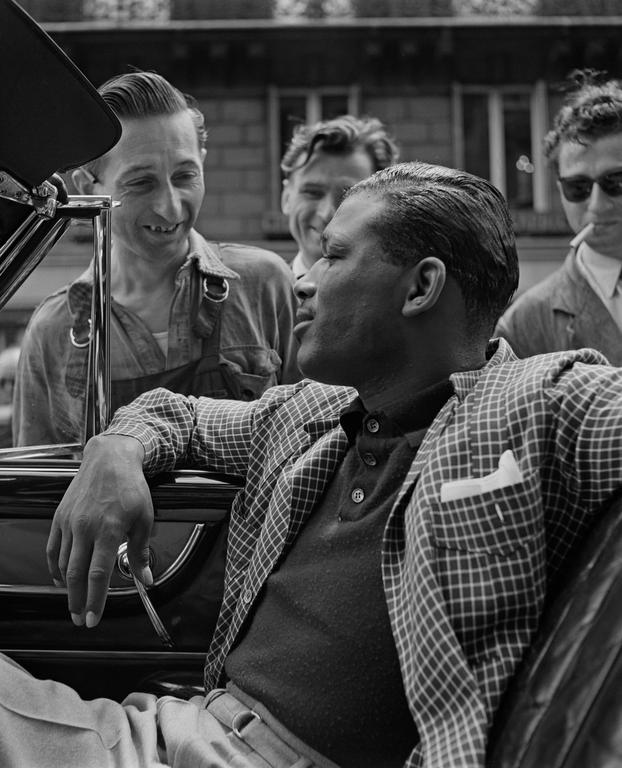
In 1951, there were few athletes in the world more admired than Sugar Ray Robinson.
Already regarded by many as the finest boxer of his generation, Robinson had become something larger than a champion. He fought with a grace that seemed to erase the violence of the sport, combining speed, precision, and elegance in a way that left opponents bewildered.
Long before the phrase “pound-for-pound” entered the sporting lexicon, many believed Robinson defined it.
His fame extended well beyond the boxing ring. Robinson cultivated an image unlike that of most prizefighters of his era. He drove expensive cars, wore impeccably tailored suits, and embraced a cosmopolitan lifestyle that made him as much a celebrity as an athlete.
Paris, meanwhile, occupied a special place in the imagination of Black American artists, musicians, and athletes. While prejudice certainly existed in France, many found a degree of acceptance and admiration that remained elusive in the segregated United States.
The city had only recently begun recovering from the devastation of the Second World War. Cafés were once again crowded, fashion houses had reopened, and Paris was reclaiming its reputation as Europe’s cultural capital.
Robinson embodied glamour, confidence, and international celebrity. Whether stepping into a boxing arena or leaning comfortably behind the wheel of a gleaming automobile, he projected effortless ease.
Looking back, the image captures more than a champion at the height of his powers. It reflects a moment when athletic greatness was becoming intertwined with celebrity culture, personal style, and international fame.
Sugar Ray Robinson was not merely one of boxing’s greatest fighters. He helped redefine what it meant to be a modern sports superstar.
Last known photo of George Mallory and Andrew “Sandy” Irvine before the final push to the summit of mt. Everest, taken on June 8, 1924. Whether they summited or not remains a mystery.
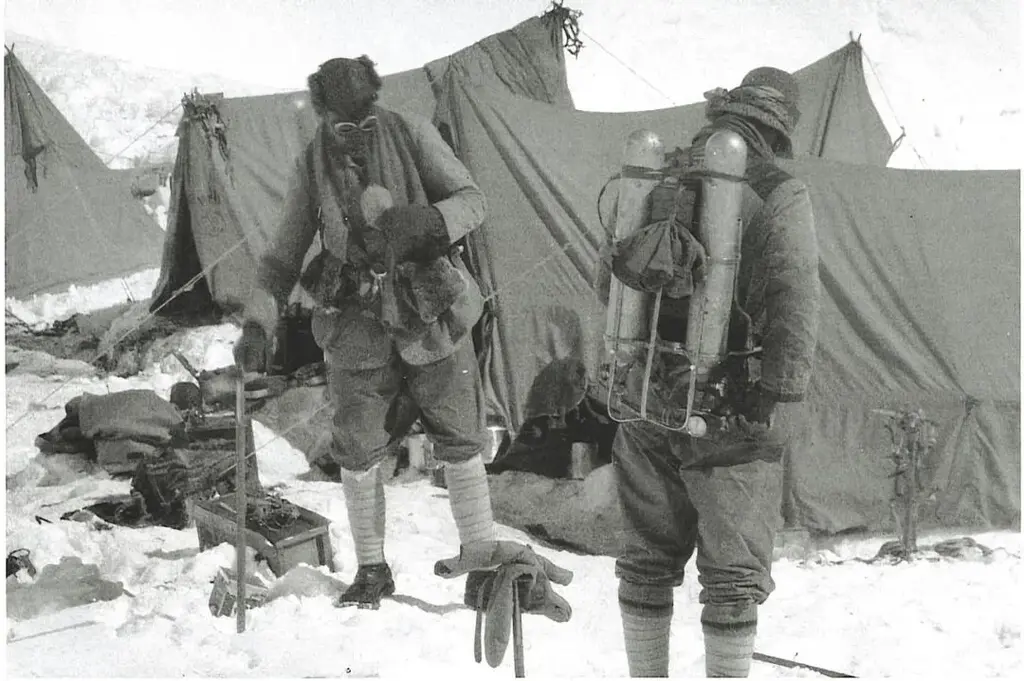
On June 8, 1924, George Mallory and Andrew “Sandy” Irvine left their high camp on Mount Everest and disappeared into history.
At the time, Everest represented one of the last great geographical prizes on Earth. No human had stood atop its summit, and the mountain had already claimed several lives.
Unlike modern climbers equipped with lightweight clothing, satellite forecasts, and advanced oxygen systems, Mallory and Irvine climbed in heavy wool garments, hobnailed boots, and cumbersome oxygen apparatus that remained largely experimental.
George Mallory was already Britain’s most celebrated mountaineer. Asked why he wanted to climb Everest, he gave the immortal reply: “Because it’s there.”
Yet for Mallory, the mountain represented more than adventure. In the years following the First World War, many Britons viewed Everest as an opportunity for national achievement at a time when the empire was searching for symbols of endurance and purpose.
His climbing partner, the twenty-two-year-old Andrew “Sandy” Irvine, was the youngest member of the expedition. Though relatively inexperienced as an alpinist, he possessed an extraordinary talent for engineering and mechanics.
His ability to repair and improve the expedition’s oxygen equipment earned him a place alongside Mallory for the summit attempt.
The two men were last seen high on the mountain by fellow climber Noel Odell, who glimpsed them ascending through breaks in the clouds before they vanished into the mist.
Neither man was ever seen alive again.
What happened next remains one of exploration’s greatest mysteries. Did they reach the summit nearly three decades before Edmund Hillary and Tenzing Norgay? Or did they perish just short of their goal?
The evidence has never provided a definitive answer.
When Mallory’s body was discovered in 1999, nearly seventy-five years after his death, it yielded tantalizing clues but no conclusion.
The photograph of his wife, which he had reportedly intended to leave on the summit, was missing. So too was the camera that might have recorded the final moments of the climb.
Irvine’s body has never been conclusively found, and with it may rest the answer to one of mountaineering’s enduring questions.